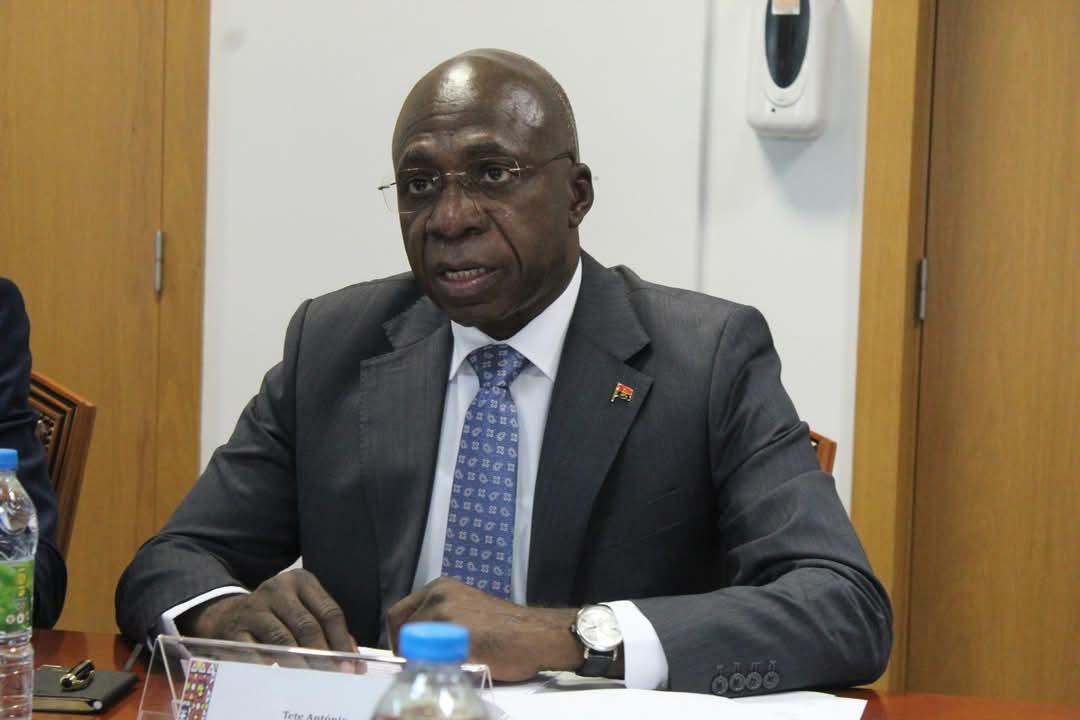
Africa-Press – Angola. Angola considers the South Atlantic a strategic space, full of opportunities and risks, requiring vigilance, coordination and joint action, with States assuming a leading role, said the minister of Foreign Affairs, Téte António, this Thursday in Rio de Janeiro, Brazil.
The Angolan official was speaking at the IX Ministerial Meeting of the South Atlantic Peace and Cooperation Zone, noting that the meeting is taking place at a time when the South Atlantic is assuming increasing geopolitical importance, and is no longer just a geographical space, but is becoming a strategic vector for security, development and the affirmation of States in the international system.
In an international scenario marked by the intensification of geopolitical competition, reconfiguration of global logistics chains and pressure on natural resources, the maritime space of the South Atlantic has acquired increased centrality.
In the political sphere, he hoped that the Rio de Janeiro Declaration would constitute a clear sign of commitment to preserving the South Atlantic as a zone of peace, free from external geostrategic tensions and oriented towards solidarity-based cooperation among member states.
He stressed that the Rio de Janeiro Cooperation Strategy should reflect a renewed political commitment, based on concrete actions, effective coordination and political will, with a view to achieving tangible results and strengthening the credibility of the organization.
The Angolan Foreign Minister pointed out that global challenges
Have become more complex and interconnected, particularly the worsening threats to maritime security, including illicit trafficking, illegal fishing and other forms of organized crime, which weaken states and compromise sustainable development.
He also referred to the impact of climate change on marine and coastal ecosystems, with direct consequences for populations that depend on the ocean for their livelihoods. During his speech, Téte António advocated for the transition from a predominantly declarative platform to an instrument with strategic coordination capabilities, with a view to more effective action.
In this context, he said that Angola considers the institutional strengthening of the organization essential.
In the legal and strategic domain, he stated that the Convention for the Protection and Development of the Marine Resources of the South Atlantic should be understood as a far-reaching political instrument that affirms the sovereignty of States over their resources and the collective responsibility for their preservation.
The official stressed the need to consolidate the South Atlantic as a true strategic community, through the strengthening of South-South cooperation, capacity sharing, investment in marine science and technology, and the promotion of inclusive and sustainable ocean governance.
He considered that the future of ZOPACAS will depend on the ability of its member states to adapt and assert themselves in a changing international context, advocating for active action in the preservation of the South Atlantic as a zone of peace, development and cooperation.
He reiterated that, for Angola, ZOPACAS remains an essential strategic platform, reaffirming the country’s commitment to its founding principles and its willingness to actively contribute to its strengthening.
The minister also stressed that the current moment demands political leadership, strategic vision and a sense of urgency, and expressed the hope that the meeting in Rio de Janeiro will mark the beginning of a new stage in the organization’s affirmation, characterized by greater ambition, coordination and capacity for action. The IX Ministerial Meeting of the South Atlantic Peace and Cooperation Zone marks the transition of the organization’s rotating presidency to Brazil, which assumes the mandate for the next three years, succeeding Cape Verde.
The initiative brought together 24 African and South American countries from both sides of the South Atlantic and marks the 40th anniversary of the creation of ZOPACAS, established by the United Nations General Assembly through Resolution 41/11, adopted in 1986.
During the proceedings, participants analyzed the Rio Declaration and the first Cooperation Strategy, which provides for initiatives to deepen cooperation between member states in the areas of oceanographic research, maritime defense and security, connectivity and fisheries.
Created on October 27, 1986, ZOPACAS stands as the main articulation mechanism in the South Atlantic, the area between the 16th parallel north and Antarctica, with the objective of promoting regional cooperation and ensuring peace and security between the countries of South America and the west coast of Africa.
Its action is based on a logic of multilateral integration and is framed within the commitment to the non-proliferation of nuclear weapons and other weapons of mass destruction.
For More News And Analysis About Angola Follow Africa-Press