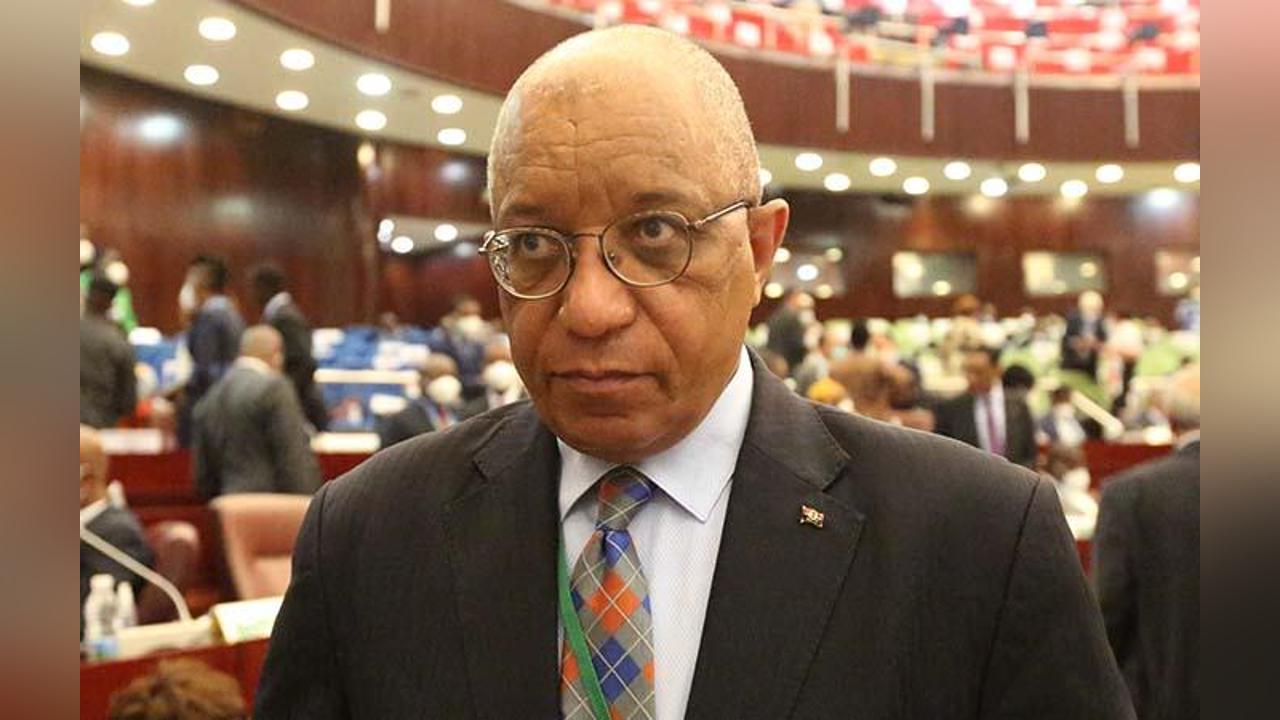
Africa-Press – Angola. The Secretary of State for Territorial Administration, Teresa Quivienguele, reaffirmed, this Friday, in Uíge province, that the new Political-Administrative Division will bring public services closer to the population and promote the harmonious development of the national territory.
In an interview with the press, at the end of the meeting on the participatory budget, the official stated that the implementation of the new Political-Administrative Division will improve control of the national territory and solve the most pressing problems of the citizens.
For this reason, he said that the elevation of communes and urban districts to the category of municipalities constitutes an advantage, above all, for the population that travels long distances to access various services.
The current Political-Administrative Division in the Republic of Angola was approved by Law number 18/16, of October 17, with the aim of redefining the Political-Administrative Division and the organizational model of the national territory in order to guarantee an adequate response capacity the provision of a more efficient public service to the population.
The Executive’s project to change the State’s model of municipality, approved by the Council of Ministers, includes the division of the provinces of Cuando Cubango and Moxico into two, thus making twenty (20) provinces and an increase from 164 to 581 municipalities .
About the participatory budget, Teresa Quivienguele said it is an important initiative for the national development phase, having reasoned that it is impossible for governance to advance without the participation of citizens.
He added that the participatory budget allows citizens to decide on the priorities of their locality, for the development of communities.
He referred that the municipal committees receive 25 million kwanzas/month to be spent on local projects and respond to the needs of the population.
He explained that the 16 management committees in the province of Uíge have already received 388 million kwanzas to be implemented in more than 100 projects for public lighting, repair of access roads, support for vulnerable people, purchase of grinding for communities, community sports and others. .
With regard to the Integrated Plan of Intervention in Municipalities (PIIM) projects, Teresa Quivienguele made a positive assessment of the 95 projects being implemented in the region, citing the fact that they are above 70 percent of physical execution.
The Secretary of State, duAngola is developing work that allows raising the level of diplomatic visibility and strategic engagement in matters of continental defense and security, while the agenda of the United Nations Security Council continues to devote sixty percent of its debates to conflicts in Africa .
In this sense, the country is considering, with great attention and care, its return to the Peace and Security Council (PSC) of the African Union (AU), scheduled for March 2024, in a context in which, in different States of the continent , political crises persist due to problems of inclusion and national cohesion.
The information was provided today (Saturday) to press by the Permanent Representative to the AU, Francisco José da Cruz, also Plenipotentiary Ambassador of Angola in Ethiopia, interviewed on “The impact of Angolan diplomacy on the projection of the country’s image in Africa”.
In the diplomat’s opinion, the need for an approach to the causes of conflicts and how to avoid them is increasingly pressing, and in this process, “Angola has played an important role” with political and diplomatic initiatives for peace and security from the mainland.
“For having lived through long and difficult years of conflict and managed to achieve peace and national reconciliation in 2002, Angola gained a wide experience in conflict resolution that it has been making available at the service of stability and development in Africa”, he underlined.
He referred that this is reflected, namely, in Angola’s presidency of the International Conference on the Great Lakes Region (CIRGL), and in its efforts to mediate the political crisis between the Democratic Republic of Congo (DRC) and Rwanda.
For Francisco da Cruz, the country’s involvement in maritime and energy security issues has also been recognized, especially in the search for sustainable solutions to respond to the challenges that the Gulf of Guinea region faces, a fact that reinforces its political authority and diplomatic credibility. in the international peace and security agenda.
Champion for Peace and Reconciliation in Africa
The ambassador stressed that, due to the diplomatic commitment of the President of the Republic, João Lourenço, in the prevention, management and resolution of conflicts in Africa, his peers decided to nominate him “Champion of the AU for Peace and Reconciliation in Africa” at the 16th Summit Conference on Terrorism and Unconstitutional Changes of Government in Africa, held in Malabo, Equatorial Guinea, on 28 May 2022.
For Francisco da Cruz, this is an added responsibility of the Angolan statesman as a pan-Africanist leader, in the search for increasingly participatory and inclusive forms of governance that contribute to the consolidation of a culture of peace and dialogue in Africa.
He added that as the AU Champion for Peace and Reconciliation, the Head of State should lead the mobilization of political support and cooperation from Member States at sub-regional, regional and continental levels, as well as galvanize international support to prioritize prevention, conflict management and resolution on the continent.
It is in this context that, on the 31st of January last, he led the launch of the “Day of Peace and Reconciliation in Africa”, which is now celebrated every year, with the aim of promoting greater citizen participation, political inclusion and ownership of the processes of negotiating peace for stability and development in Africa, he said.
Role in regional and international organizations
The diplomat said that, within the scope of its diplomatic insertion strategy in the international arena, Angola seeks to play an increasingly assertive role in regional and international organizations, mainly because it considers it necessary to participate in initiatives aimed at consolidating peace and security in Africa, given its experience in conflict prevention, management and resolution.
“For Angolan diplomacy, States must know how to defend their national interests and preserve their sovereignty and independence, favoring peaceful and inclusive ways to resolve conflicts and overcome any disputes, within the respect of the law and Human Rights”, declared Francisco da Cross.
He added that the exchange of experiences and information on national reconciliation initiatives contributes to the creation of a dynamic in favor of achieving the AU’s strategic objective of silencing the weapons in the continent.
When it comes to the issue of reconciliation in Africa and beyond, Angola is often referenced for the way it conducted its own peace process and national unity “which resulted in the creation of an environment of political inclusion and democratic participation among its children”. , regardless of their party options”, he maintained.
Mandates in the Peace and Security Council
Angola’s last term on the Peace and Security Council (PSC), the main body of the AU responsible for ensuring peace and security in Africa, dates from March 2018 to March 2020.
During that period, he assumed the monthly rotating presidency twice, having organized a meeting at ministerial level, in New York (USA), in September 2018, on the sidelines of the 73rd United Nations General Assembly, under the theme “The State of Peace and Security in Africa and the Steps taken in Promoting African Solutions to African Problems”.
In the same condition, it hosted in the Angolan capital, Luanda, in December 2019, another session of the PSC, in which the “National Reconciliation, Restoration of Peace, Security and Reconstruction of Cohesion in Africa” was debated.
Promoting a culture of peace
The Angolan Executive is also committed to promoting a culture of peace and reconciliation on the continent, evidenced by the holding of two editions of the Pan-African Forum for the Culture of Peace in Africa – Luanda Biennial, in September 2019 and in October 2021 , in partnership with the AU and UNESCO, he declared.
For the ambassador, the Bienal de Luanda, whose third edition will take place in October of this year (2023), “aims to promote, permanently and firmly, a culture of peace that contributes to the strengthening of national unity and implies an unequivocal rejection of , individual and collective, of divisions and violence”.
In his view, such (violence) has affected, with serious political, economic and social consequences, many countries in Africa, particularly in the Great Lakes Region, jeopardizing the strategic objective of silencing weapons on the continent.
economic diplomacy
Also Permanent Representative to the Economic Commission for Africa (UNECA), the ambassador stressed that Angola’s economic diplomacy is in line with the objectives of the Continental Free Trade Area of Africa (AfCFTA) of deepening economic integration.
The same purposes, he said, aim to promote and achieve sustainable and inclusive socio-economic development, gender equality, industrialization, agricultural development, food security, structural transformation and inclusive human development.
According to Francisco da Cruz, all AU Member States tend to benefit from silencing the guns in Africa, as it will promote the full realization of the AfCFTA, which is a flagship project of Agenda 2063 that aims to create a single African market for goods and services, facilitated by the free movement of people and capital.
For More News And Analysis About Angola Follow Africa-Press