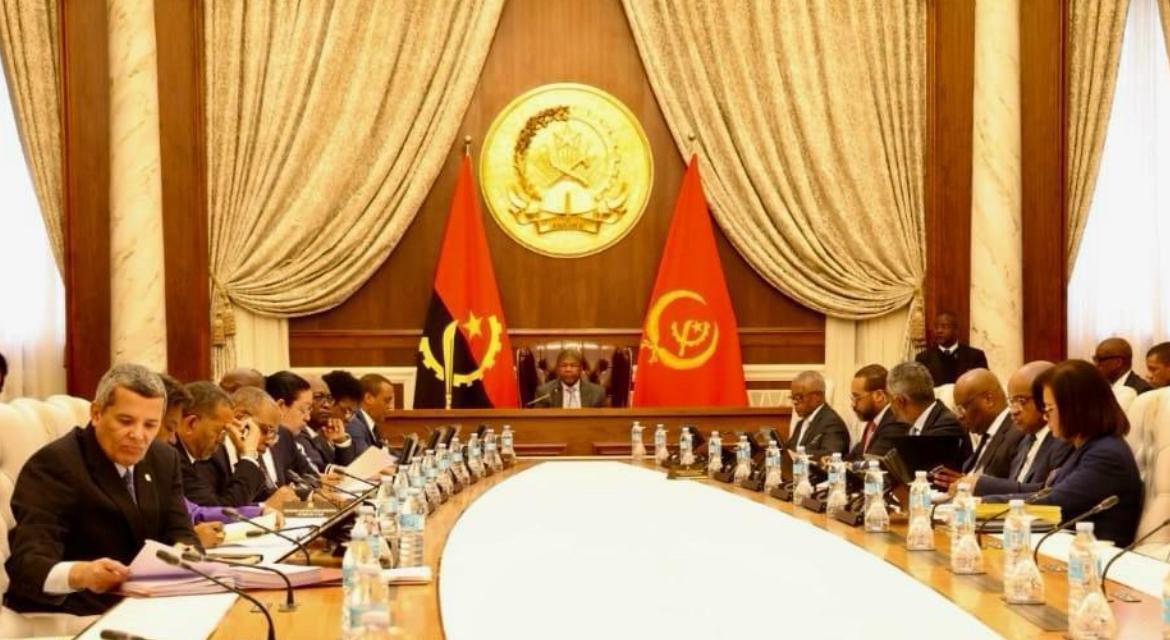
Africa-Press – Angola. The Cabinet Council assessed on Wednesday (29) the draft Presidential Decree that provides for the transformation of the Angolan Customs Warehouse, E.P. (EAA) into a joint-stock company, with a majority public capital stake.
According to information on the matter, the new framework preserves state control, legal continuity, the institutional mission, and workers’ rights.
Under the new 2026/2028 Strategic Plan, the Angolan Customs Warehouse S.A. will be reinforced as a strategic public operator in the fields of logistics, supply stabilization, storage, wholesale distribution, and support for food security. Its operations will complement those of economic operators and will be structured around the Strategic Food Reserve, Logistic and Wholesale Distribution Services, and the Integrated Logistics and Distribution Network.
The transformation will make it possible to reinforce governance, oversight, transparency, sustainability, and accountability within the institution.
The measure also provides for the progressive integration of the assets and logistical infrastructure necessary to fulfil the EAA’s institutional mission.
The Angolan Customs Warehouse was established on Dec 16, 2002 under Decree No. 81/2002.
Headquartered in the Ngola Kiluanje neighbourhood at kilometre 4 of the Cacuaco Road in Luanda, the institution plays a strategic role in managing the country’s food security by ensuring the storage, preservation, and distribution of essential food goods.
The primary mission of the Angolan Customs Warehouse focuses on managing and operating the State’s Strategic Food Reserve, a mechanism designed to guarantee the availability of essential products, contribute to the stability of national supplies, and minimize the impacts of potential supply crises or price fluctuations on the market.
In addition to managing the food reserve, the company carries out wholesale trade activities with the aim of ensuring the storage and distribution of food products to different regions of the country.
It also plays a role in supporting domestic production through the acquisition of agricultural products from local producers, such as rice, with the objective of encouraging internal production, strengthening the supply chain, and contributing to the stabilization of food prices.