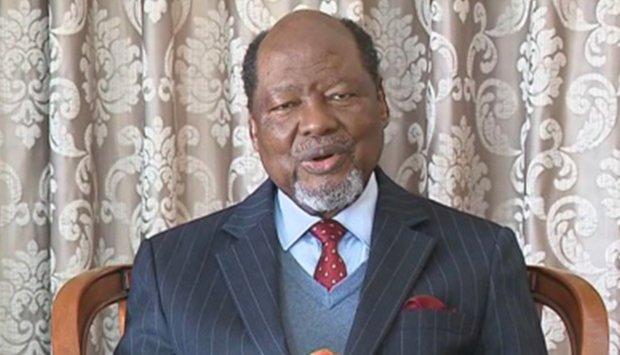
Africa-Press – Angola. The former president of Mozambique, Joaquim Chissano, appealed this Sunday, in Luanda, to the parties competing in the General Elections to be guided by exemplary political conduct, promoting a healthy environment, valuing tranquility and, most importantly, he underlined, to accept the final results, as a sign of respect for the will of the people that will be placed in the polls.
The Mozambican politician, who is in the country as an international entity invited to observe the elections, made the statements to the press at the end of a meeting with the president of the National Electoral Commission, André da Silva Neto.
“We must trust the electoral administration. I appeal to Angolans to vote according to the law and wait, then, for the results calmly”, he stressed, advancing, in this case, “whoever loses must accept, even if he does not agree”. For Joaquim Chissano, “there are some who say I don’t agree, but I accept it for the good of the Nation”.
The former Mozambican President stressed that one should not agree in any way. Anyone who feels wronged should go to court, but when the courts decide, it is necessary to accept the results, even if you do not agree with the “sentence” of the courts. “The country needs everyone to be together, it’s not just accepting the election results, it’s accepting the challenge of starting a new life with others and waiting for another opportunity”, he stressed.
He added that in the conversation he had with the President of the CNE, he was informed that the institution is ready to carry out the election, and that all electoral civic education work had been carried out. “He spoke of civic education carried out by the CNE, and I wished, regarding the result, that the political parties had carried out civic education”, he stressed. In this line, he said that he verified that the atmosphere is calm. “No voter is going to take any action that could thwart this lull.
Joaquim Chissano said that he spoke a little about what happened in other countries, since elections were held in Kenya two weeks ago. “The atmosphere was calm when I got there, but in the course of the elections the situation was not good, it ended up with the Electoral and Borders Commission divided, we don’t know what will happen next Monday and Tuesday, it is possible that some parties resort to the courts”, he emphasized.
José Carlos Barreiras, president of the National Electoral Commission of São Tomé and Príncipe and head of the mission of the Network of Jurisdictional Electoral Observation Bodies (ROJOE) of the CPLP was one of the entities received, also, by the president of the CNE. He said that, from everything he heard from the president of the CNE, the conditions are in place for the elections to take place in the best possible way. “We will be distributed in some provinces, but the largest presence will be in Luanda”, he clarified.
“We are a small group, with 15 members, which does not cover the entire country”, he pointed out. José Carlos Barreiras touched on, at a certain moment, that the question of the existence of the dead in the electoral roll is a worldwide phenomenon, it does not call into question the electoral results, because the dead do not vote. “I can give an example, in my country, which is small, São Tomé and Príncipe, we have few voters, when the registers are already made, it is not possible to remove the dead from the electoral register”, he said.
“The dead are still registered in the electoral rolls, nobody can remove them, however the elections are supervised by the delegates of lists, in the polling stations”, highlighted the electoral observer.
For More News And Analysis About Angola Follow Africa-Press