Africa-Press – Angola. The National Water Council (CNA) approved, this Friday, in Luanda, the Action Plan for the five-year period 2023-2027, which foresees, among others, the creation of regional river basin administration offices and the study of current and future human resources needs in the sector.
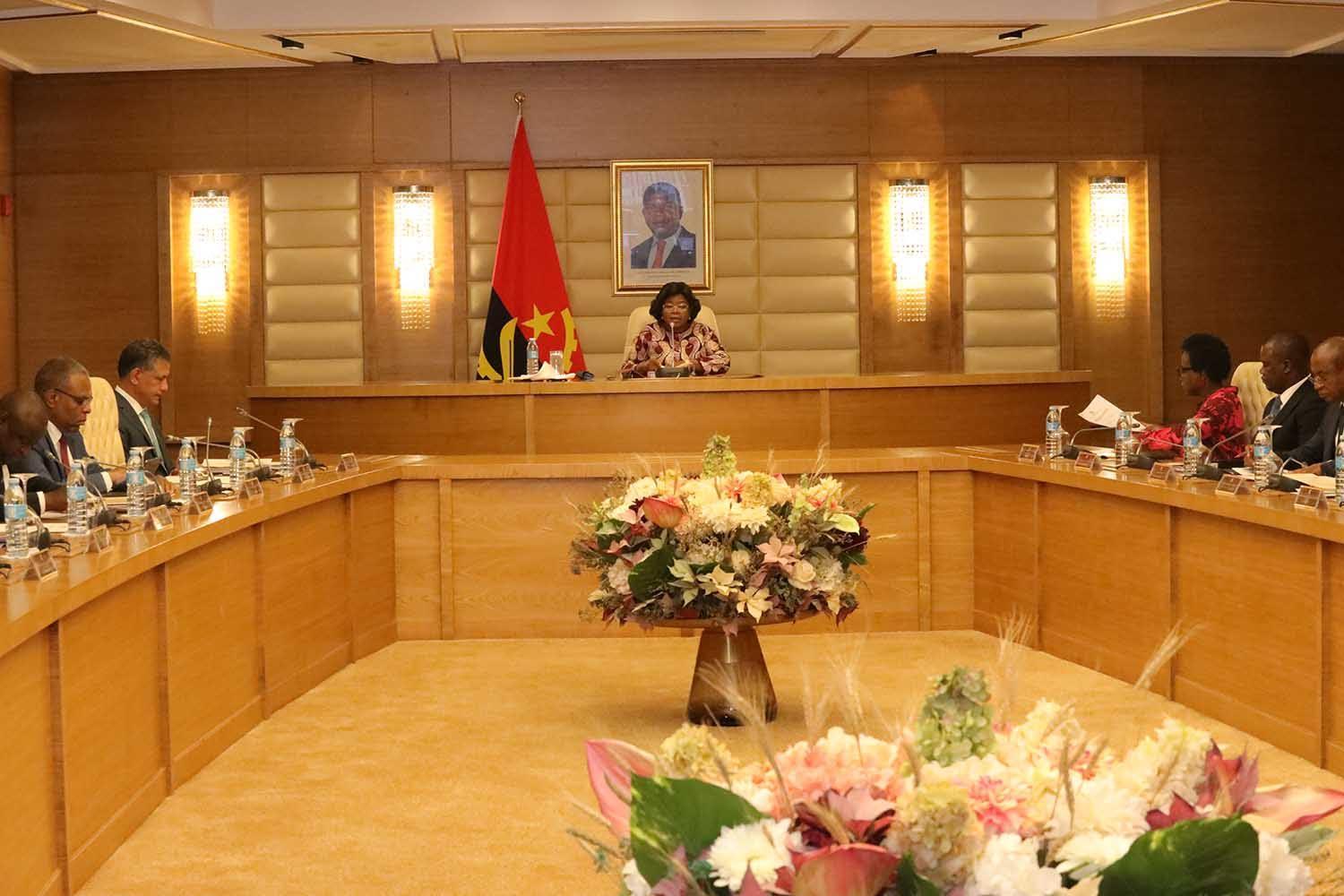
The 1st Extraordinary Session of the National Water Council, guided by the Vice-President of the Republic, Esperança da Costa, also placed emphasis on analyzing the summary report of the technical visit to the town of Caxarandanda (municipality of Quiçama, Luanda), where the community is being affected by an outbreak of blindness, due to the bite of the so-called “black fly” and for using unsafe water from the Longa River.
In this sense, the Vice-President advised that, from 2024 onwards, ministerial departments create conditions aimed at improving access routes to the locality, as well as obtaining drinking water and basic sanitation, in order to prevent the spread of cases of blindness that have been reported.
According to the Minister of Energy and Water, João Baptista Borges, he takes into consideration the Long-Term Strategy – “Angola 2050”, as well as the action plans for the Energy and Water Sector 2023-2027, namely the National of Water and the General Development and Use of Water Resources in River Basins.
In the legislative domain, as challenges for the sector, the minister referred to the need to update and resolve gaps, as well as the elaboration of proposals for the legal regime of water resource user associations, the implementation of a public access platform and free access to environmental legislation and the definition of priorities for establishing public-private partnerships.
According to the person responsible for the area, in the field of planning and use of water resources, the plan proposes to prepare an update on the development of water resources in river basins and monitoring and evaluation reports.
It also provides for a national program for the efficient use of water and a plan for extractive activities, as well as guidelines for compensatory measures on the environmental, socio-cultural and economic impacts of the implementation of water projects, as well as the navigability safety project for the Congo River .
João Baptista Borge stressed that, by 2027, it is expected to eliminate the water distribution deficit in the province of Luanda, which has 50 percent of the population without access to the drinking water network.
To this end, as the action plan foresees, within the framework of water supply and wastewater and rainwater sanitation, among other measures, the construction of systems 4 (BITA) and 5 (Quilonga Grande) is underway.
It also includes the inclusive sanitation project for coastal cities, the rehabilitation and expansion of access to water in Menongue, Benguela, Sumbe, Porto Amboim, Gabela, Waku Kungo, M’Banza Congo and Soyo, as well as the increase in rural supply in southern Angola.
Likewise, it is also proposed to promote the national production of equipment and consumables necessary for water services and sanitary installations in all schools, health units and prisons in the country.
It includes the elaboration of the national strategy to combat and prevent water-borne diseases, the construction of integrated infrastructures for water supply, wastewater and rainwater sanitation, as well as implementing integrated water distribution projects in Industrial Development (PDI) and Rural Industrial Parks (PIR).
The construction and rehabilitation of dams with high storage capacity, the elaboration of the national dam safety plan and reservoir planning, the recovery and desilting of 43 stone masonry and water retention dams in the municipalities of Bibala, Camucuio, Moçâmedes and Virei (Namibe), as well as the reconstruction of hydro-agricultural dams and irrigated perimeters are also included in the aforementioned plan.
Regarding resilience to climate change, the action plan envisages the implementation of the structuring project to combat the effects of drought in southern Angola (Huíla, Namibe and Cunene), a national plan for droughts and water scarcity, carrying out the survey, preparation and approval of risk maps for floods, floods and slope instability throughout the national territory, as well as ensuring the protection of slopes to prevent ravines.
Created by Presidential Decree no. 76/17, of April 20, the National Water Council is coordinated by the Vice-President of the Republic, who is responsible for coordination and articulation between the different ministerial departments linked to the planning, management and use of water resources.
In this context, national river basins and those shared by the Angolan State, including users of water resources and local communities, are also part of the Council’s responsibilities.
angop
For More News And Analysis About Angola Follow Africa-Press