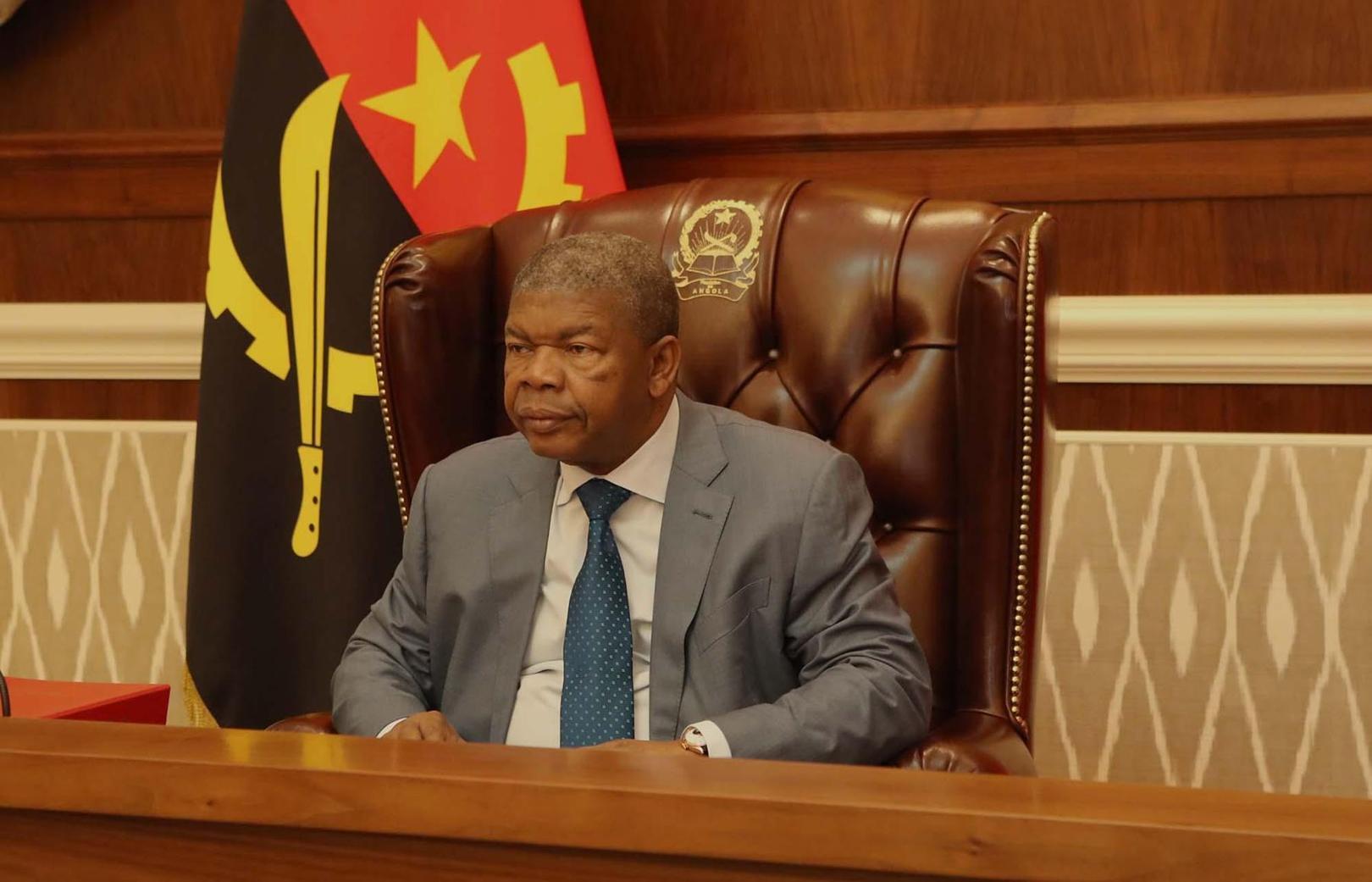
Africa-Press – Angola. The Long-Term Development Strategy, Angola 2050, a document that reflects the future vision of the country, was approved this Wednesday, during the 6th Ordinary Session of the Council of Ministers.
The document contemplates different scenarios of economic and social growth, the definition of global and sectoral goals, says the final communiqué of the meeting chaired by the President of the Republic, João Lourenço.
The Long Term Development Strategy, Angola 2050, replaces the previous Long Term Strategy, Angola 2025.
The statement explains that the replacement is due to the need to align with the international commitments assumed within the framework of the United Nations Agenda 2030 and the African Union Agenda 2063.
The replacement also arises from the need to harmonize the time horizon, a preponderant element for the execution of medium-term policies and the National Development Plan 2023 – 2027.
The communiqué, which ANGOP had access to at the end of the session, informs that the preparation of this instrument resulted from a joint effort by national and international institutions.
Among the national institutions, civil society, academia, the private sector, institutions at the central and local level of the State, as well as people with disabilities or reduced mobility stand out.
Finance Sector
In the field of public finance management, the Council of Ministers approved a diploma containing instructions for drawing up the General State Budget (OGE) for the 2024 financial year.
The aforementioned document establishes the principles, rules and procedures to be observed in all bodies of the budgetary system by the budgetary units and dependent bodies, in the process of preparation and elaboration.
This is the process of preparing and drawing up the 2024 OGE bill, as well as the medium-term expenditure framework for the 2023-2027 period.
Industry and Commerce
For the sector of industry and commerce, the Council of Ministers endorsed the regulation on the licensing of commercial activity, a diploma that establishes the conditions and procedures for licensing the practice of this task.
With the licensing for the exercise of this activity, the Executive intends to unify the dispersed regimes currently in existence and unify the procedure for access, exploitation of commercial activities and simplified provision of services by local bodies.
Still in the sector of industry and commerce, the regulation on the licensing of the exercise of industrial activity was approved.
In this regard, the diploma establishes the rules that must be observed in the process of appraising and approving projects and licensing of industrial activities and installations, as well as the criteria for granting the Industrial License Permit.
With this diploma, the Executive will ensure the protection of the environment, correct industrial planning, safety and health in industrial establishments and the quality of national industrial goods, within a framework of sustainable development and corporate social responsibility.
Foreign policy
In today’s session, the Council of Ministers approved, within the framework of foreign policy, the agreement on the Lobito Corridor Transit Transport Facilitation Agency between the Governments of Angola, the Democratic Republic of Congo and Zambia.
The trilateral cooperation instrument will allow countries without access to the sea to transport goods along the Lobito Corridor (Benguela), using the existing port and railway infrastructures, without any constraints in terms of circulation.
The measure is expected to result in gains for Angola, with an increase in customs and port revenues.
Also in the context of foreign policy, the session endorsed the resolution approving the Declaration on Youth Development and Empowerment in the Southern African Development Community (SADC).
Likewise approved was the resolution for ratification of the SADC Protocol on health, mining sector, control of firearms, ammunition and other related material, tourism development, statistics and fisheries.
Still on foreign policy, the Council of Ministers endorsed the bilateral instruments of cooperation between the Geological Institute of Angola and the State Agency Council Superior for Scientific Investigations of the Kingdom of Spain, in the geological field.
This Wednesday’s session approved the Memorandum of Understanding between the Ministry of Justice and Human Rights of Angola and the Zambian counterpart.
The press release indicates that all bilateral instruments of cooperation inherent in foreign policy will go to the National Assembly.
The Executive appreciated and recommended the approval of the diploma that creates the Best Municipality of Angola Award and respective Regulation.
The award aims to encourage healthy competition between municipalities in promoting actions that contribute to meeting the needs of the population and promoting local development.
For More News And Analysis About Angola Follow Africa-Press