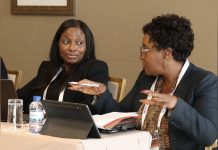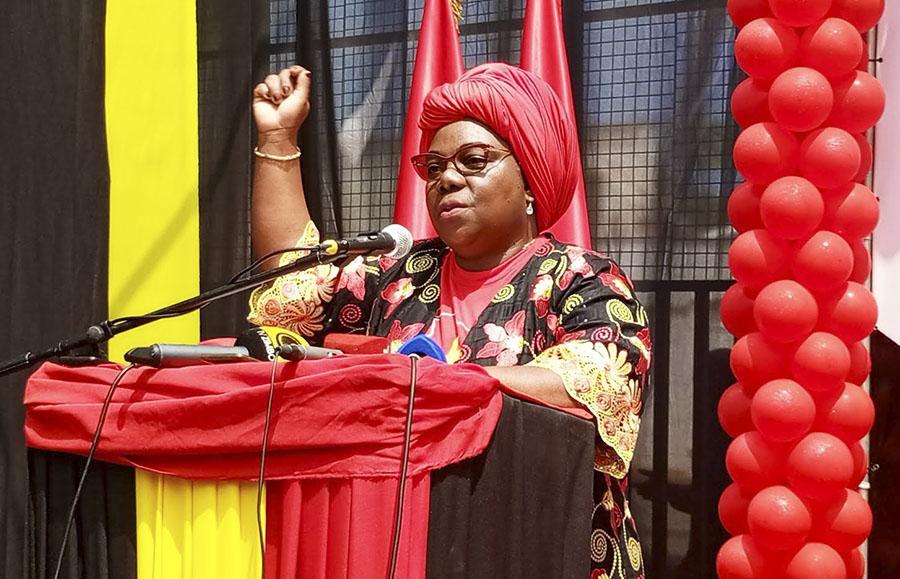
Africa-Press – Angola. The vice-president of the MPLA, Luísa Damião, reaffirmed Friday, the Angolan Executive’s commitment to education and technical-professional education so that youth can learn to preserve cultural, historical and patriotic values.
“Education must be the fundamental premise for the preservation and conservation of a people’s identity”, he argued.
The person in charge, who was speaking at the opening of a lecture alluding to the celebration of the 4th of February, appealed to young people to focus their efforts on studies because, “studying requires sacrifices but the fruits only come with effort, resilience, patience, faith and hope in better days”.
According to the vice-president of the MPLA, being young these days is very different from what it was in the past “because the world is faster, more technological, more digital, less analogue and in one click, we are in a global village”.
However, according to Luísa Damião, great challenges arise in communication, as everything starts to become more virtual and, therefore, we need to adapt to this irreversible context.
For the vice-president of the MPLA, despite many changes, “it is necessary, as a society, family and country, to continue to dialogue with children and young people, to transmit positive values to them”.
For his part, historian Cornélio Caley, who was the speaker at the event, expressed a feeling of gratitude for the opportunity to speak to young people about the importance of the events of February 4, 1961.
In the early hours of February 4, 1961, a group of women and men, armed with sticks, machetes and other sharp weapons, attacked the House of Reclusion and the São Paulo Prison, in Luanda, to free political prisoners, threatened with death.
In response to the attack, the colonial-fascist regime reacted brutally with repression across the country, with murders, torture and arbitrary arrests.
These arrests and murders of several defenseless people led some nationalists to organize themselves for the liberation struggle.
Preparations for the action began in 1958, in Luanda, with the creation of two clandestine groups, one covering the suburbs and the other the urban area, coordinated by Paiva Domingos da Silva, Imperial Santana, Virgílio Sotto Mayor and Neves Bendinha (now deceased).
February 4, 1961 is considered an important milestone in the African struggle against colonialism.
The events of this day thus translated into a sublime expression of nationalism, demonstrated by Angolans.
For More News And Analysis About Angola Follow Africa-Press