Africa-Press – Angola. The guarantee of ensuring mobility for access to the new Dr. António Agostinho Neto international airport, in Luanda, was the main headline in Press’s economic news, in the week that ended on Saturday.
The National Roads Institute (INEA) announced that the conditions have been created for mobility in access to the new international airport, which is scheduled to open on November 10th.
According to INEA’s Luanda provincial director, Rosária Kiala, the Executive is engaged in improving the avenues Deolinda Rodrigues, Via Expressa, towards Cabo Lombo, up to the 25 bridge.
Speaking to the press, at the end of a guided tour of the various infrastructures promoted by the construction of the new international airport in Luanda, Rosa Kila said that the work involves improving the asphalt carpet, vertical and horizontal signage, construction of stops for public transport, rehabilitation and construction of new pedestrian streets.
According to the person responsible, in this first phase, the Kima Kienda (Boavista) avenues in the urban district of Ingombota, municipality of Luanda, on January 21st, Pedro de Castro Van-Dúnem Loy, the Patriota and from Futungo.
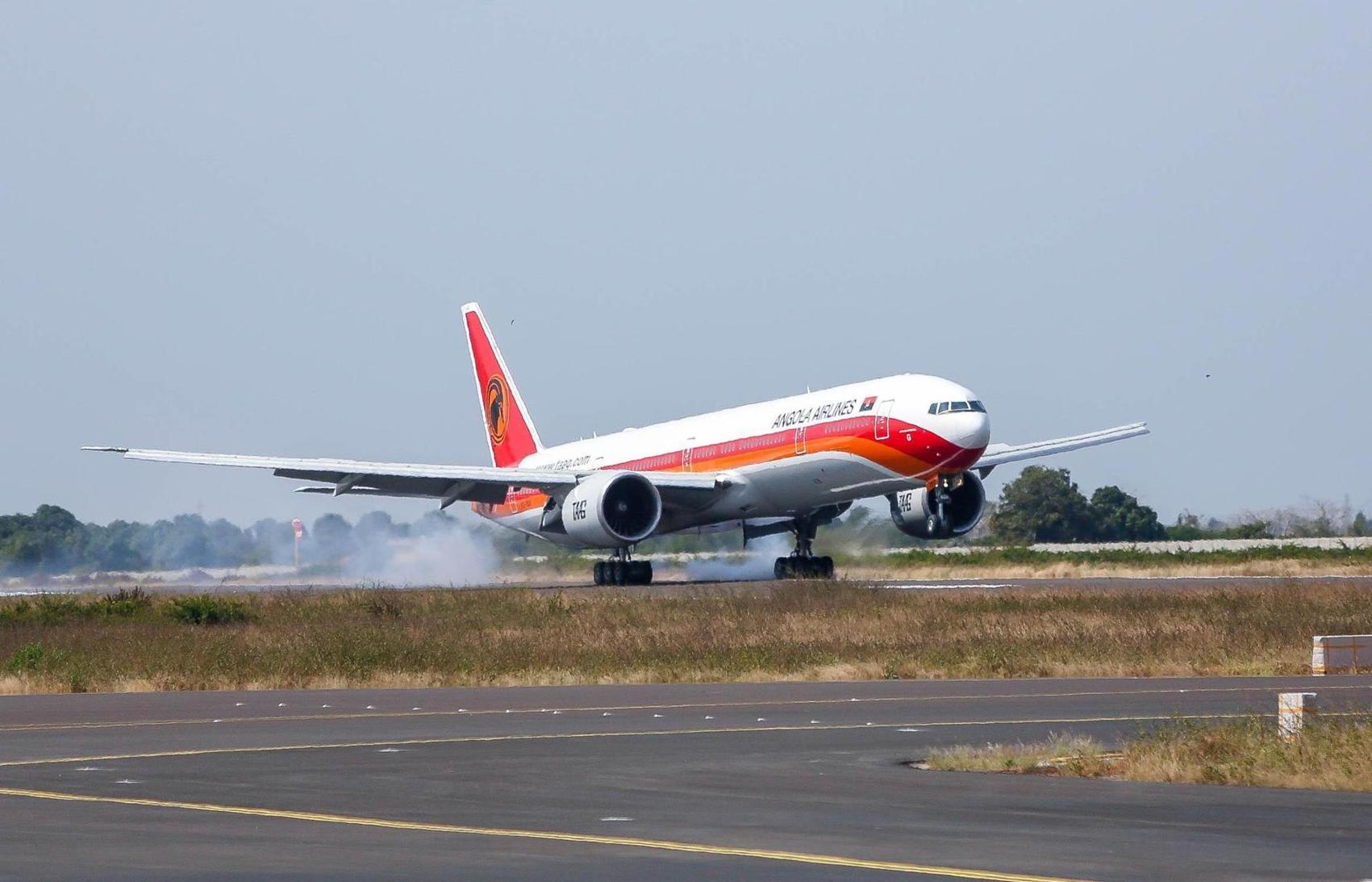
Still regarding the new international airport in Luanda, it was reported that it will receive domestic flights at the end of the first quarter of 2024, announced the Minister of Transport, Ricardo de Abreu.
The government official was speaking at the end of a meeting chaired by the President of the Republic, João Lourenço, which served to discuss preparations for the inauguration of the Dr. António Agostinho Neto Airport.
According to the minister, the forecast is to begin receiving international flights in the third quarter of 2024, within the framework of a gradual logic of activating the new airport, with cargo planes beginning to operate this year and, subsequently, they will increase the services.
Also noteworthy was the proposed General State Budget (OGE) 2024 presented this week to the National Assembly for approval, valued at 24.7 billion kwanzas, representing an increase in revenue of 22.9%, compared to the year 2023. .
According to the report justifying the OGE 2024 proposal, of the total 24.7 billion Kwanzas, 14.7 billion corresponds to tax expenditure, including debt interest, and the other 10 billion is intended for financial expenses related to debt repayment, in the amount of 9.7 billion, and capitalizations in the amount of 300.4 billion kwanzas.
Regarding functional expenditure allocations, the budget is marked by a high debt service, concentrating around 57.8% of total budget expenditure, with a total amount of Kz 14.3 billion, the document states.
The report states that the social sector accounts for the second largest share of the budget, with a weight of 20.1% (Kz 4.9 billion), followed by General Public Services, with 9.0% (Kz 2.2 billion, Defense , Security and Public Order, with 7.1% (Kz 1.7 billion) and the Economic sector (Kz 4.9%).
The 2024 OGE proposal brings a global fiscal surplus of 17.4 billion kwanzas, corresponding to 0.02% of the Gross Domestic Product (GDP), as a result of tax revenue and expenses of 20.08% and 20.06 %, respectively.
Regarding the OGE, the president of the National Assembly, Carolina Cerqueira, hoped that the proposed General State Budget (OGE) for the 2024 economic year will contribute to improving the country’s situation, especially for the most disadvantaged families.
In an interview, Carolina Cerqueira praised the measures to increase public investment and reduce public debt which, in her view, could stimulate development in the long term.
The leader of the Angolan parliament also shares the Executive’s concern about the difficult social situation that afflicts the population and particularly families, hoping that the proposal under consideration for 2024 may, in fact, contribute to improving the country’s situation.
José de Lima Massano, who made his debut in delivering the OGE Proposal to the Legislative body, considered the document balanced, as it seeks to meet the objectives and goals contained in the National Development Plan (PND).
In this budget proposal for 2024, the social area has a weight of 20.1 percent, corresponding to 4.9 billion kwanzas.
Defense, Security and Public Order comprises 7.1 percent, corresponding to 1.7 billion Kwanzas, while the economic part has 4.9 percent corresponding to 1.2 billion Kwanzas.
Still following the OGE, the economic wording highlighted the fact that the Executive envisages extending the exemption from Labor Income Tax (IRT) to public employees, with salaries of up to 100 thousand kwanzas.
This information was provided by the Minister of Finance, Vera Daves, having explained that the measure appears in the State General Budget Proposal (OGE) for the 2024 financial year, delivered this Tuesday by the Executive to the National Assembly.
The current law only exempts public employees with salaries of up to 70 thousand kwanzas from the IRT.
According to the Minister of Finance, this is one of the ways to provide some relief to families through this fiscal measure.
“In this OGE Proposal we seek to balance the equation, giving some space through tax relief and through an adjustment in remuneration by 5 percent for public employees”, he highlighted.
It was also mentioned last week that Angola will produce 71% of clean energy by 2027.
According to engineer João Fernandes, from the National Directorate of Energy and Rural Electrification, of the Ministry of Energy and Water, in an interview,more than 62% of the country’s energy production comes from renewable sources, that is, hydro and photovoltaic (solar) .
Angola’s energy matrix comprises 59.79% hydro-electric energy, 35.74% thermal energy, 3.81% solar energy and 0.57% hybrid energy. In total, 63.6% of the energy produced nationally is from clean sources.
To achieve the target of 71% clean energy, foreseen in the Electricity Sector Development Plan, the source said that they are counting on the Caculo Cabaça hydroelectric plant, which will generate 2,100 Megawatts (MW) and several solar energy projects.
The economic news also highlighted the announcement by the Lucapa Diamond Company that it had extracted a 208-carat diamond at the Lulo mine, located in the municipality of Capenda Camulemba, Lunda Norte province.
According to a statement, the mineral extracted in block 31 was classified by the Yehuda gauge as Type IIa.
According to the note, this is the 39th diamond weighing more than 100 carats and the second to be recovered from the Lulo mine, in October, after the 123-carat Type IIa, found in block 19.
The mine has revealed, since the beginning of its exploration in 2010, a high potential for “quality and quantity”, having achieved, in the first year, the highest value per carat in the world, in the order of 2,985 dollars. (3,005 euros).
Lulo is also the mine where the largest diamond found so far in Angola was extracted, weighing 404.2 carats, sold in May 2016 for US$16 million and which subsequently yielded US$34 million, after cut and transformed into jewelry.
It was also highlighted that the International Monetary Fund (IMF) predicts growth in the Angolan economy above 3% in 2024, accelerating the diversification of the economy.
Speaking to the press, after the presentation and public exhibition session of the International Monetary Fund (IMF) Report on the Regional Economic Perspectives of Sub-Saharan Africa: “A Light on the Horizon?”, the resident representative of this institution in Angola, Victor Lledo, highlighted that a recovery above 2023 levels is expected.
Victor Lledo considers that 2023 was also a difficult year due to exchange rate and inflationary pressures, which are expected to decrease in 2024, with the resumption of fiscal consolidation.
In his opinion, the 2024 General State Budget clearly points in this direction, putting the accounts on a path, to a debt close to the anchor of 60% of the Gross Domestic Product.
According to the person responsible, it will be very important to create the necessary fiscal space to boost investment in social areas.
“There are important recommendations, such as continuing with the reduction of tax subsidies on fuels, which currently represent around 3.5% to 4% of GDP and which take up a very large space, whose values could be used in education, health and social assistance” , he said.
Another extremely important issue has to do with the fact that Angola obtained the best classification ever at the IENA fair in Germany.
The Angolan delegation, which participated in the 74th edition of the Ideas, Innovation and New Products Fair (IENA), in Germany, won 19 medals.
In its 15th participation, from October 28th to 30th, in the city of Nuremberg, after its debut in 2009, Angola won three gold medals, six silver medals and ten bronze medals, surpassing the 14 last year.
This year, the Angolan delegation presented work linked to the environment and the social area, carried out at the universities Agostinho Neto (UAN), Metodista de Angola (UMA) and Mandume Ya Ndemufayo – Instituto Politécnico de Ondjva – Cunene.
Angola was represented by ten people, including university officials and inventors from three provinces (Luanda, Cunene and Namibe), for a total of 32 registered projects.
In the last edition, in 2022, the country won 14 medals, three gold, two silver and nine bronze. Overall, the country now has 120 medals, including gold, silver and bronze.
angop
For More News And Analysis About Angola Follow Africa-Press