Africa-Press – Angola. Equatorial Guinea is a country located west of Central Africa, which includes the mainland region of Rio Muni and five volcanic islands off the coast.
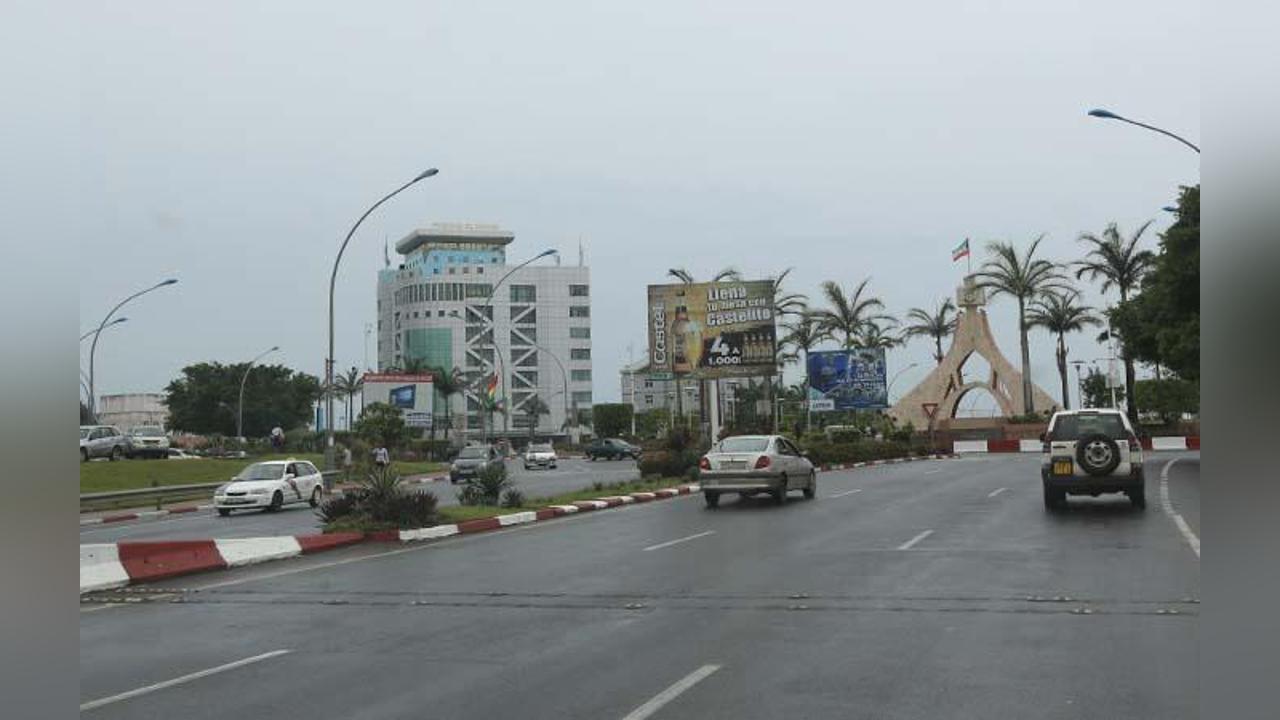
The capital is Malabo, located on the island of Bioko, with Spanish colonial architecture, and the center of the country’s thriving oil industry.
Equatorial Guinea, officially the Republic of Equatorial Guinea, is divided into several discontinuous territories in the Gulf of Guinea, a continental one, Mbini (former Spanish colony of Rio Munii) and other islands.
The islands are Bioco (formerly Fernando Pó), in the north of the Biafra Golf, Ano Bom, south of São Tomé and Príncipe, and Corisco, Elobey Grande and Elobey Pequeno (and adjacent islets) in Corisco Bay, off Gabon .
In addition to Gabon and São Tomé and Príncipe, Equatorial Guinea has borders with Cameroon and Nigeria.
The country’s capital is the city of Malabo, formerly known as Santa Isabel.
Since the mid-1990s, Equatorial Guinea has become one of the largest sub-Saharan oil producers.
With a population of 798 thousand 807 inhabitants, it is the country with the highest gross domestic product per capita on the African continent and the 69th in the world.
Membership in CPLP
On July 23, 2014, Equatorial Guinea entered the Community of Portuguese Speaking Countries (CPLP) and in 2017, at the United Nations, it gained the status of a developing country.
Climate
Equatorial Guinea has a tropical climate with distinct dry and wet seasons.
From June to August, the Muni River is dry, and the Bioco is wet. From December to February the opposite occurs.
Between these periods there is a gradual transition. In Ano Bom, a cloudless day has never been recorded. The temperature in Malabo and Bioco varies from 16 °C to 33 °C.
In Rio Muni, the average temperature is around 29 °C. Annual rainfall varies from 1,920 millimeters in Malabo to 10,920 millimeters in Ureca, in Bioco.
Demography
Equatorial Guinea has a young population (41.5% under 15 years of age) with a birth rate of around 34.88 per thousand and a mortality rate of 8.81 per thousand.
Life expectancy is 61.75 years for men and 63.78 for women.
Around 4.1% of the population is over 65 years old. The literacy rate among adults was 52% in 1992, but reached 87% in 2011.
The majority of the population lives in rural areas.
The main ethnic groups, according to the 1994 census, are the Fang (85.7%), Bubi (6.5%), Mdowe (3.6%), Annobon (1.6%), Bujeba (1.1% ), and another 1.4%.
Economy
Before independence, Equatorial Guinea exported cocoa, coffee and wood mainly to Spain, Germany and the United Kingdom.
The discovery of large oil reserves in 1996, and their subsequent exploration, have contributed to a very large increase in government revenue.
As of 2004, Equatorial Guinea has become the third largest oil producer in Sub-Saharan Africa.
Its oil production rose to 360,000 barrels per day, compared with just 220,000 barrels two years earlier.
Forestry, agriculture and fishing are also important components of the Gross Domestic Product (GDP).
angop
For More News And Analysis About Angola Follow Africa-Press