Africa-Press – Angola. The National Institute of Religious Affairs (INAR) intends, for this year, to intensify the proximity and cooperation with the churches to better identify congregations that are not legalized, said Tuesday, the national director of the institution, Adilson de Almeida .
The new director of INAR, who intends to improve the relationship between the State and the Church, recognizes that the work of the institute goes beyond the legalization process and also includes the inspection of actions carried out by some congregations, namely proliferation, illegal immigration, forgery of documents, false imprisonment, sexual abuse, accusations of fetishism against minors and the elderly, beatings, among other reported practices.
For the director, it is essential to draw up strategies to reverse this type of practice, as it is a cross-cutting issue that requires the collaboration of churches and related entities so that better solutions are found.
In an interview, regarding INAR’s work programme, the person in charge, appointed on October 25, 2022, praised the readiness of the churches in actions aimed at the growth and development of the country.
He also said it was necessary for the churches to base their activity on a line of operation that meets the needs of the communities where they are installed, transmitting a reliable partnership to the State.
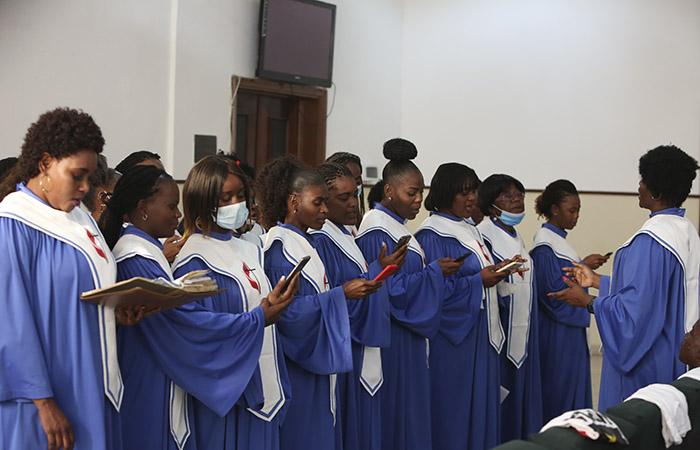
According to Adilson de Almeida, the work of the churches transcends the preaching of the word of God, when they become sectors of employability, creators of social and training programs, promoters of activities for the moralization of society, implementation of projects in the sectors of education , health and agriculture, thus contributing to the development of the communities where they operate.
He referred that in Angola, constituted by a territorial surface of more than one million square kilometres, composed by 18 provinces and 164 municipalities, there are churches that support the communities, but they lack clerical representation in the State institution that watches over the functioning of the religion.
Adilson de Almeida highlighted social action, especially in historic churches, such as the creation of primary schools, universities, health centers, counseling institutions, among other services, which help in the formation of man and which has served as an instrument of churches in actions aimed at the growth and development of the country.
“They have generated human and structural development, even transforming the beauty of the country, with temples characterized by modern architecture that enrich the historical collection, issues that must be included in the protocol of cooperation between the State and the churches”, he emphasized.
The principle of equality, according to the also pastor of the United Methodist Church in Angola, explains that all religious denominations must be treated in the same way, with the same rights and cooperation, allowing the creation of an environment of social peace and preservation of values.
The official recalled that the recognition of churches is done by the Ministry of Justice and Human Rights with the opinion of the Ministry of Culture, through the National Institute of Religious Affairs.
To this end, it is necessary to create the recognition process with more than 60,000 signatures of members, contrary to the previous decree that required 100,000 subscribers, where after confirmation it is sent to the related bodies for authorization of the license to exercise religious activity.
The source clarified that with the creation of the new Law of Religion and Worship of 12/19 of May 14 and the Presidential Decree 51/18, which extinguished the previous Law, a new process was opened, in which INAR is a party and has been working to bring order to the religious phenomenon and to guide the exercise of religious freedom in Angola.
The director noted that since 2019, 97 requests have been made for church recognition and, in this process, only 22 churches have achieved accreditation and four recognition in 2022.
He also clarified that the 22 accredited churches were not prevented from holding services for a provisional period of six months, pending further steps in the process, so that they can continue to hold services.
According to the official, the fact that some churches hold services without registration, without recognition and without a history, makes it difficult to supervise their functioning at country level.
Based on his autonomy, the religious who did not advance values, explained that the set of fees instituted serve to support the churches, and in the past the process was carried out freely and without cost.
The pastor argues that in addition to responding to the various situations imposed by the churches, there is an urgent need to enhance the institution’s human capital, strengthening relations with similar institutes, not only national but also international, to facilitate the training of its staff and promote joint programs.
INAR has 19 employees in its administrative staff, including directors and employees, when the forecast is 128 employees.
For More News And Analysis About Angola Follow Africa-Press