Africa-Press – Angola. According to the deputy director of the National Institute for Tourist Promotion of Angola, tourism represents a privileged vector for reducing poverty and the country’s own growth.
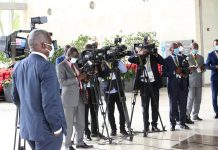
“In the future, tourism could become the equivalent of oil for Angola.” This was stated by the deputy director of the National Institute for Tourist Promotion of Angola (INFOTUR), Nelson Kabenda, during an interview last Saturday, on the 4th, in “Aldeia Camela Amões”, located in the municipality of Cachiungo, in the province of Huambo. During the 4th Tourist and Academic Excursion promoted by the company “Criar Sabendo” in that region, Kabenda, who was one of the speakers at the event, highlighted that The well-known “peace industry” must be seen as a fundamental pillar for economic development and “a source of wealth in the diversification of the economy”.
At the event, with the presence of more than 50 excursionists, coming from Luanda, in his presentation on the theme “Tourism in Angola: perspectives and challenges”, the person responsible highlighted that the sector has the potential to become the next major source of income for the country, generating jobs and strengthening the State’s coffers.
According to the deputy director of the National Institute for Tourist Promotion of Angola, tourism also represents a privileged vector for reducing poverty and the growth of the country itself.
In his opinion, given the peaceful environment that has been enjoyed in Angola for 21 years, tourism should represent the lever for rapid economic growth. He added, in this regard, that the development of the sector in Angola is still embryonic and with few opportunities , especially at the provincial level.
During his speech, he said that “Angola has advantages and opportunities to transform tourism into a strategic sector, capable of boosting economic and social development, in order to protect and enhance environmental resources”.
Nelson Kabenda considered this and other important collateral factors to attract the flow of not only national but also foreign tourists.
Goals to achieve
Nelson Kabenda said, on the other hand, that the main goals to be achieved in the field of tourism necessarily involve placing Angola among the top ten tourist destinations in Africa. “Among these factors, tourism in the country is expected to contribute seven percent of the Gross Domestic Product (GDP) by the year 2030,” he said.
He believes that these are “achievable” goals, as long as greater investments are made in the sector. However, he pointed out that investments today are meager, if the country’s tourism potential is taken into account.
“With well-directed policies and an effectively planned strategy, Angola can truly achieve this goal, valuing its promotion and transforming tourism into a more successful sector”, he said.
Questions and answers
During the question and answer session, tourists António Alberto, Paulo Gamba and Iracelma Madalena expressed concern about the degradation of access roads to the country’s tourist attractions, with emphasis on the Okavango Zambeze Project (Cuando Cubango), Cabo-Ledo (Luanda), among others. The three took the opportunity to appeal to “legal entities to ensure their rehabilitation to boost the promotion of tourism, with the aim of managing wealth for Angola and creating more jobs, especially for youth who are the most affected group due to unemployment.”
The entry of foreign tourists into the country without visas and the principle of proportionality between them and Angolan citizens, traveling abroad, were other issues presented and which also deserved attention during the event.
In turn, the administrator of Aldeia Camela Amões, Armando Cachitoto told, that this is an ideal place for tourism in the Central Plateau region and is highly sought after. “Therefore, our doors are open to any excursionist interested in visiting this place,” he highlighted.
jornaldeangola
For More News And Analysis About Angola Follow Africa-Press