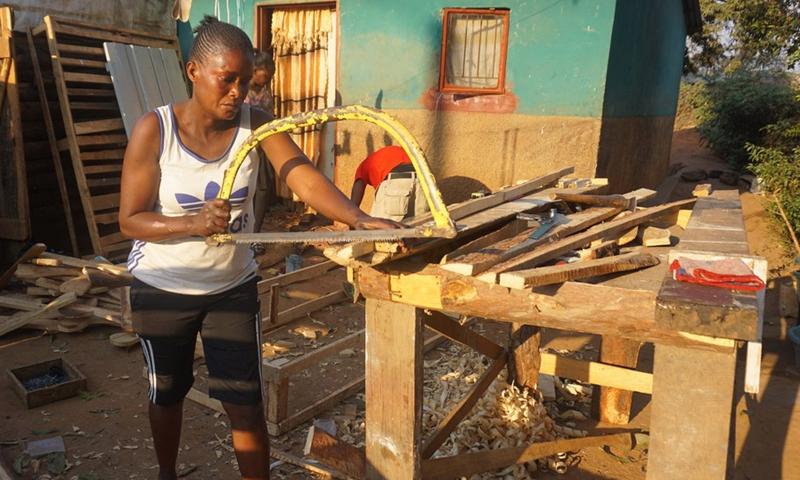
Africa-Press – Angola. Carpentry shop owners, in the city of Sumbe, Cuanza-Sul province, are having difficulties practicing their art due to lack of money to buy raw materials, therefore defending access to bank credit to facilitate activity in the market.
The fact was verified during a round carried out by the report to several carpenters, where among the opportunities they need, the carpenters point out the flexibility of the bank and the contemplation of the programs and projects of the Executive, aimed at the promotion of micro and small companies .
Bank credit
The craftsmen of wood, glue and nails consider that with the opening of the bank for lending, carpenters can carry out their tasks, responding to the needs of the population, but also contributing to the State coffers, through taxes. The artisans were unanimous in stating that, along with other productive sectors, such as agriculture and fisheries, carpentry also generates goods and services, in addition to guaranteeing jobs for young people.
turnover
Marques Jomba José, head of the Funeral Agency “António José Jomba”, explained that with the difficulties they face in accessing bank credits, it becomes difficult to increase the volume of business, complicating the generation of income for the company’s functionality, especially to pay subsidies to employees.”We are in a complicated situation, where production is low, also resulting in low income, and the situation begins to get complicated to the point that one day we close the company”, he highlighted.
Marques José said that he has already knocked on the doors of several bank branches in Sumbe, without finding credit facilities and advocates greater banking flexibility, as a way to encourage jobs that respond to the needs of the population, but also to reduce unemployment within of young people.
“I recently went to a bank branch to sign up for a loan and the answer was that the credits were reserved for the agriculture and fisheries sectors, and imagine how discouraged I was to continue working on art”, he said.
Access to raw material
Another craftsman is Manuel Camilo, who is in charge of Organizações Irmãos Camilo, who pointed out that the main difficulty was access to bank credit for the acquisition of raw materials, such as wood, glue, nails and other equipment.
“We have already knocked on the doors of several bank branches that operate in the region, without a solution, which forces us to reduce staff, in addition to the decline that we have registered, in terms of the quality of the finished product”, he said.
António Fernando, who has been an apprentice carpenter for three years, recognized that the profession of carpenter has brought him a new job opportunity, where he learns the profession and earns some income to satisfy his needs.
“I’ve been in this carpentry shop for three years, and with the little I earn I can contribute to household expenses, and I’m grateful that my father encouraged me to embrace the profession”, he said, appealing to other young people to embrace any profession. that contributes to the insertion in the productive life.
Another claim made by the masters of the press, wood, glue and nail is the cost of transporting wood, from the places of acquisition to their workshops, and they argue that the Executive’s programs should include the transport, not only of products from the field to the markets , but also raw material for small industries.
“The places where wood is purchased are in the interior of the province, which forces us to spend a lot of money just on transport, and this is reflected in the price of the final product sold to customers”, said António Fernando.
expendable materials
As for expendable materials, such as glues and nails, our interlocutor said that this is another difficulty, due to the fact that the local market does not offer the means at compatible prices.
“We also experience another difficulty in obtaining consumable materials, such as glues, nails, paints, varnishes and others, and for that we have to go looking in the markets of the capital or Benguela”, he stressed.
furniture resale
António Fernando made it known that, due to constraints on access to the raw material, which makes it possible to manufacture quality furniture, many carpenters choose to buy furniture already made, from the provinces of Uíge, Cabinda and Zaire, and resell it in the local market. “Many of us stopped making furniture, and opted to buy furniture already made in the provinces of Uíge, Zaire and Cabinda, just so as not to close the doors of the joineries”, he said.
Among the furniture bought in other markets, António Fernando mentioned products such as beds, wardrobes and urns.
According to those responsible for the joineries, the work regime in the joineries involves permanent and contract workers, who are recruited for specific jobs, and there are those who earn by percentage, according to the work they have done.
For More News And Analysis About Angola Follow Africa-Press