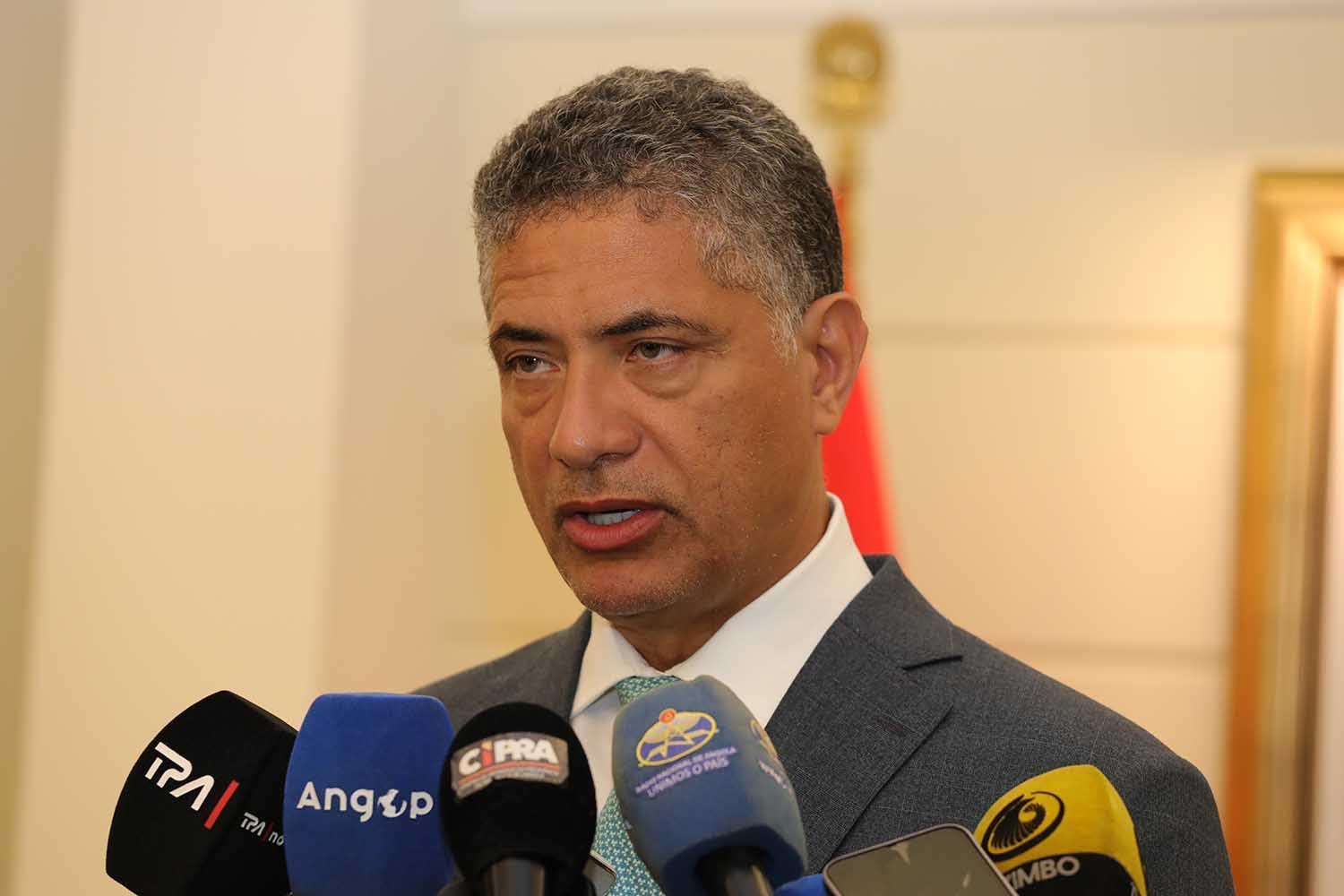
Africa-Press – Angola. The Minister of Energy and Water, João Baptista Borges, stated this Wednesday, in Abu Dhabi, that the challenges for expanding the electricity transmission network are still immense.
“The challenges are still immense given the need to guarantee the expansion of the energy transport network, in order to transport a total of 2 GW of available energy, including its interconnection with other countries, within the framework of international trade intra-African energy sector, in particular with the Republic of Namibia and the Democratic Republic of Congo”, stated the minister.
The person in charge made these considerations when speaking at the official opening of the 14th Assembly of the International Renewable Energy Agency (IRENA), in Abu Dhabi, United Arab Emirates.
João Baptista Borges informed those present that with this, Angola intends to achieve several advantages with the commercialization of surplus energy in the regional market.
Associated with these efforts, he highlighted that the country is undergoing important reforms of its legal framework for the Electricity Sector, such as the creation of the legal regime for Independent Energy Producers. These producers, he continued, enjoy specific privileges, within the scope of current legislation. , acting under a regime of free market competition and having contractual freedom to sell energy to the public electricity sector, through the signing of energy purchase contracts with the market operator.
In this event that runs until Thursday (18), Angola is vice-president together with the Dominican Republic, Georgia and the Republic of Iraq, under the Presidency of Rwanda.
The government official informed those present that Angola has achieved, in recent years, exponential growth in its installed electricity production capacity.
He detailed that the country went, in the last eight years, from 2.4 GW in 2015 to 6.2 GW, with the 39% of hydro generation catapulted to around 60%, thermal generation declined from 61%, in 2015, to around 36% in 2023. This development in the generation matrix was thanks to the completion of the Laúca Hydroelectric Plant, which has a production capacity of 2 GW.
He made it known that the construction of the Caculo-Cabaça Hydroelectric Plant is also underway, which when completed will contribute to achieving the production target of 9 GW.
The minister added that Angola continued the process of restructuring the energy matrix, having completed, in 2022, the Biópio Photovoltaic Plants with around 188.80MW, and Baía Farta with around 96.70 MW, which contribute approximately 4 % of the Public Electrical Production Matrix.
These infrastructures allow for an annual saving of three million tons of fossil fuels and, consequently, a reduction in carbon dioxide emissions of around nine million tons.
The electricity production matrix also includes the first phase of the Caraculo Photovoltaic Plant with around 25 MW, in a project that is expected to reach 50 MW.
According to the official, the Sector’s strategic actions were reflected in an increase in the electrification rate to 43% and a simultaneous decrease in the annual consumption of diesel in thermoelectric plants from 1.36 billion liters in 2015 to around 560 million liters. liters consumed in the year 2023, a decrease of almost 60% in eight years.
The event is discussing, among other topics, “Emerging technologies”, “investments”, “regulatory policies” and “international cooperation to face the challenges of the energy transition”.
For More News And Analysis About Angola Follow Africa-Press