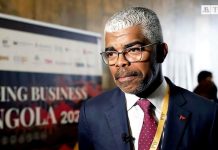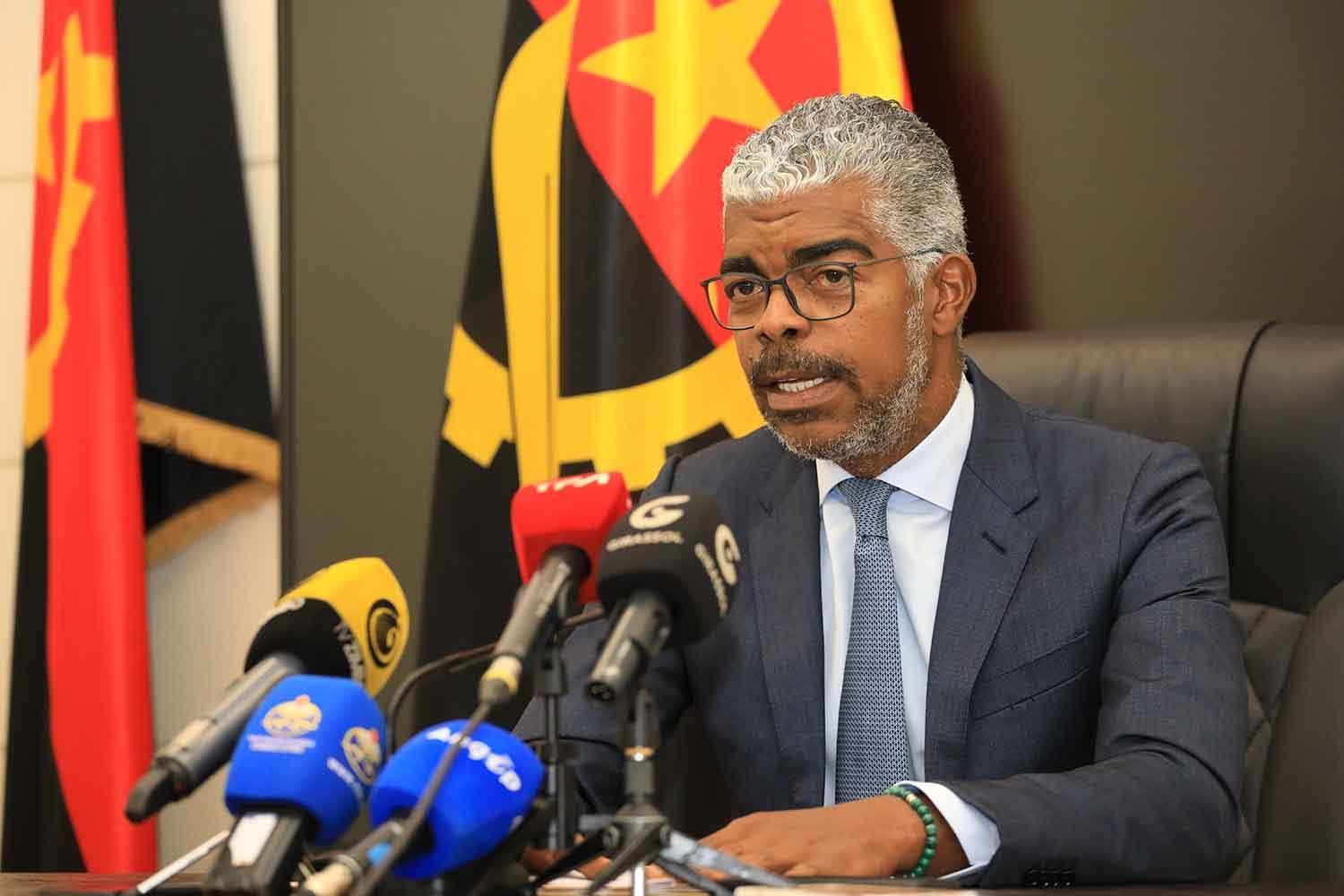
Africa-Press – Angola. The Minister of Transport, Ricardo D’ Abreu, acknowledged in Luanda, that there are some pockets of instability on the continent, for transversal development, especially from the point of view of inter-African trade, pointing out the implementation of commitments as the main challenge that are assumed.
The minister, who spoke as a speaker on the panel “The challenges and opportunities of the interaction of the African continent and the prospects for economic growth”, recalled that the African Union 20/63 agenda is well outlined and establishes principles and goals to be achieved, the which is implemented with great difficulty, efficiently and effectively.
As an example, he pointed to the Single Inter-African Transport Market as an agreement that has serious difficulties in its implementation.
According to the minister, this is a business that can grow, at the level of other regions of the world, from the current 15% to higher levels.
“Obviously we need to remove these barriers and make a commitment, as well as improve trust between institutions in the region to ensure that we can all do it together and not choose other solutions,” he said.
He reminded those present that 70 percent of African air transport is dominated by non-African companies.
For him, the matter of transport and logistics is one of the variables for Africa to overcome the limitation of regional trade, which is why Angola is an important partner and is investing to ensure the supply of large sectors, with the Lobito, Moçâmedes and with the Dr. António Agostinho Neto International Airport, recently opened.
Ricardo D’Abreu urged that the runners serve the continent and not wait for a global agenda.
He added that economies must move from primary product economies to large export values, in order to quickly observe growth and the values of the corridors remain in the region, as independent and sovereign countries.
Ayanda Dlodlo, Executive Director of the World Bank Group for Angola, Nigeria and South Africa, called for investments in project and contract management.
He also stated that improving access to energy will also develop countries and help move from the informal to the formal sector.
Africa currently records around 70 to 80 percent of trade in the informal sector.
Another challenge presented by Ayanda Dlodlo is the financing that needs to be facilitated, within the African continent itself.
Jorge Lombe, vice-president of corporate services at the African Export and Import Bank (Afreximbank), made it known that the bank he represents identifies techniques to capture cross-border trade, with the aim of improving inter-regional trade for greater development .
In his opinion, it is necessary to remove the concentration on primary products and diversify the market.
The Asian continent, he pointed out, is already interested in receiving African products, but what now needs to be done is to boost the regions in Africa.
Another fact he highlighted is that European banks, in terms of projects, assume more risks than African banks themselves.
He considered that the union between African banks is crucial to sustain exchange.
“When a free trade zone is opened, a mechanism for the transaction is needed, which requires funds”, asserted the Cameroonian.
Armando Manuel, member of the Economic Council, focused his approach on the need for countries on the continent, the cradle of humanity, to have more infrastructure and strong institutions, otherwise they will not be fit for development.
He said that the continent has 40 percent of its population young and unemployed, so the success of integration depends on quality infrastructure.
On the other hand, Armando Manuel advocates moving from family farming to commercial agricultural production.
The 3rd edition of the Luanda Biennial takes place in Luanda for three days.
The event, held every two years, aims to debate the culture of peace and non-violence in Africa.
Organized by the Republic of Angola, the United Nations Educational, Cultural and Scientific Organization (Unesco) and the African Union, the event brings together heads of state, government officials and youth from several African countries.
For More News And Analysis About Angola Follow Africa-Press