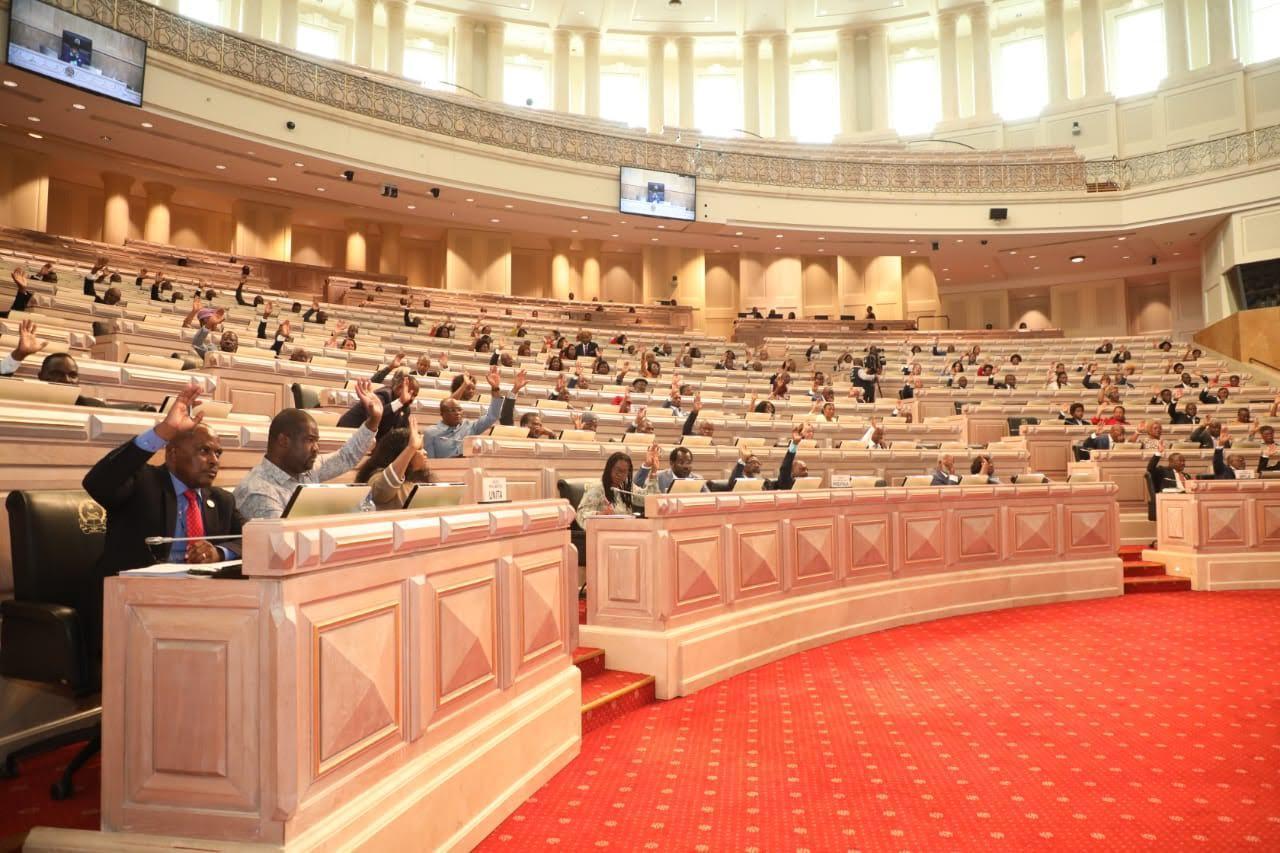
Africa-Press – Angola. The Speaker of the National Assembly (AN), Adão de Almeida, called on Wednesday (29) in Luanda for the reinforcement of public policies, international cooperation, and collective commitment to tackle the impacts of climate change.
Speaking at the opening of the 2nd Parliamentary Conference on the Environment, held under the motto “Climate Action: Responding to Earth’s Signals and Building a Sustainable Future”, he stressed that climate change constitutes one of the greatest challenges nowadays.
Adão de Almeida said that climate change is no longer a future risk but has become a daily reality, with direct consequences on people’s lives.
The official highlighted that extreme phenomena, such as prolonged droughts and catastrophic floods, affect food security, cause family displacement, and generate high economic and social costs.
In this regard, he recalled that Africa remains among the continents most vulnerable to climate change, despite accounting for less than 4% of global greenhouse gas emissions.
He noted that Angola represents only about 0.21% of global emissions, yet it still faces challenges such as droughts, floods, coastal erosion, desertification, and ecosystem degradation.
Adão de Almeida pointed to the Angola Climate and Development Report, published by the World Bank in 2022, explaining that between 2005 and 2017, around 4.5 million people were affected by extreme weather events, causing economic losses estimated at 1.2 billion US dollars.
The AN Speaker highlighted the measures adopted by the Angolan Executive to tackle climate change, among them the approval of the National Climate Change Strategy 2022–2035, aligned with the Paris Agreement.
He also praised projects such as the construction of the Cafu Canal in the province of Cunene and other infrastructure integrated into the Programme to Combat the Effects of Drought in Southern Angola, considering that these initiatives increase community resilience and improve the living conditions of affected populations.
In the energy sector, Adão de Almeida highlighted the progress made by Angola in producing clean energy from hydro and solar sources, reducing greenhouse gas emissions and positioning the country among the African states with the highest proportion of clean energy in domestic consumption.
He also referred to other ongoing initiatives, such as the gradual elimination of routine gas flaring in the petroleum industry, reforestation programmes adapted to different regions of the country, mangrove planting campaigns, biodiversity conservation actions, and the plan for the progressive reduction of single-use plastics.
Adão de Almeida also referred to Angola’s biological wealth, with over 6,000 flora species and around 3,000 fauna species, arguing that this heritage represents a strategic asset for sustainable tourism, the green economy, scientific research, and the creation of green jobs.
However, he advocated deepening dialogue between the State, civil society, and communities, considering that environmental protection depends on the active participation of citizens.
On the international front, he called for the strengthening of environmental multilateralism, the swift availability of the United Nations Loss and Damage Fund, and the facilitation of climate financing and technology transfer to developing countries.
Along the same lines, he touched upon the role of the AN in approving effective environmental legislation and overseeing its implementation, arguing that climate change mitigation and adaptation policies should be treated as priorities in public budgets.
He also advocated strengthening the intervention of the Specialized Working Committee responsible for the environment in monitoring national and international commitments and supervising the application of climate funds.
Adão de Almeida believes that climate change represents both a major challenge and an opportunity to rethink the development model, advocating investments in the green economy, renewable energies, resilient agriculture, forest conservation, biodiversity valorization, and technological innovation.
In this sense, he expressed the expectation that the 2nd Parliamentary Conference on the Environment will produce concrete recommendations, strengthen cooperation between institutions, and contribute to more effective public policies, appealing for joint mobilization in defence of the environment and future generations.