Africa-Press – Angola. The oceanic areas of the CPLP (Community of Portuguese-Speaking Countries) countries, which represent a source of fundamental resources for the sustainable development and economy of these states, particularly for coastal communities, make up 7.5 million square kilometers.
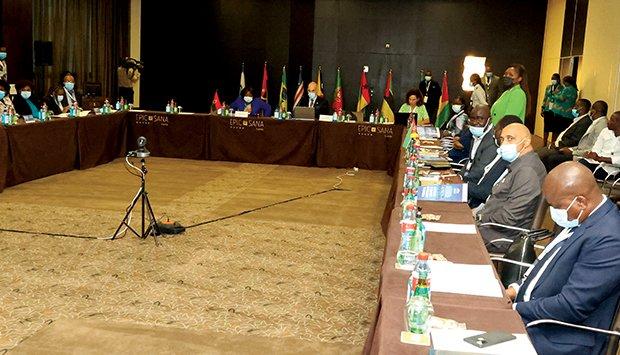
In this context, the Secretary of State for Fisheries, Esperança da Costa, who spoke at the opening of the fifth Meeting of Ministers for Sea Affairs of the CPLP, highlighted that the proper management of resources contributes to the stability of nations and to the strengthening of relations between the countries that make up the CPLP.
“We must develop redoubled efforts, for resilient and inclusive economic growth, with permanent monitoring in the recognition and appreciation of the ocean nexus, climate and biodiversity conservation”, he indicated.
For now, 90 percent of universally traded goods that reach the markets and the final consumer are transported by sea, when, according to the Secretary of State for Fisheries, three million people depend on the oceans for their food, “the relevance of the oceans in the maintenance of human life being visible”.
According to the head of the Fisheries Department, the world recognizes the vital importance of the ocean for living beings, for human survival, which depends on the preservation of these water bodies, which cover about 50 percent of the oxygen that living beings need to to live. The ocean is also responsible for absorbing about 30 percent of greenhouse gases, serving as a buffer to global warming and climate change.
Bearing in mind these aspects and the result of the strong pressure and unbridled exploitation that the oceans are suffering, Esperança da Costa recognizes that the world today faces major global challenges, with emphasis on climate change, exploitation of natural resources, water acidification, decline in biodiversity, loss of habitats, among other elements, that threaten the resilience of the oceans. “These phenomena have a great impact on fisheries and put the sustainability of the economy at risk”, she stressed.
Marine Resources
As for the management of marine resources, Esperança da Costa acknowledged that, with the presence of the Ministers of Sea Affairs of the Community of Portuguese-Speaking Countries in Angola, it is possible, “together”, to find the best measures for the development of the economy of the sea. , based on valuing resources, creating jobs and investing in new technologies and innovation.
Other valences, he highlighted, are the development of digitalization at the service of the maritime economy, from aquaculture to biotechnology, oceanic renewable maritime energies, in addition to mining and nautical tourism, which serve to achieve the well-being of CPLP members.
“No country alone can develop actions aimed at responding to the sustainable development agenda”, acknowledged Esperança da Costa, who highlighted the CPLP as a pioneer in the issue of the oceans, which placed sea affairs on its agenda as a priority.
In turn, the director of CPLP Cooperation, Manuel Clarote Lapão, highlighted that the fifth Meeting of Ministers for Sea Affairs serves to affirm the strategy and geopolitics of the community and member states, for inclusive sustainable development.
In 2010, as he explained, the Ministers of the Sea approved the community strategy for the oceans, an important moment, as sustainable development was introduced as a principle and policy to be followed.
“The ocean is one of the strongest elements identified in the CPLP and constitutes an important source for the sustainable development of the economy, also contributing to the growth of relations between countries”, highlighted Manuel Clarote Lapão.
The fifth Meeting of Ministers for Maritime Affairs of the CPLP will last for three days. It follows the motto “Mobilize partnerships and investments for the sustainable development of the Seas of the CPLP Member States, challenges and opportunities”.
For More News And Analysis About Angola Follow Africa-Press