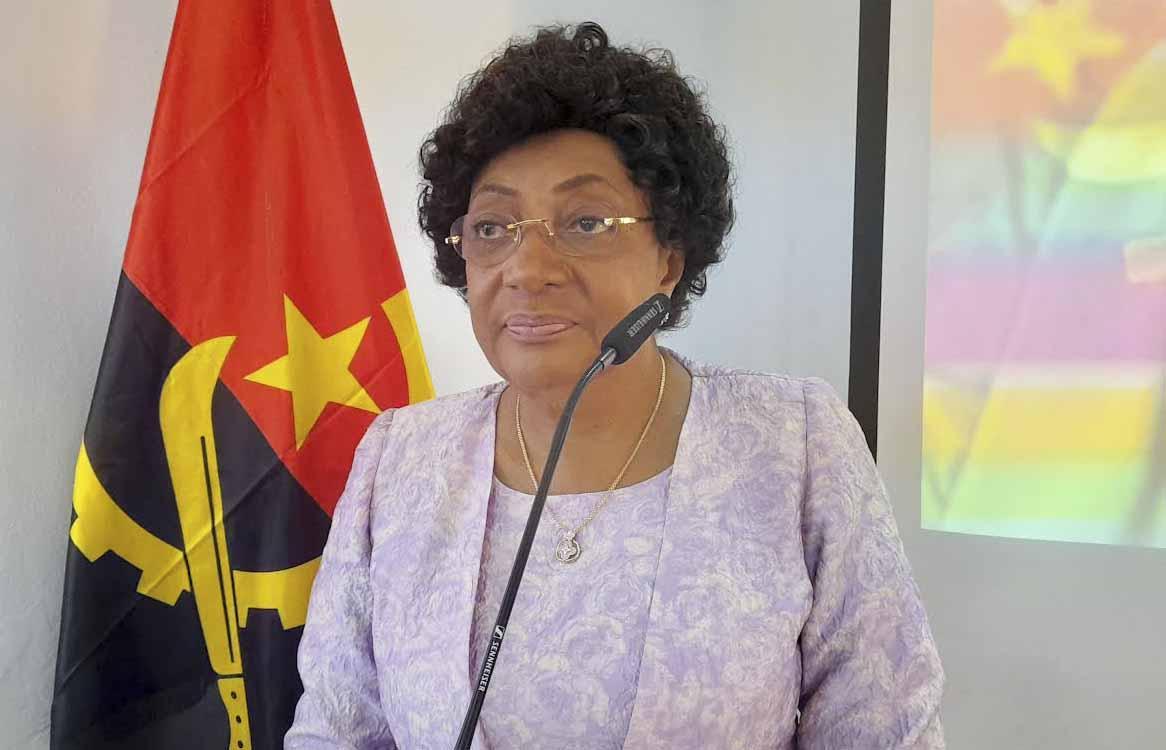
Africa-Press – Angola. Jurists must adopt an ethical stance committed to justice, with awareness of their social responsibilities, recommended, this Thursday, in Luanda, the Justice Ombudsman, Florbela Araújo.
During a lecture on “Ethics, Deontology and Social Expectations of the Jurist”, at the 1st Angolan Congress of Criminal Law, he said that the “jurist must have a critical vision and be in-depth knowledge of his/her social context” and cannot be fooled by the monopoly of State and the law.”
He called on jurists to be the first to denounce any practice of corruption, nepotism, fraud, easy profit, insubordination, influence peddling and others incompatible with ethical and deontological values.
On the other hand, Florbela Araújo pointed to ethics as “the centrifugal force” in the actions of the institution she heads, serving as a basis for achieving the mission and recommended combating the culture of “more or less” in Law.
Among other actions, it advanced the continuous promotion of models of conduct by the Public Administration aimed at employees and administrative agents to guarantee professionalism and urbanity in its relationship with citizens.
He recalled the existence of the Ombudsman’s Code of Ethics and Deontology, approved by Order No. 2/22, of 19 November, which establishes the primacy of “integrity, dedication and humanity” in the relationship between the Ombudsman, and deputy , of the Ombudsman’s employees and administrative agents in their relations with citizens.
Regarding Magistrates and Justice Officers, the Ombudsman noted that “cases of justice officials, sometimes even magistrates” who accept payments or favors, in exchange for speedy processes, are not rare.
Under the motto “The new legal-criminal and judicial reality of Angola – Challenges and Perspectives”, the event included three panels, addressed by 12 other speakers, who spoke about “The New Penal Code and Angolan Penal Process”, “Public Security, Criminality, Rights and Fundamental Freedoms” and the “Justice System in Angola. A vision of Comparative Law in the CPLP”.
For More News And Analysis About Angola Follow Africa-Press