Africa-Press – Angola. Commercial farmers in the Gabela, Kibala and Waku-kungo corridors, beneficiaries of the Commercial Agriculture Development Project (PDAC), consider this initiative to be a structuring means and booster of agribusiness, within the scope of increasing food production in the country.
The PDAC is a project of the Government of Angola that aims to increase agri-food productivity in order to develop and strengthen the agricultural business sector, and has the support of the World Bank and the French Development Agency (AFD).
In the province of Cuanza Sul, this project, promoted by the Ministry of Agriculture and Forestry, has already financed 17 business plans for the cultivation of a global area of 400 hectares, which is expected to harvest more than 900 tons of different products per agricultural season. , over the next five years.
In addition to funding, farmers benefit from cyclical training actions, based on planting techniques, crop rotation, conservation, soil fertilization and, particularly, business management.
For the small and medium-sized entrepreneurs in that region, financed with the entry of the PDAC, the initiative has brought greater and encouraging results in the perspective of an increase in production of more than 500 percent, so far.
Among the training courses, cyclical ones centered on content such as planning, monetizing the cultivation area and agro-food management stand out.
Producers also learn new techniques and the improvement of others that involve several steps, from soil preparation, planting, harvesting, packaging, processing and distribution of products, as determinants for the increase in food production.
Farmers benefited Fazenda Hamba A
This farm is located in the agrarian perimeter of CADÁ, in the commune of Gabela (municipality of Amboím), with 160 hectares, where beans, corn, sweet potatoes and Arabica coffee are produced.
According to Ana Maria de Carvalho, owner of the farm, it benefited from a tractor, plow, harrow and eight million kwanzas for working capital.
With the amount received, explains the farmer, it was possible to restructure the operation of the farm, with the creation of rainfed areas for coffee, silos, improvement of the entire production support structure and, above all, the irrigation system.
The farmer said that these factors are boosting production, as well as improving the quality of the crop.
“Before joining the project, I had a global production of around 2.5 tons for each agricultural season, but at this point I am producing a volume of more than seven tons, for each type of crop, with the expectation of surpassing this in the next harvest. ”, he asserted.
According to Ana de Carvalho, she has planted more than 300,000 coffee trees, but with the help of the PDAC, she built a nursery with more than four thousand seedlings.
For this reason, argues the businesswoman, the PDAC appears as a vector to change the agribusiness framework of small and medium-sized producers in the province.
Precious Farm
Farmer António Loureiro, ex-military and owner of Fazenda Preciosa, with 95 hectares, produces Arabica coffee in five hectares and Robusta coffee in another 25 hectares. From this production he expects to harvest one ton per hectare.
However, the farmer had his business plan approved and financed by the DPAC, which allowed him to obtain a complete tractor worth 17 million kwanzas, which will help to raise the coffee cultivation fields, from 30 to 80 hectares. until 2025.
Epandi Farm
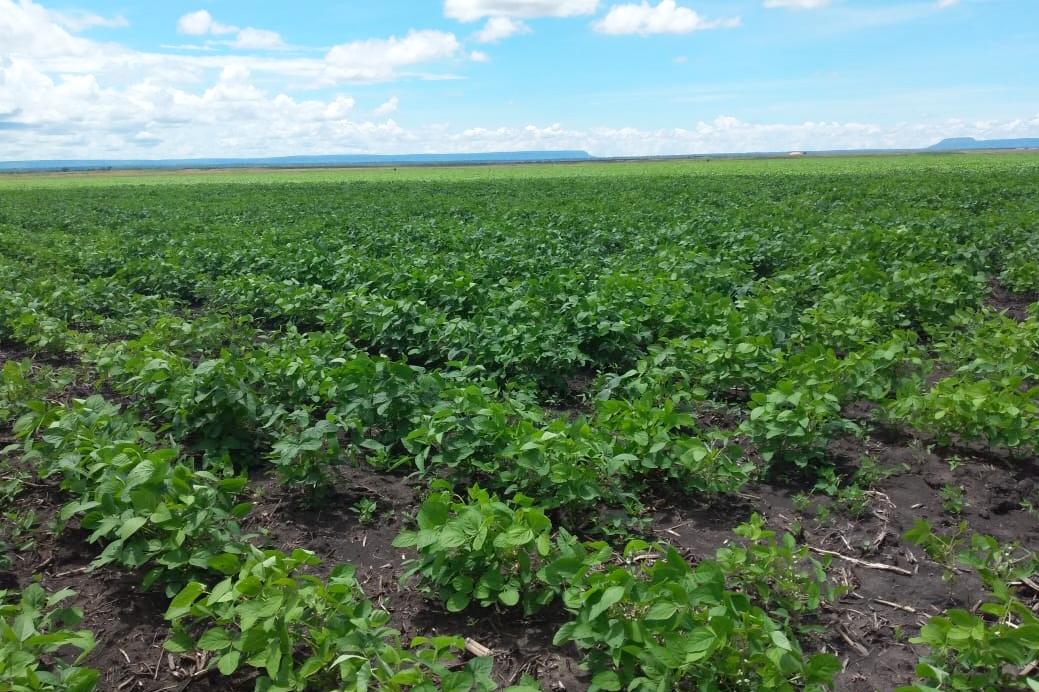
This farm, located in Kibala, in the Catofe area, is installed in an area of 460 hectares, with a cultivation space of 260, where maize, beans and soybeans are planted, as well as a small portion of garlic.
According to the project director, Oseias Bonga, in partnership with the PDAC, the farm also benefited from global financing in the amount of 391 million kwanzas, a value that is allowing the mass cultivation of grains, in order to make production more profitable.
The financing is making it possible to restructure the farm, with the purchase of four pivots (irrigation system), dryers, seeders and the construction of barns.
On the other hand, the PDAC experience brought to the farm new techniques and skills to work the land, a fact that is allowing better results for the second soybean crop, with the efficiency of one ton per hectare with the expectation of collecting three tons per hectare. hectare in the next agricultural season.
According to the manager, after the partnership with the PDAC, the farm began to harvest between six and seven tons per hectare, and from now on the farm will plant corn for two harvests per year.
Therefore, from this time onwards, the farm will produce seven tons of corn per hectare, five tons of soybeans per hectare and three tons of garlic per hectare. The other big bet is garlic cultivation.
Dira Agricultural Farm
In production since 2005, it occupies an area of 493 hectares and is focused on the cultivation of maize, reindeer potatoes and soybeans, as well as vegetables. In the field of livestock, it is dedicated to pig farming, goats, dairy cows and beef cattle.
In recent years, it has grown maize in a space of 32 hectares, but with the PDAC this area has grown to 120 hectares of maize production, with a removal of six tons per hectare.
This fact is the result, said the farm manager, Damilton António, of the funding from the PDAC and the bank in the amount of 206 million kwanzas, which enabled the purchase of a tractor, four seeders in line, two irrigation systems, as well as allowed the increase in manpower.
As part of the partnership with the PDAC, the farmer hopes it will be extended to other provinces in the country.
However, the manager asks the PDAC to resize some terms of the financing agreement, since at the time the financial plans are submitted, market prices were at a level, now there is a substantial change, with the rise in prices.
“The prices of seeds and equipment in 2020 are no longer the same. Therefore, we ask the PDAC to renegotiate the reimbursement terms”, he argued.
Tingã Limited Agricultural Farm
Focused on the production of beans, soybeans, corn and reindeer potatoes. For cultivation, 447 hectares are prepared.
According to the farm’s administrator, Aníbal João, a project is under way to expand the cultivation space to increase the volume for its production, estimated at 28 tons, to levels above 300 tons.
In this sense, the fields are being cleaned, the soils improved with limestone, as they will receive new plantations.
To this end, it received funding from the Commercial Agriculture Development Project (PDAC) of 42.5 million kwanzas, invested in equipment and a tractor, plow, harrow, seeder and a generator.
The financed business plan foresees, for the next season, the planting of 30 hectares of maize, 20 hectares of soybeans and 10 hectares of reindeer potatoes.
Regarding the partnership with the PDAC, Aníbal João considers it crucial to leverage national production, in particular agribusiness, combined with technical and professional training, which are contributing to improving the development of agricultural fields.
Provincial Project Directorate
The project coordinator in the province of Cuanza Sul, Margarida João de Almeida, said that around four million euros financed the 17 business plans in Cuanza Sul.
During a visit to verify the funded projects, the person in charge considered the implementation of the PDAC, in the province, a success, despite any constraints resulting from the process.
The project has promoted three to four trainings annually, with a focus on the production of grains, coffee, accounting, as well as the production plan, as indispensable tools for the development of agriculture.
The coordinator explained that of the financed amount, 50% is from the PDAC, 40% comes from commercial banking and the remaining 10 from the proponent.
According to the official, the beneficiaries of the project have improved their techniques, developed other production skills and with that the levels desired by the Angolan government have been achieved.
However, the official points out the slowness in the process of providing funding, as a strangling factor in the chain of the agricultural production process.
The project manager in the province said that, at the moment, more than 400 plans have been submitted to the PDAC and are undergoing procedural evaluation.
Inside
The Commercial Agriculture Development Project (PDAC) is an initiative of the Government of Angola, approved in 2018. It entered into force in December 2020 and aims to develop and strengthen the agricultural business sector, in partnership with the support of the World Bank and of the French Development Agency (AFD).
It covers actors within priority value chains, qualified farmers and Small and Medium Agribusiness Entrepreneurs who benefit from direct financial support, technical assistance, co-financing of investments and partial credit guarantees.
The national dimension project, at this stage, is being developed in the provinces of Malanje, Cuanza Norte, Cuanza Sul, Huambo, Bié and Huíla, whose value chain is centered on the production of maize, beans, soybeans, coffee, cassava, sweet potato and reindeer potato.
In livestock, the production of eggs and chickens includes the value chains selected as a priority.
For More News And Analysis About Angola Follow Africa-Press