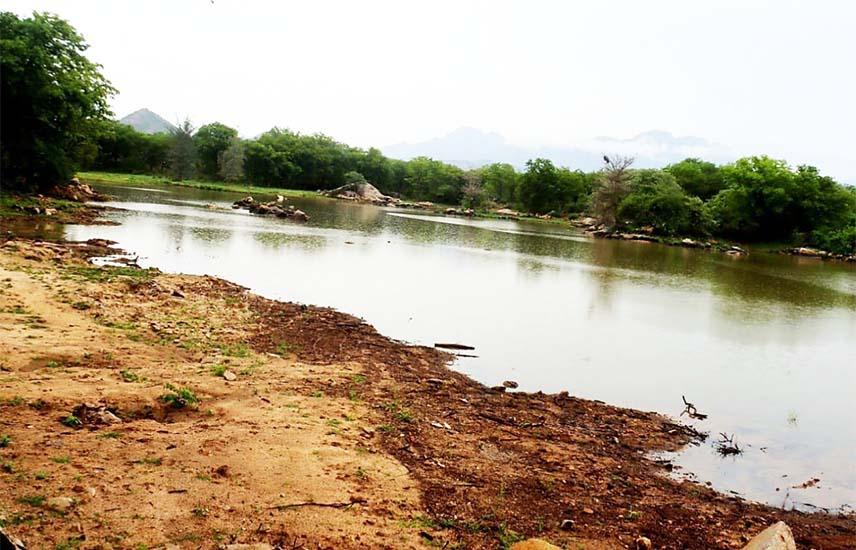
Africa-Press – Angola. The inhabitants of the town of Tchissanguela, municipality of Bibala, province of Namibe, mostly peasants and animal breeders, already feel the benefits of the water retention basin rehabilitated under the Integrated Plan of Intervention in Municipalities (PIIM).
The retention basin with a capacity to store more than 40 thousand cubic meters of water and located on the transhumance line,.
The basin is allowing the population to settle, facilitating the development of agricultural activity with the production of large quantities of vegetables and cereals, as well as the domestication of animals such as cattle, goats and poultry.
The municipal administrator of Bibala, Luzia Arcanjo, said that the municipality will recover the title of the largest granary in the province, which it won in the 1990s, as the basin can store water for a period of five years.
For better management of this basin, the administrator said that the local administration, in partnership with the agriculture sector, carries out capacity-building training with operators in the agricultural and livestock sector, to ensure good levels of production.
“After a period of severe drought, the location currently has a water retention basin that will boost agricultural production as well as reduce transhumance,” he said.
Without advancing the amounts used in this endeavor, the administrator also stated that the hydrographic basin in question is part of the rehabilitation project for the three dams located in the Municipality of Bibala.
At this time, it is the largest owner of cattle with more than five hundred thousand head.
The municipality of Camucuio was awarded 13 PIIM projects, 10 of which have already been completed, linked to the education, health, housing, water and basic sanitation sectors.
The municipality is 188 kilometers north of Namibe province and has more than fifty thousand inhabitants, mostly peasants and animal breeders.
For More News And Analysis About Angola Follow Africa-Press