Africa-Press – Angola. The Head of State, João Lourenço, asked the National Electoral Commission (CNE) for an opinion on the creation of conditions for the holding of the general elections, scheduled for next August, informed the Minister of State and Head of Civil House of the President of the Republic.
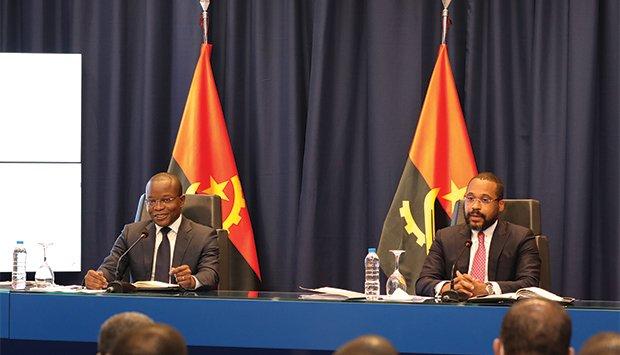
Adão de Almeida, who provided the information at a press conference, said that the act of requesting an opinion, by the President of the Republic, is a necessary procedure for the convening of the upcoming election. The Minister of State previously presided over the clarification meeting, between the Executive and the political parties with parliamentary seats, on the Unofficial Electoral Registration process and the period for complaints.
On the occasion, Adão de Almeida also announced that the Head of State had approved funding of 80,240,340 kzs for each of the 11 legally existing political parties, which makes a total of 882,643,740 kwanzas. This amount, according to the minister, has to do with extraordinary funding, and not with funding for the election campaign. For, he continued, “the Law on the Financing of Political Parties defines, for the election year, extraordinary funding, which must be granted to all political parties.”
As for the funding for the electoral campaign, the Minister of State and head of the Civil House of the President of the Republic, Adão de Almeida, said that it will be defined after the approval of the candidacies by the Constitutional Court. The resources were approved with an indication so that the competent body of the Executive, in this case the Ministry of Finance, can execute them immediately. He added that the information was shared with the political parties, which were asked, for due purposes, to interact with the relevant channels.
Adão de Almeida underlined that the responsibilities of the Executive, in general, are being fulfilled in a rigorous, punctual and correct way. “The Executive Power is fully complying with all its responsibilities, with regard to the Electoral Registry”, specified the Minister of State.
Before the call for elections, he said, it is necessary for institutions to have access to the data. “A kind of doubt was introduced in the public space about the fact that the Executive shared provisional data with the CNE, and the latter, in turn, with the Constitutional Court. If this does not happen, it is not possible to organize elections within the constitutional deadlines.” “, clarified the minister, having mentioned, on the occasion, that elections must be called, under the terms of the Constitution, up to 90 days before the end of the mandate”.
He considered the demand made by opposition political parties to post lists of senior citizens eligible to vote “unfounded, as it was made in light of laws that are no longer in force.”
“The Electoral Registration process, in the terms in which it is carried out today, has a constitutional basis. In this, article 107, of the revised Constitution of 2021, defines the Official Electoral Registration. This principle was already in the 2010 Constitution, but it is the first time that it is operational”, explained the Minister of State.
He made it known, by the way, that this transformation in the process is understandable, despite not having been rigorously understood by everyone, since there are opinions that do not fit the vision of the Official Electoral Registry and, more than that, because of the same based on outdated legislation, therefore already revoked.
In the Official Electoral Register, he explained, “there is a sharing of data between the Ministry of Justice and Human Rights, which holds the Civil Identification database, containing the registration of citizens for the issuance of the Identity Card, sharing these data with the Ministry of Territorial Administration, which in turn owns the Senior Citizens database.
“This means that registration is not carried out in person. When the Ministry of Justice shares data with the MAT, it is from there that information is obtained from Angolan citizens who are able to exercise their right to vote”, stressed Adão de Almeida.
“I mean, from the outset, the total number of citizens able to vote in the 2022 electoral process is equal to the number of all citizens who have registered for the vote until 2017, plus citizens over 18 years of age, who now enter to vote. the database via the Identity Card, plus citizens who registered for the first time, particularly in areas of difficult access”.
For the Minister of State and Chief of Staff of the President of the Republic, the repealed Law on Electoral Registration required the exposure of copies of data to Municipal Administrations, and it is on the basis of this Law that political parties are making demands. “Because the law in force requires the publication of data, just so that each citizen, individually, can consult their data. What is being done is in better conditions than the previous law, which the opposition political parties are wanting”, he underlined.
Suspicions Aabout The Origin Of More Than 14 Million Records
When clarifying the misunderstanding that has been raised about the more than 14 million citizens listed in the Senior Citizens database, the Minister of State said that the situation cannot be seen in the logic of the Face-to-Face Registration, but in the Logic of Official Registration. He stressed that all citizens, who are in the Identity Card database, are automatically transferred to the Electoral Register of Senior Citizens database. This fact, he said, “has also been introduced into public opinion in an unfounded way”.
Overseas Registration Covered 12 Countries
The Minister of Territory Administration, who also participated in the press conference, at the Press Center of the President of the Republic (CIPRA), highlighted that the Electoral Registration, in the diaspora, was carried out in 12 countries, namely South Africa, Germany , Belgium, Brazil, France, Great Britain, Namibia, the Netherlands, Portugal, DRC, Republic of Congo and Zambia.
Marcy Lopes justified carrying out the Electoral Registration in the 12 countries for various reasons, such as the restrictions registered in the fight against the Covid-19 pandemic. “We concentrate the teams in the countries where the resident Angolan community is larger”, said the minister Marcy Lopes, adding that the attempts to move teams to other countries were not successful, “because we were not able to circumvent and comply with the prevention and fight against Covid-19, because they are too strict”. As an example, he pointed to China that, at the time, required a 21-day quarantine, adding another eight that made up almost 30 days. “Displacing teams to do the Electoral Registration in countries with similar measures would be an exercise with almost no results”, concluded Marcy Lopes.
Political Parties Defend A Climate Of Peace And Concord
After the meeting, the MPLA vice-president, Luísa Damião, highlighted the responsibility of political parties to work towards the electoral and civic education of potential voters.
Luísa Damião, who made the statements to the press, after the meeting between the Executive and the political parties with parliamentary seats, said that “political forces have a responsibility to pass this message on”, and, for that, they need to be well informed, with credible data, to provide useful information to voters.
The MPLA, he said, wants the elections to take place in an orderly, peaceful and harmonious way, “and in this everyone must contribute”. , must give way to others, but this one served to dispel misunderstandings and eliminate possible suspicions regarding the process”.
The politician considered that the meeting was fruitful, “because it made it possible to clarify issues such as, for example, the posting of the lists of the Senior Citizens”.
UNITA’s commitment is to continue to appeal to people to maintain peace and create a harmonious environment. “If on the one hand, at the institutional level, we must dissipate all forms of suspicion, on the other hand, at the society level, in general, we must avoid an atmosphere of tension. Manuel Fernandes, president of CASA-CE, defended a transparent process , of respect for the Law and the principles of democracy in the process itself. The meeting, he acknowledged, “was positive and dialogue should be the great remedy for this process, which we intend to be a true celebration of unity and reconciliation for Angolans”. Rui Malopa, from the Social Renewal Party (PRS), said that the fact that registration in the diaspora did not cover all countries harms his party.
The president of the FNLA, Nimi a Nsimbi, said that the elections should not constitute reasons to divide the Angolans. “Dialogue is therapy, and through it we can overcome many problems that concern political forces and Angolans”, he concluded.
For More News And Analysis About Angola Follow Africa-Press