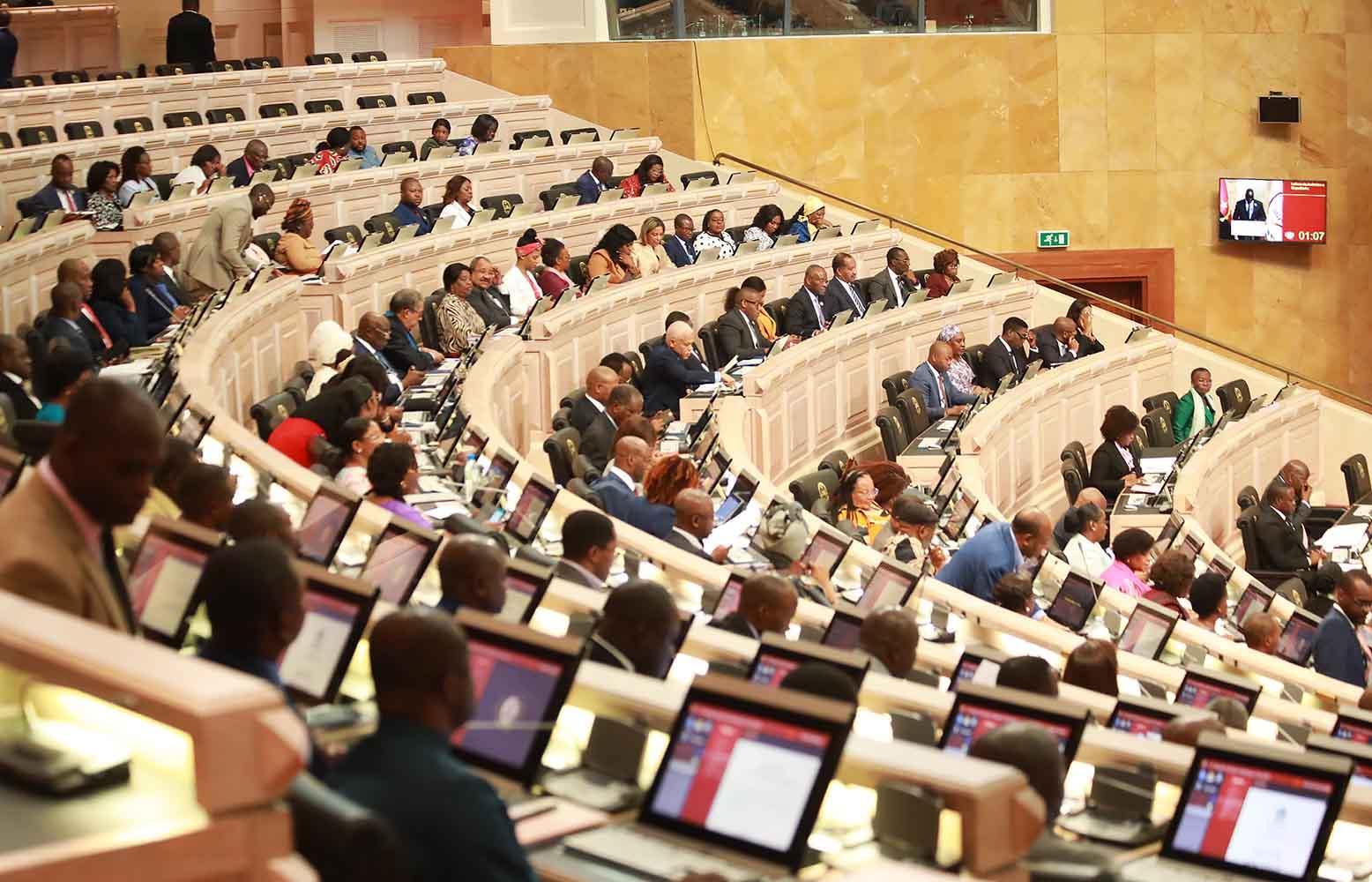
Africa-Press – Angola. Members of the National Assembly (AN) unanimously approved, in general terms, the proposed amendment to the Domestic Violence Law on Thursday.
Initiated by the President, the proposal, approved during the 3rd Extraordinary Plenary Meeting of the 4th Legislative Session of the 5th Legislature, seeks, broadly speaking, to make it easier for legal practitioners to classify specific crimes at the time of trial, to expedite the processing of such cases, and to create a more robust and effective system for combating domestic violence.
It also aims to restore public confidence in state bodies that administer justice and to strengthen measures for the protection against and prevention of domestic violence.
More specifically, the bill seeks to expand and update the legal definition of domestic violence and to address potential gaps or omissions by incorporating new classifications, thereby covering all forms of violence within family, intimate, and domestic relationships.
The instrument, intended to replace Law No. 25/11 of July 14 (in force for 16 years), also aims, among other things, to implement measures ensuring the effective enforcement of sentences, as well as protection measures and integrated support for victims.
The law also provides for the establishment of monitoring and evaluation mechanisms, utilizing the collection and dissemination of statistical data, alongside systems for the ongoing tracking and assessment of the implementation of legal measures, with the goal of monitoring key indicators.
Furthermore, the instrument aims to harmonize the domestic violence law with the Penal Code and the Code of Criminal Procedure.
Explanation of vote
MPLA MP Elisandra Wassuca deemed the amendment to the Law timely, noting that it strengthens victim protection, broadens the scope of the definition of domestic violence, and aligns Angola with best practices and the international treaties the country has ratified.
In her explanation of vote, she challenged the narrative that domestic violence is a strictly private family matter, arguing instead that it is a struggle that must be addressed by everyone.
Meanwhile, UNITA MP Clarice Mukinda explained her vote in favor by citing the need to improve the legislation during the specialized committee review stage; she noted that the current Law is out of step with reality and the rising number of domestic violence cases.
She advocated for a Law that inspires and engages other sectors and institutions in the country regarding civic education and the creation of material conditions to alleviate the hardships faced by many families—hardships that lie at the root of domestic violence.