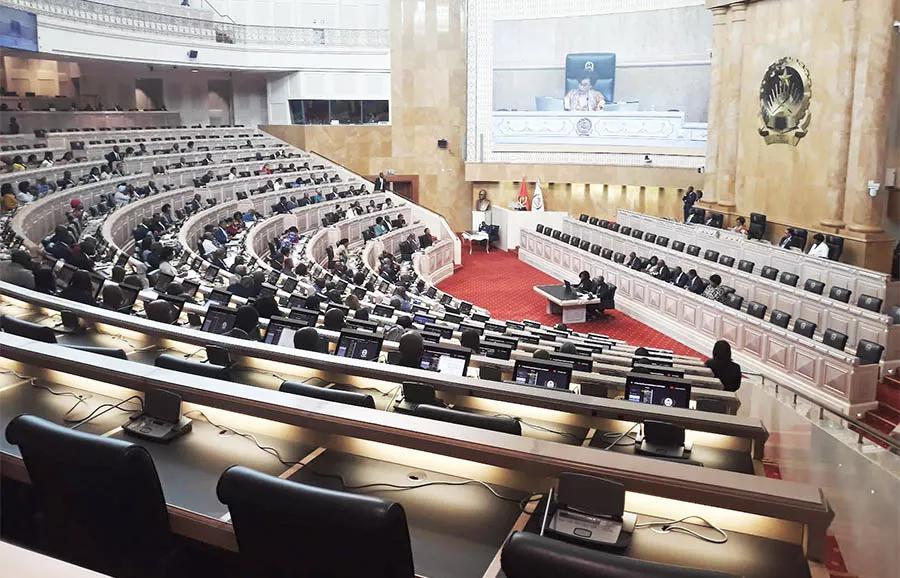
Africa-Press – Angola. The proposed Law on Startups, approved in general terms by parliament on Thursday (19), aims to establish a specific legal framework for the recognition, certification, incentives, and supervision of innovative companies in Angola.
In presenting the legislation, the minister of Industry and Commerce, Rui Miguêns, said that the document aims to boost the digital economy, foster skilled employment, and strengthen national competitiveness.
He stated that in the country’s current economic context, there is an emergence of new players, particularly technology-based companies characterized by scalable business models and high growth potential.
According to the minister, this phenomenon follows the dynamics of the global market, where entrepreneurs seek to meet the demands of domestic and international markets with solutions increasingly based on technological innovation.
He stated that the proposal underscores the role of startups in boosting productive activity, mainly in emerging markets, by contributing to job creation, wealth generation, and strengthening competitiveness, elements considered essential for sustainable development.
Rui Miguêns explained that the initiative also highlights the importance of the progressive integration of the informal sector into the formal economy through technological processes, which could broaden the tax base and promote greater economic inclusion.
To fill the existing legislative gap, he stressed that the proposal establishes a specific legal framework adapted to the reality of startups, distinct from the regime applicable to micro, small, and medium-sized enterprises.
Among the main goals, he pointed out, are the creation of legal security for innovative companies, the encouragement of technological entrepreneurship, and the alignment of Angola with international practices for promoting innovation.
In practical terms, the law provides for the creation of its own legal regime, the introduction of the startup seal and the pre-seed for early-stage projects, as well as the definition of tax and financial incentives and appropriate financing mechanisms, such as pre-seed (early stage of fundraising), seed, and Series A.
He noted that the document also defines the organization of the ecosystem, with the creation of the National Startup Council, the operation of certifying entities, and the allocation of supervisory, oversight, and inspection powers.
In the area of transparency, the legislation establishes the obligation of annual reports, monitoring mechanisms, the application of sanctions, and the publication of information on the startup environment.
The proposal, according to the Minister of Industry and Commerce, also clarifies the distinction between startups and micro, small, and medium-sized enterprises.
While the former law are based on technological innovation, with scalable models and a global vocation, the latter maintain a traditional profile, with gradual growth and a focus on the local market.
According to the Executive’s proposal, the National Institute for Support to Micro, Small and Medium Enterprises (INAPEM) should assume the role of certifying entity, while the National Council of Startups will function as a technical support body for the sector.
With the approval of the decree, the Government hopes to stimulate the emergence of more startups, increase investment in innovation and consolidate the development of the digital economy in the country.