Africa-Press – Angola. Administrator of Quipungo, José dos Santos Vital, reiterated Tuesday, in this city, the need for rehabilitation of the municipality’s three main dams, to guarantee resilience to drought, security and food rights.
These are the Sendi, Chicungo and Quipungo dams, the first of which, under the Calonga River, is located 48 kilometers northwest of the municipality and has the capacity to store 9.5 million cubic meters of water.
The second, Chicungo, supported by the river with the same name, has a capacity to accumulate 6.3 million cubic meters, 45 kilometers west of the municipality, in a municipality that is characterized by having agricultural and livestock potential throughout its territorial extension.
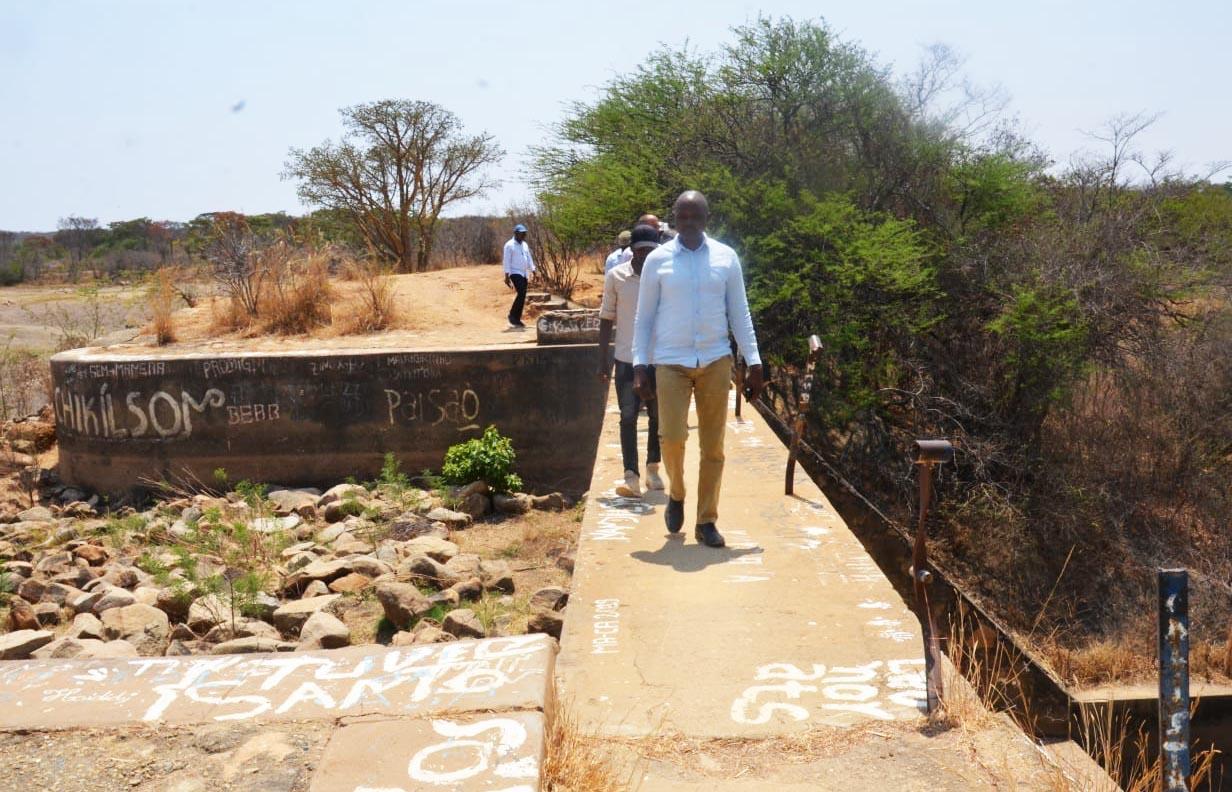
The last one, Quipungo, 700 meters long, is located one kilometer from the municipal town, under the Calonga River, its reservoir has the capacity to store 8.2 million cubic meters of water. The three influence an area of at least 51 thousand 180 hectares.
The three were built in the 1960s, due to the variability of rainfall between different rainy seasons, in order to guarantee the water supply at the municipal headquarters, as well as to ensure and promote the practice of horticultural activities, fishing and watering of the cattle.
Wednesday, in this city, the local administrator, José dos Santos Vital, stated that the full functioning of the dams constitutes the basis for the development of the municipality’s potential, agriculture and livestock farming, generating growth in populations.
He said that the dams were “destroyed” due to lack of maintenance and management, as for a long time it was not defined who was responsible for controlling these hydraulic structures, associated with the advanced erosion process they were already suffering and heavy rains recorded in 2019.
He added that the rains washed away “immense quantities” of grass and sticks, which covered the surface spillways, forcing the water to break the embankment of the Sendi dam, which was already suffering from severe erosion, as a result of which the Quipungo dam could not withstand the amount of water coming from it. of the Sêndi reservoir and also gave way.
He made it known that since the 1960s, the Sêndi dam had only one intervention considered “palliative” in 2013 and the Chicunco dam had its channel rehabilitated in 2020, but its dam needs to be desilted, while the Quipungo dam has never been reinhabited as such.
The losses highlighted the loss of capacity to store water in sufficient volumes to supply the population of the headquarters and outskirts, as well as in the population’s rudimentary water systems (cacimba) causing a deficit in the water table.
“We also had a drastic reduction in the fishing potential of the reservoirs, which was once a source of attraction for artisanal fishing, discouraging individual fishermen and those organized in cooperatives, as well as irrigated and even rainfed agricultural activities becoming inoperative, due to the scarcity of water caused due to the drought”, he continued.
He reinforced that studies have already been carried out on the three infrastructures and possibly from next year they will be able to begin the rehabilitation of the Sêndi dam, with financing from the World Bank, as it constitutes the municipality’s circular route, connecting Quipungo from north to south.
Recovery will relaunch agriculture and fishing for more than eight thousand families
The rehabilitation of the dams, according to the source, will allow the relaunch of agricultural, livestock and fishing activities for eight thousand and 117 peasants, organized into associations and cooperatives.
As an example, he said that in the Quipungo dam, artisanal fishing activity allowed approximately 288 tons of fish/year to be allocated to the market, with forecasts estimated at a revenue volume of 96 million kwanzas.
In the fruit and vegetable sector, the availability of water allowed horticulturists to manage 200 hectares of land, which could therefore only make available more than 40 thousand tons of various products/year, with forecasts of a volume of revenue transacted in billions and as for the The dam alone watered 14,500 livestock.
He stressed that if cattle watering is guaranteed, agro-pastoral populations will no longer carry out forced transhumance to other municipalities, such as Jamba and Matala, which has forced at least seven thousand pastoralists to take long walks, sometimes without rest, sacrificing their family and debiting the herds.
“The unavailability of water in dams has forced breeders to abandon their farms in search of other opportunities in other municipalities and, often frustratingly, due to social conflicts, caused by disappointments that place them in the condition of beggars, making them, in a certain way, vulnerable”, he lamented.
Rehabilitation will guarantee water supply to the municipal headquarters
The specific demand to supply the municipal headquarters is currently set at 100 cubic meters/hour, the capacity of the reservoir before the dam collapse was 150 cubic meters/hour and the current catchment capacity after the collapse is five cubic meters/hour .
He highlighted that the only system for capturing, treating, storing and distributing water at the municipal headquarters is through a well integrated into these dams as a single source through drains, but depending on the scenario in which we live, there is a loss in water capture. of water of 147 cubic meters/hour, an amount higher than the specific demand of the municipality, which is 100 cubic meters/hour.
With the rehabilitation of these dams, combined with a new water system under construction in the municipality, within the scope of the Integrated Plan for Intervention in Municipalities, it was reported that they will have a source capable of supplying over 250 cubic meters/hour, sufficient to supply the 47 thousand inhabitants of the city. municipal headquarters.
José dos Santos Vital stated that in addition to these dams guaranteeing a sustainable source of water, they are also attractive structures for tourism in the municipality, despite the exile, as their rehabilitation could encourage tourism and guarantee jobs in the region.
He said that the reservoirs were home to a great diversity of migratory birds, coming from many parts of Africa, establishing an ecological relationship between birds and fish that directly benefits fishermen in terms of the quality and size of the fish.
He mentioned that such birds, in addition to being fish consumers, feed on insects and their permanence implies a reduction in producers’ expenses, as it reduces the purchase of agricultural pesticides and minimizes the application of these toxic substances in terrestrial and aquatic ecosystems, and in systems underground water supply.
“These dams have already hosted numerous national and international fishing championships. For this reason and more, they represent one of the most important cultural heritages of the residents”, he recalled.
Quipungo is 120 kilometers away, east of the city of Lubango, occupies a territorial extension estimated at five thousand 675 square kilometers and has an estimated population of 208 thousand 820 inhabitants, according to projections by the National Statistics Institute.
The municipality is limited to the North by Cacula and Caluquembe, to the East by Matala, to the South by Gambos and to the West by Lubango. It has five communes that await official recognition, namely the headquarters, Chicungo, Tchiconco, Hombo and Cainda.
angop
For More News And Analysis About Angola Follow Africa-Press