Africa-Press – Angola. The Community of Portuguese-Speaking Countries (CPLP) concluded the ratification of the Mobility Agreement by all member states, after Equatorial Guinea ended the process last week, announced the Portuguese-speaking organization.
According to a note published on the community’s official website, the permanent representative of Equatorial Guinea to the CPLP, Tito Mba Ada, was received by the executive secretary, Zacarias da Costa, last Thursday “to deposit the instrument of ratification by the Equatorial Guinea of the Agreement on Mobility between CPLP Member States”, signed on July 17, 2021, in Luanda.
With the ratification by Malabo, this process is completed by the nine member states of the organization.
On the 24th, Zacarias da Costa warned of the need to create a significantly more favorable framework for the movement of people between Member States. “The conclusion of this agreement is not the final stage of the process, but the starting point for the creation of a significantly more favorable framework, the movement of people”.
The executive secretary of the CPLP said that the agreement should “now be implemented through the adaptation of internal legislation and through the conclusion of a series of other complementary agreements”.
The parliaments of the nine member countries of the CPLP “will thus be called upon again and several times to give their indispensable contribution to the construction of a CPLP which is, without a doubt, a community of States and which also seeks to assert itself, each time more, as a community of people”, added Zacarias da Costa, when speaking at the solemn opening session of the XI Parliamentary Assembly of the CPLP.
The Mobility Agreement establishes a “cooperation framework” between all Member States in a “flexible and variable” way and, in practice, covers any citizen.
States are provided with a range of solutions that allow them to assume “commitments arising from mobility in a progressive manner and with different levels of integration”, taking into account their own internal specificities, in their political, social and administrative dimensions.
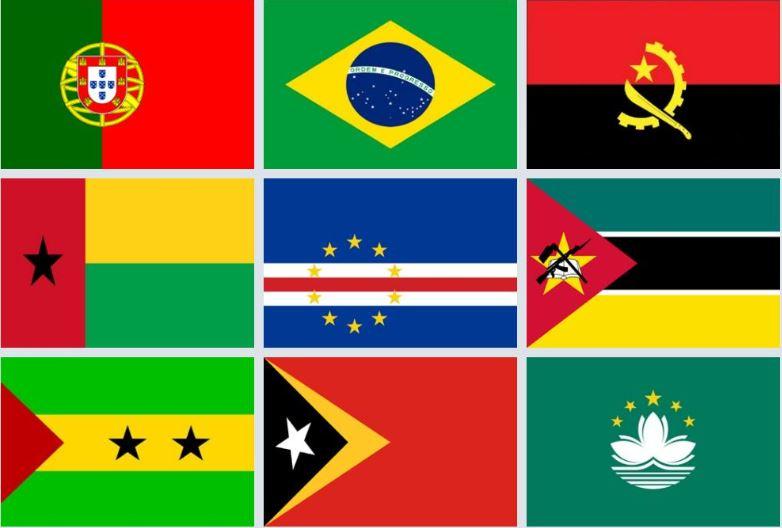
The CPLP includes Angola, Brazil, Cape Verde, Guinea-Bissau, Equatorial Guinea, Mozambique, Portugal, São Tomé and Príncipe and Timor-Leste.
On the 30th of October, the new regime for the entry of immigrants into Portugal came into force, which provides for the facilitation of the issuance of visas for CPLP citizens, within the scope of the Agreement on Mobility between Member States.
According to the decree, citizens of the Community of Portuguese-Speaking Countries can obtain a visa to seek work or a CPLP residence visa, being exempt from presenting valid travel insurance, proof of means of subsistence, copy of the return ticket and in person presentation to apply for a visa.
Community priority axis
Angola, which holds the presidency of the CPLP, deposited, in June this year, at the organisation’s headquarters, the Letter of Ratification of the Mobility Agreement.
On the occasion, the executive secretary of the CPLP, Zacarias da Costa, rejoiced with the initiative, remembering that only Equatorial Guinea was left to do so.
The Ministry of Foreign Affairs considered, in a press release, that “mobility is a priority axis of the CPLP that is part of the Angolan Presidency Program, as it is essential for the materialization of the new general objective of the CPLP”, which is “Cooperation Economic”, a commitment made at the Luanda Summit.
In the statement, Minister Téte António highlights that the Agreement on Mobility “will act as a catalyst in the various sectors, namely Education, Higher Education, Health, Gender and Women’s Empowerment, Commerce and Industry, Culture, Environment, Tourism, Defense and Security, Scientific Research, Technology and Innovation, with a view to increasing the value of its human and natural resources”.
The agreement establishes a “cooperation framework” between all Member States in a “flexible and variable” way and, in practice, covers any citizen.
For More News And Analysis About Angola Follow Africa-Press