Africa-Press – Angola. The director of the Provincial Office for Integrated Economic Development of Benguela, Samuel Maleze, defended, in this city, the inversion of the dominance of commerce by expatriates, in favor of national businesspeople.
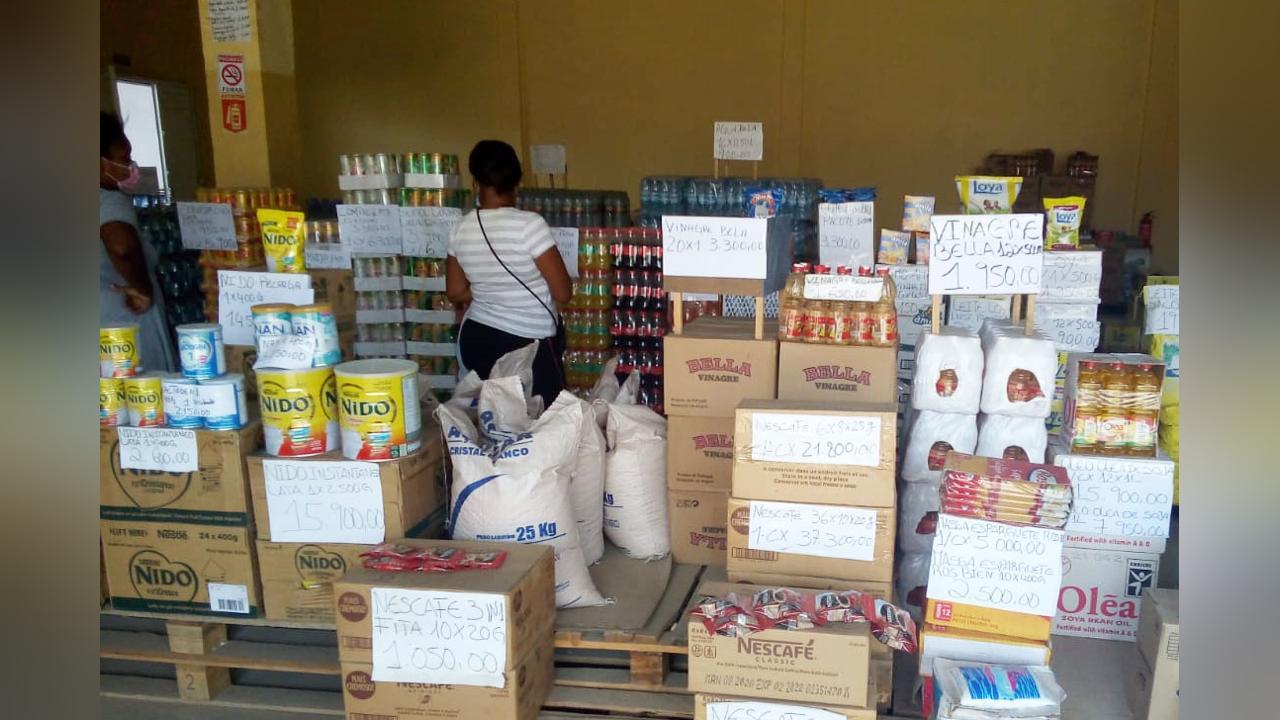
Speaking at a meeting with journalists, Samuel Maleze acknowledged that there is a large presence of expatriates who saw wholesale and retail trade, and small industry, especially bakeries, as a great opportunity to make a profit.
He compared the attitude of domestic and foreign retail traders, as well as their prosperity.
According to the director, while the expatriate trades until the last customer, the national closes the door at 6pm, encouraging informal commerce in the so-called “night squares”.
“They are united, they created a network to supply goods in all stores across the country”, he assured.
Most national businesspeople, said Samuel Maleze, prefer to rent their facilities, including licenses, which is illegal, and expect a monthly income.
He recalled, however, that the Executive has created financing mechanisms for the Angolan business community, through Notice 10, from the National Bank of Angola, the Action Plan for the Promotion of Employability (PAPE), the Angolan Venture Capital Active Fund ( FACRA) and others.
“Today, fortunately, we already have national entities re-entering the bread business”, he revealed.
Still in this segment, he stressed that there is a large market, as there are municipalities in the province of Benguela that have only one bakery, or none at all, as is the case of Chongoroi.
To reverse the situation, he stated that it was necessary to raise awareness among people and reorganize the commercial network, with strong intervention from supervisory bodies.
Regarding the prices of products in general, he recognized that they are rising day after day.
“Knowing the weak purchasing power of Angolans, expatriates are placing a profit margin of 50 to 100 kwanzas in line with their compatriots, remaining in a comfortable position”, he considered.
As for Congolese neighbors who arrive in the country to buy beans in advance, inflating prices, he said that the solution is for financiers to support national producers.
“They claim that they buy the product to sell in Praça do 30, in Luanda, but they go beyond it and take it to their borders. However, the bodies of the Ministry of Commerce and Industry are already working to stop this problem”, he explained.
The director also spoke about the issue of rural exodus, where peasants want to come to big cities thinking it is the best place to live.
“They forget that they have arable land, water and that the Government supports them with seeds, fertilizers and motor pumps for agricultural promotion”, he explained.
Regarding this aspect, he gave the example of young people who sell their possessions to buy a motorbike and do motorcycle taxi work, aiming for easy profit.
“The reversal of this situation involves looking at internal production”, defended the director.
Samuel Maleze also spoke about the ” Nosso Super ” commercial network in the province, which passed to the private sector, within the scope of the Privatization Program (PROPRIV).
“The Lobito unit was acquired by POMOBEL, while in Benguela, the tender was won by a group that will soon open its doors”, he pointed out.
The Provincial Office for Integrated Economic Development is a support service for the Government of Benguela, whose task is to manage public policies in the Industry, Commerce, Mineral Resources sector, with the component of petroleum derivatives, the Promotion of Employment and Business Development.
For More News And Analysis About Angola Follow Africa-Press