Africa-Press – Angola. On its initial route, it circulated through Cidade Alta, Luanda Provincial Government (GPL), Main Military Hospital, Luanda Popular Fair, Luanda International Fair (FILDA), Viana and Calumbo. There was also the line that extended from M’Bungo (Baixa de Luanda) to Funda (Cacuaco).
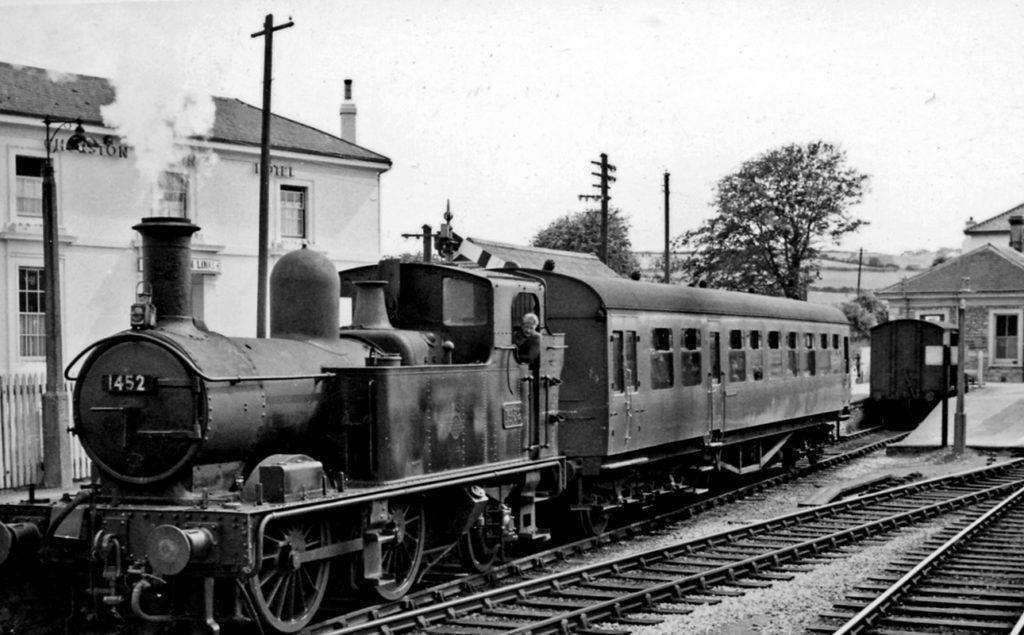
The history of trains in Luanda began to be written on October 31, 1888, with the then Ambaca Railway, predecessor of the Luanda Railway. The first section of railway line was 50 kilometers long and connected Luanda station to Funda station. Thus, in the distant year of 1888, railway circulation began in Angola.
In the 19th century, Luanda was a peaceful city with around 15 thousand inhabitants, of which three thousand were Europeans. The year was 1885 and the newspaper “Futuro de Angola”, published simultaneously in Portuguese and in the national language Kimbundu, printed on the cover, in bold letters, the beginning of construction of the railway line in Luanda.
Three years later, that is, in 1888, the first section of the Ambaca Railway was inaugurated, the route leaving Luanda to the town of Funda, currently the municipality of Cacuaco, over a length of 45 kilometers. The railway network expanded rapidly in the following years.
The Ambaca Railway Central Station was installed in M’Bungo, where the CFL headquarters are still located today. During the construction of the railway line from M’Bungo to Funda station, the story goes, a bridge named Mãe Isabel was built, which currently separates the main M’Bungo station from Bairro da Boavista.
From M’Bungo, the train went to Maianga Station, whose objective was to serve employees and residents located in Cidade Alta. On the way, towards Maianga Station, the locomotives crossed a nearby baroque bridge, where, years later, the Colégio de São José do Cluny was built.
General director and fake engineer
Alves dos Reis, then director of the Ambaca Railway, starred in one of the memorable shows in the company’s history. Holder of a “forged diploma”, which qualified him as a machine engineer, he managed to be admitted to the position of director of the Ambaca Railway.
The renowned entrepreneur, at the time, decided to carry out profound renovations on the Ambaca Railway, the purpose of which was to modernize, expand and replace the existing locomotives with new, state-of-the-art American model ones.
The changes made by the “false engineer” provoked strong protests from railway employees. Some experts in the matter disagreed with the train’s intention to cross over the bridge, as this structure could not support the weight of the locomotives, a suggestion promptly rejected by Alves dos Reis.
On the day scheduled for the inauguration, as a protest, the train drivers from the Ambaca Railway Company refused to work. Sustaining the reforms, the then director challenged the employees and put their technical knowledge into practice, taking on the task of train driver.
At the helm of the locomotive, in the company of his wife and daughter, Alves dos Reis accelerated and, at high speed, crossed the bridge under the perplexed gaze of hundreds of subordinates and the population who joined the inaugural event. The “false engineer”, surprisingly, overturned the contrary opinions of the most skeptical.
The twinkling train tracks came to life. Since that date, trains have gained momentum and new perspectives. Around 1885 and 1886, the workshops were built, located in front of the Luanda Central Station, which served until 1918, the end of the First World War and later, in 1975, the Luanda Railway.
Navy and overseas project
The history of the birth of the Luanda Railway dates back to August 5, 1873, when the Portuguese Minister of the Navy and Overseas, João de Andrade, ordered the General Government of Angola to produce a public transport project for the colony (province of Angola).
In 1873, on December 9, a Decree was published that approved a contract between the colonial government and the group of partners that constituted the company and that would proceed with the “construction and exploration of a railway line between Luanda and Ambaca – Dondo” .
On July 16, 1885, after 12 years, a law was published that authorized the Government to award the work, proceeding with the opening of the competition, construction and operation of the Railway. In September 1885, a contract was drawn up with Alexandre Peres, who was obliged to form a company.
It was through this contract that the Companhia Real do Caminho-de-Ferro de África emerged, whose statutes were drawn up in the city of Porto, Portugal. The location chosen for laying the construction stone was the square adjacent to the Nossa Senhora da Nazaré Church, in the Mutamba area.
The tombstone or plaque, from this memorable act of the Luanda Railway, can be seen on the front of the main building of M’Bungo Station or Bungo, as it is currently called.
In an act that surprised everyone and everything, the Government Gazette published, on July 13, 1918, Decree number 4600, which guided the transfer of the Ambaca Railway to the management of the Portuguese colonial authorities. Thus, the Luanda Railway was born.
The exploration of 504 kilometers included Malanje and another 31 km, of the Golungo Alto branch (Cuanza-Norte), with the route between Km 5 and Catete, being made through Vale do Bengo. Luanda’s railway network expanded very quickly in later years. The 52 km bypass was created, between Zenza do Itombe and Luinha, in 1931.
On May 28, 1944, the ribbon was cut between the town of Dondo and the town of Cassoalala. In 1900, the train arrived in the Lucala region, CuanzaNorte province, and, in 1908, in the city of Malanje.
General Workshops: the Heart
The General Workshops are considered, by CFL employees, as the “heart” of the company, as they are the center and management of the equipment that makes up the trains. The old workshops, which dated from the period of their construction, in 1886-1888, located on the perimeter of Luanda Central Station (M ‘Bungo), they were deactivated in 1957.
Under the guidance of the Ministry of Overseas, a contract was signed with the senior inspector of Public Works, engineer Vasco Ramalho, for the preparation of the Official Plan of the State Railways, in the province of Angola. Thus, on May 28, 1957, the new general workshops were born, at Estação dos Musseques (Tunga Ngó).
It is from there that, every day, CFL locomotives are inspected before activities. The CFL General Workshops are made up of 7 warehouses, divided into carpentry, foundry, power plant and small mechanics sections. They comprise the technical park, warehouses, wheeled shed, technical and administrative services, changing rooms, changing rooms, canteens and toilets.
jornaldeangola
For More News And Analysis About Angola Follow Africa-Press