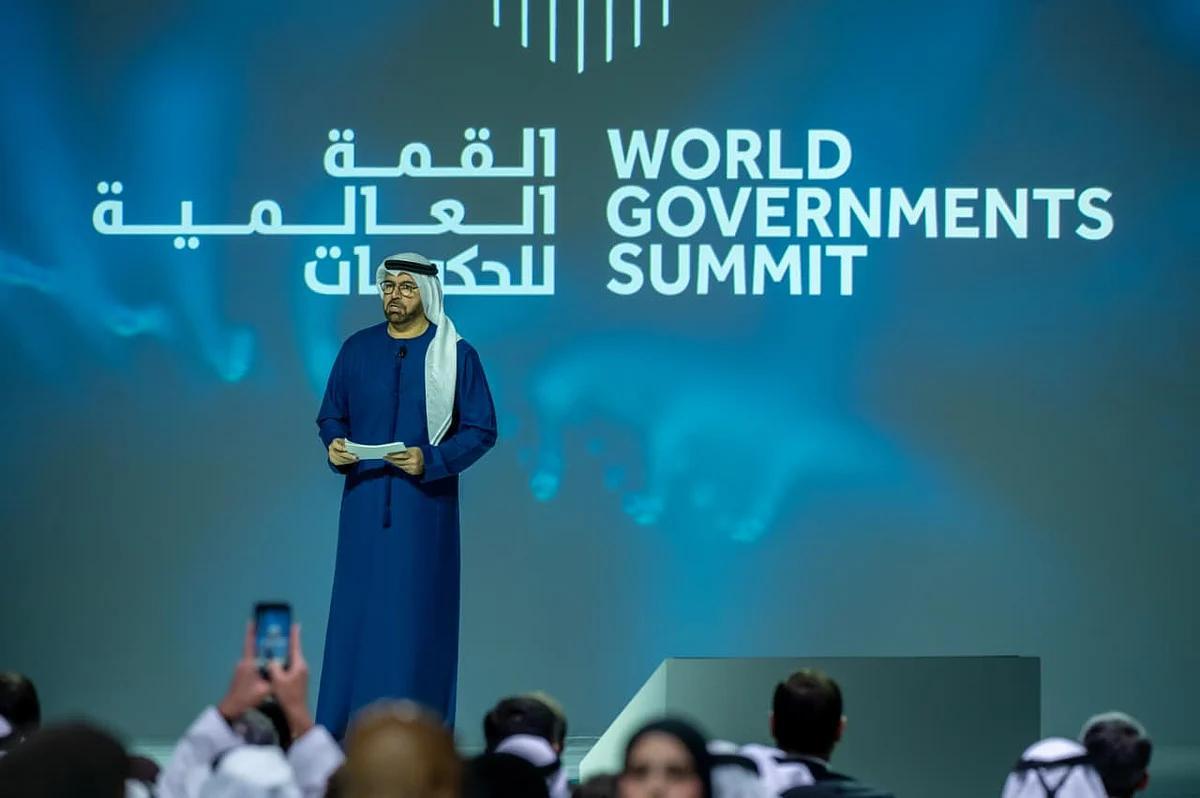
Africa-Press – Angola. The United Arab Emirates invited on Tuesday in Dubai, governments around the world to redesign how they operate in order to address “a new reality and a new humanity.”
This challenge was announced at the opening of the World Government Summit (WGS), which runs until Thursday to discuss the future of government.
According to Mohammad Al Gergawi, UAE Minister of State for Council of Ministers Affairs and chairman of the WGS organizing committee, there are currently four forces rapidly redefining the world.
Al Gergawi identified these forces as artificial intelligence, advanced medicine, neuroscience, and digital environments. Together, they have caused a shift in not only technology, but also human evolution itself.
Al Gergawi underscored that governments are currently dealing with “Generation Z,” who were raised in an era of instant access and constant connectivity. By 2040, he predicted, Generation Z will represent 40% of the global workforce.
“After every revolution, there has been a redefinition of government. The question today is, ‘Are governments designed for the man of tomorrow or the man of yesterday?’” he asked.
The UAE official urged world leaders to move beyond bureaucracy and focus on designing the future, underlining that the history shows that some governments adapt and lead while others lag behind.
He considers this new era a “historic opportunity” for governments to redefine themselves, bearing in mind that “the first and true role is to serve humanity.”
Regarding advanced medicine as a second force, particularly genomics and early disease detection, Al Gergawi stated that falling genomic sequencing costs and predictive health advances may allow for the identification of diseases before birth.
He said this result would extend not only life expectancy, but also quality of life and that these changes will reshape labor markets, pension systems, and social policies.
The Emirati leader also discussed neuroscience, which has the potential to transform learning and human capacity. Technologies such as neural implants already enable participants in experimental tests to control devices using brain signals.
The rise of digital environments appears as the fourth force in his taxonomy, with more than 5.5 billion people now connected online. He noted that humans have transformed from living in small villages into inhabitants of a large, borderless world in, which the interconnected world has altered identity, attention, and social behavior, with individuals maintaining multiple digital personas on different platforms.
“These environments are creating a different mindset,” he said, raising questions about how governments should respond to citizens whose lives are increasingly shaped by virtual spaces.
For More News And Analysis About Angola Follow Africa-Press