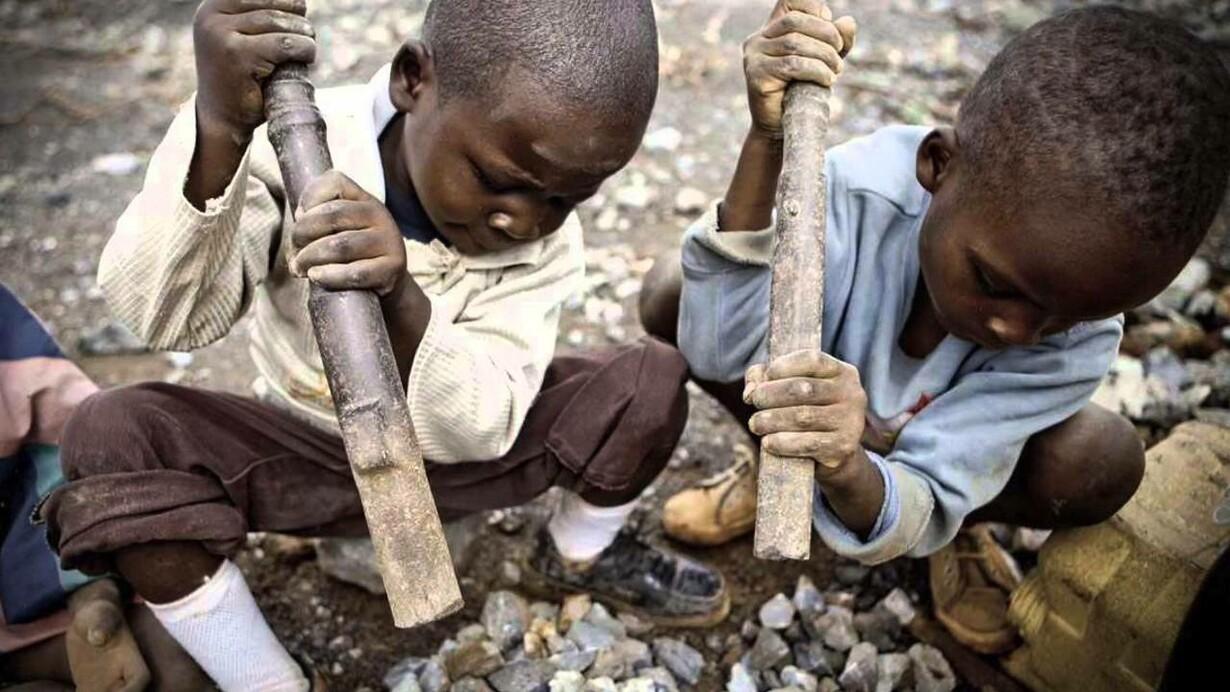
Africa-Press – Angola. The number of children exposed to child labor in the city of Uíge has grown in the last two years, due to the economic difficulties faced by some families. There are countless minors who are forced by their family members, under threat of aggression, to ask for money and food on the street.
The little ones, aged between 5 and 16, usually stay near commercial establishments, where they ask for food or money to buy basic necessities and school supplies.
Pedro, a 10-year-old boy, is an orphan of both father and mother and currently lives with a grandmother in the Kakiuia neighbourhood. He told Jornal de Angola that he does not study because his grandmother, who has vision problems, does not have the means to buy school supplies, clothes and shoes. unit by unit opposite the Shoprite supermarket.
“If I don’t come here to beg for alms then I’ll go hungry all day. My parents send me to sell food from the countryside and when I don’t accept they beat me. I’d rather run away and beg for alms than stay at home than beat me. they give money and food,” said another 14-year-old teenager.
Francisco, whose surname was purposely suppressed, said that there are days when he goes home with 3,000 or 4,000 kwanzas, enough, in his opinion, to solve some of his concerns, a routine he has been doing for a year under the influence of other boys, which you came across in the vicinity of the aforementioned commercial establishment.
Afonso José is a 12-year-old boy, born in Mbanza Kongo, the capital of the neighboring province of Zaire. He came to live in Uíge brought by his mother, together with two brothers. “They study but I dropped out last year, when I was studying 3rd grade at Paco’s school. My mother sells tomatoes in the market square”, he said.
The little one, assuming what he does, reiterated that “my mother sells but I like to spend the day on the street asking for food and money to buy my things”.
Betinho is 16 years old and lives with his stepmother in the Kixicongo neighborhood. He is fatherless. He revealed that his stepmother does not let him into the house on certain days, which leads him to spend the night in the bathroom in the backyard, where he also keeps his things. Betinho, whose first name is Alberto, dropped out of school in 2016 when he was in 5th grade, spending most of his time on the street since then “to get something to eat and wear”. Bungo. “My mother doesn’t know about the situation I’m going through and maybe she doesn’t know either that my father is dead. There are people who can help me contact my mother to come get me, but they don’t. And I have no way of reaching her,” said the boy.
Joana, a 13-year-old girl, sells clothes, which she receives from adults, at zunga (street sales). At the end of the day they pay you some money. This routine is usually done during the vacation period, because she studies the 5th grade. Joaninha, as she is called within the family, lives with her parents, but takes advantage of the holidays to sell and get money to buy her own things.
INAC reaction
Faced with the situation, the acting head of the provincial service of the National Institute for Children (INAC), José Domingos, said that there is a plan to combat exposure and child labour, which is carried out jointly with the municipal administrations, the National Police and other sectors. He added that awareness-raising has been carried out in informal markets and neighborhoods, focusing on the consequences of violating children’s rights.
“INAC is aware of the situation that many children have been going through, which is a phenomenon that is seen daily in the Uigen society, with the number of children exposed to forced labor increasing considerably”, said the official, who added: “Most of the children involved in child labor are those who live with their stepfathers, stepmothers, or even with grandparents and parents in conditions of poverty”.
José Domingos said that there were still cases of evasion of paternity and of accusations against minors for alleged practice of witchcraft, with the accused being expelled from the house. Many children in these conditions are children of parents who do not work and are unable to bring anything home, so minor children are forced “to do certain jobs” to help support their families, said José Domingos, relying on allegations of some of these minors.
For More News And Analysis About Angola Follow Africa-Press