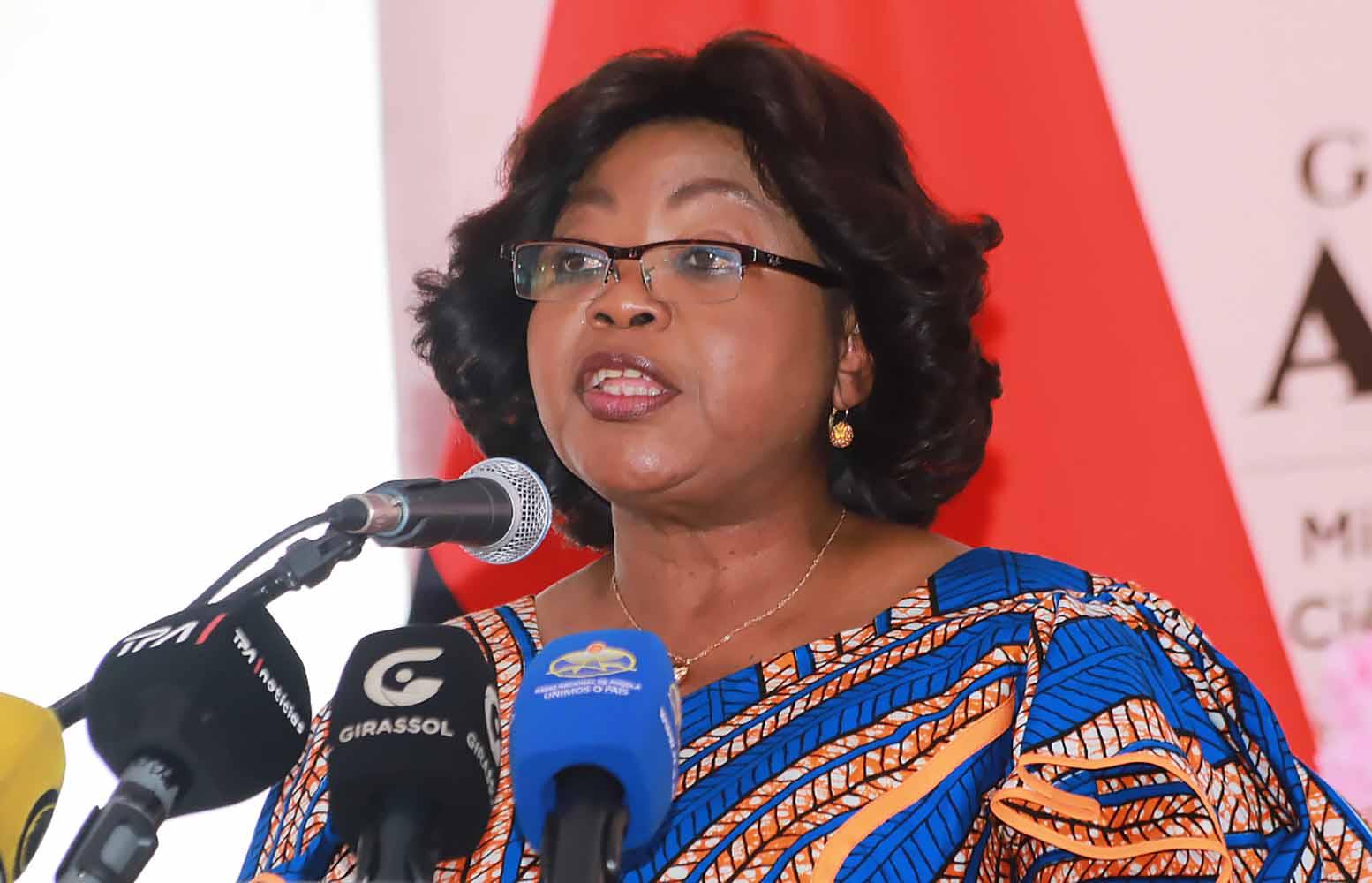
Africa-Press – Angola. The Vice-President of the Republic, Esperança da Costa, highlighted, this Wednesday, in Luanda, the role of women in social, economic and political development in the country.
According to the Vice-President, who was speaking at the opening of the Women and Young Women in Science Dialogue Forum in Angola, the Executive has developed actions to empower young people and women for science, highlighting, among others, the Science and Technology Development Project , with the allocation of scholarships.
He added that, within the scope of the project run by the Ministry of Higher Education, Science, Technology and Innovation, 55 percent of scholarships for postgraduate studies and funding for the development of scientific research projects must be allocated to women, starting from assumption that they meet the application criteria.
For Esperança da Costa, reflecting on women and science necessarily implies contextualizing graduate and post-graduate academic training, especially a doctorate, as it is a degree that requires greater application in the search for more specialized knowledge.
“In Angola, the exponential increase in the university student population that has been observed, especially since 2009, has also been accompanied by a greater number of women attending higher education. In 2019, the percentage of women was 46%, with emphasis on the fact that academic achievement records reveal a slightly higher annual approval rate among women”, he stressed.
However, Esperança da Costa added, statistics show that at postgraduate level there is a large decrease in the participation of women, who represent only 24% of students at this level of training.
According to Esperança da Costa, despite the progress registered with the increase in the frequency of women in higher education, this does not translate into a greater presence of women in scientific research.
He added that the low percentage of women in postgraduate courses in Angola, around 24%, led to the carrying out of a “Diagnostic study on inclusion and access to postgraduate training that is more sensitive to gender and vulnerable groups in Angola” developed in 2021 and 2022, under the Higher Education Support Program (UNI.AO).
It is, he said, a study whose general objective is to understand the internal and external brakes and obstacles, for a better social inclusion of vulnerable groups at postgraduate level and progression in the teaching career.
Esperança da Costa made it known that this study demonstrated that of the various constraints identified by women in continuing their studies, in addition to financial and logistical issues, barriers were identified based on sociocultural and institutional factors.
The study in question also serves to demonstrate the Executive’s concern with identifying the barriers that maintain gender disparity in science, for decision-making, policy formulation and implementation of measures to overcome such barriers.
Alluding to “Março Mulher” and the International Day of Women and Girls in Science, celebrated on the 11th of February, the forum aims to promote the concertation of ideas, through the sharing of information and experiences.
For More News And Analysis About Angola Follow Africa-Press