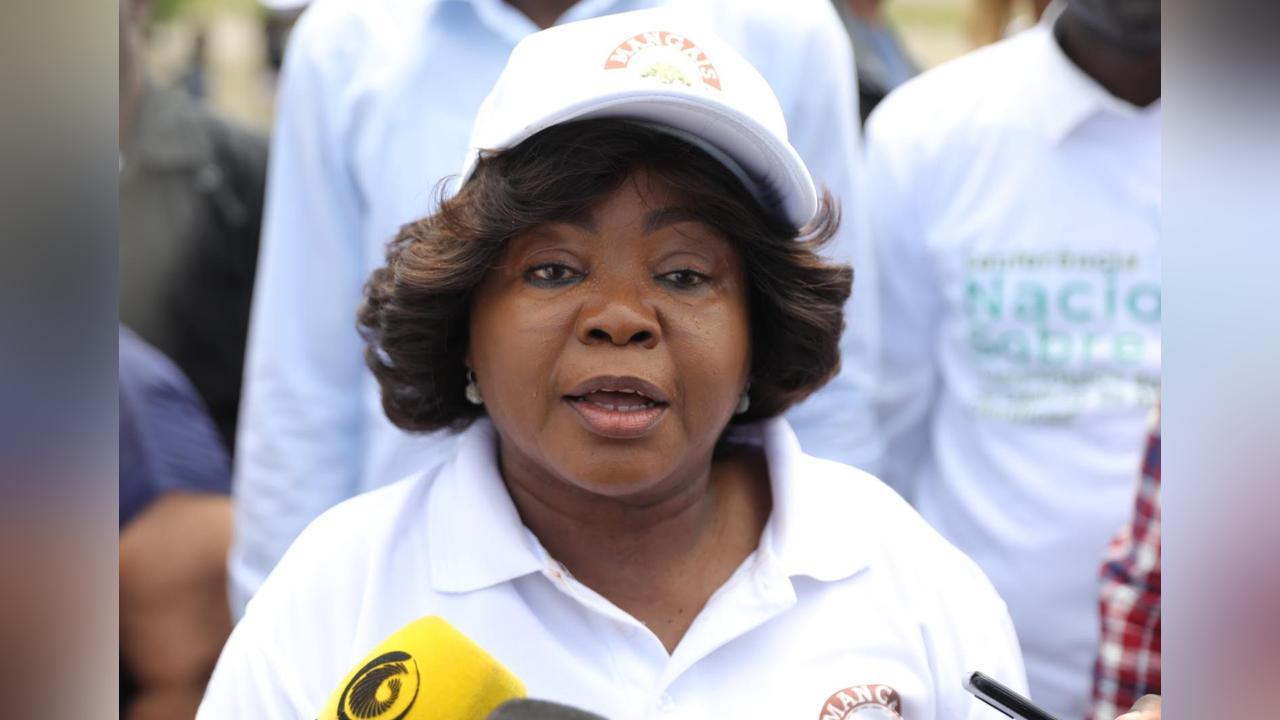
Africa-Press – Angola. The Vice-President of the Republic, Esperança da Costa, traveled to Uíge province this Monday for a 48-hour working visit.
During her stay in that northern province, the Vice-President will chair the 1st Ordinary Session of the National Multisectoral Commission for the Safeguarding of World Cultural Heritage, a forum that brings together various sectors of the Executive Branch linked to the preservation and enhancement of Angolan cultural heritage.
According to the work agenda, the Vice-President will also chair the review meetings of the National Commission for the Fight against HIV/AIDS and Major Endemic Diseases, the National Council for Roads and Traffic Management, and the National Council for Water, Environment, Climate Change, Human Capital, Higher Education and Education.Later that same day, Esperança da Costa will visit Kimpa Vita University, the construction site of the new Uíge General Hospital, and other educational establishments.
The Vice-President of the Republic’s agenda for Tuesday, February 10th, includes a visit to the project for 15,000 household water connections in the Kindenuco neighborhood, on the outskirts of the city of Uíge, where she will present the initiative to expand water distribution in the region.
The National Multisectoral Commission for the Safeguarding of World Cultural Heritage was created under Presidential Decree No. 25/18, of March 5th, and updated by Presidential Decree No. 93/23, of May 3rd.
Its responsibilities include promoting conservation programs and the participatory management of cultural heritage, as well as adopting special measures to monitor national cultural heritage with exceptional universal value.Located approximately 345 kilometers from Luanda, the province of Uíge is known for its natural and cultural richness, with several tourist attractions, including the Lagoa do Feitiço (Lake of the Spell), the Grutas do Nzenzo (Nzenzo Caves), the Serra do Pingano (Pingano Mountain Range), Bombo, Massau, and Camulungo.
In addition to its tourism potential, Uíge presents itself as a region with high agricultural potential, as well as mining (copper, cobalt, and zinc) and forestry potential.
The province, which recently underwent a new political-administrative division, now comprising 23 municipalities, faces challenges in terms of infrastructure and fuel supply, but continues to attract investment, especially in the coffee and copper mining sectors.