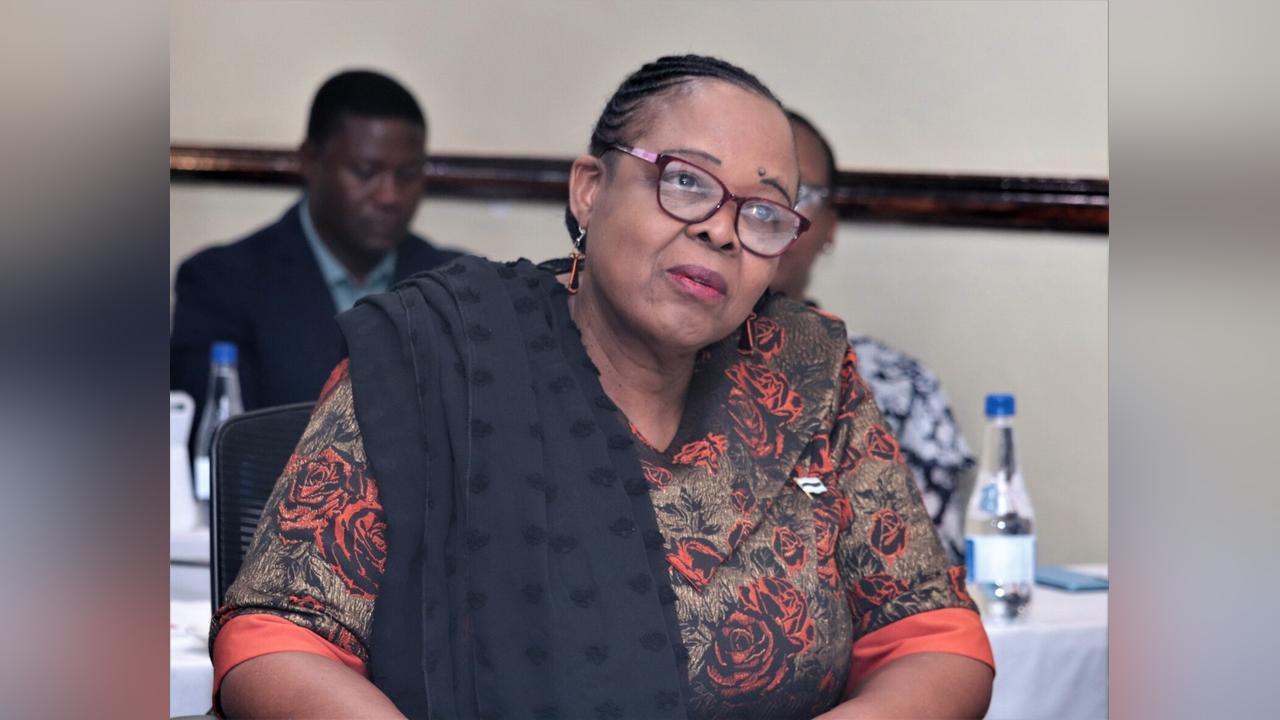
Africa-Press – Botswana. On 12 March 2026, Hon. Minister Nono Kgafela Mokoka hosted a half-day Ministerial Summit on the Digitalisation of Schools, bringing together Cabinet Ministers, senior government officials, and key stakeholders. The consultative meeting focused on accelerating Botswana’s transition to a modern, technology-enabled education system capable of meeting the demands of the 21st century. Assistant Minister Justin Hunyepa opened the summit by highlighting the importance of inter-ministerial collaboration, noting that breaking down institutional barriers is essential for a unified approach to national education reform. He stressed that teachers remain central to curriculum delivery and must be continuously supported through training to ensure that digitalisation is both effective and sustainable. The opening remarks set the tone for a strategic discussion that emphasized practical solutions and coordinated action.Education
Permanent Secretary Mrs. Mmamiki Kamanakao outlined the summit’s objectives, underscoring that digital education transformation is no longer optional but a national priority. She explained that the meeting aimed to raise awareness among ministers about the progress and challenges of the national digital education programme, provide strategic policy guidance, identify areas requiring cross-ministerial support, and strengthen national commitment to digital learning. The summit also sought agreement on concrete next steps to accelerate implementation, ensuring that digitalisation moves beyond planning into measurable action. By framing digital education as essential to national development, the Permanent Secretary highlighted the need for a cohesive and accountable approach across government.
Minister Nono Kgafela Mokoka emphasised that digitalisation extends beyond introducing devices into classrooms; it involves transforming teaching and learning processes. He called for stronger ICT infrastructure, reliable internet connectivity, and ongoing teacher training to maximize the benefits of technology in education. Minister Mokoka further highlighted the role of digital platforms and education management systems in supporting both instructional delivery and governance, stressing that technology must enhance learning outcomes rather than simply digitize existing practices. His address reinforced the idea that successful digitalisation requires comprehensive planning, investment, and continuous support for educators.Education
In closing, Dr. Mokoni, speaking on behalf of Minister David Tshere, commended the Ministry of Child Welfare and Basic Education for convening the summit. He emphasised that digitalisation must be treated as a whole-of-government initiative, underpinned by legal frameworks such as the Digital Services Act and the Cyber Security Act of 2025. These laws provide essential safeguards for digital systems and ensure that learners and educators can participate safely in the digital environment. Dr. Mokoni’s remarks highlighted the need for policy, infrastructure, and legal frameworks to work together to support sustainable transformation in schools. The closing discussion reinforced the principle that digital education is both a strategic and legal priority for Botswana.
The summit concluded with a strong consensus that the digital transformation of education is a national development imperative aligned with Vision 2036. Leaders pledged to expand school connectivity, equip learners with digital devices, empower teachers with modern skills, and develop robust systems to guide decision-making. The agreement reflected recognition that digital education is critical not only for learners’ academic success but also for the competitiveness of Botswana’s economy. As Dr. Mokoni summed up, digital transformation in education is not optional; it is essential for preparing Botswana’s learners for the future and ensuring the nation’s long-term social and economic development.Education