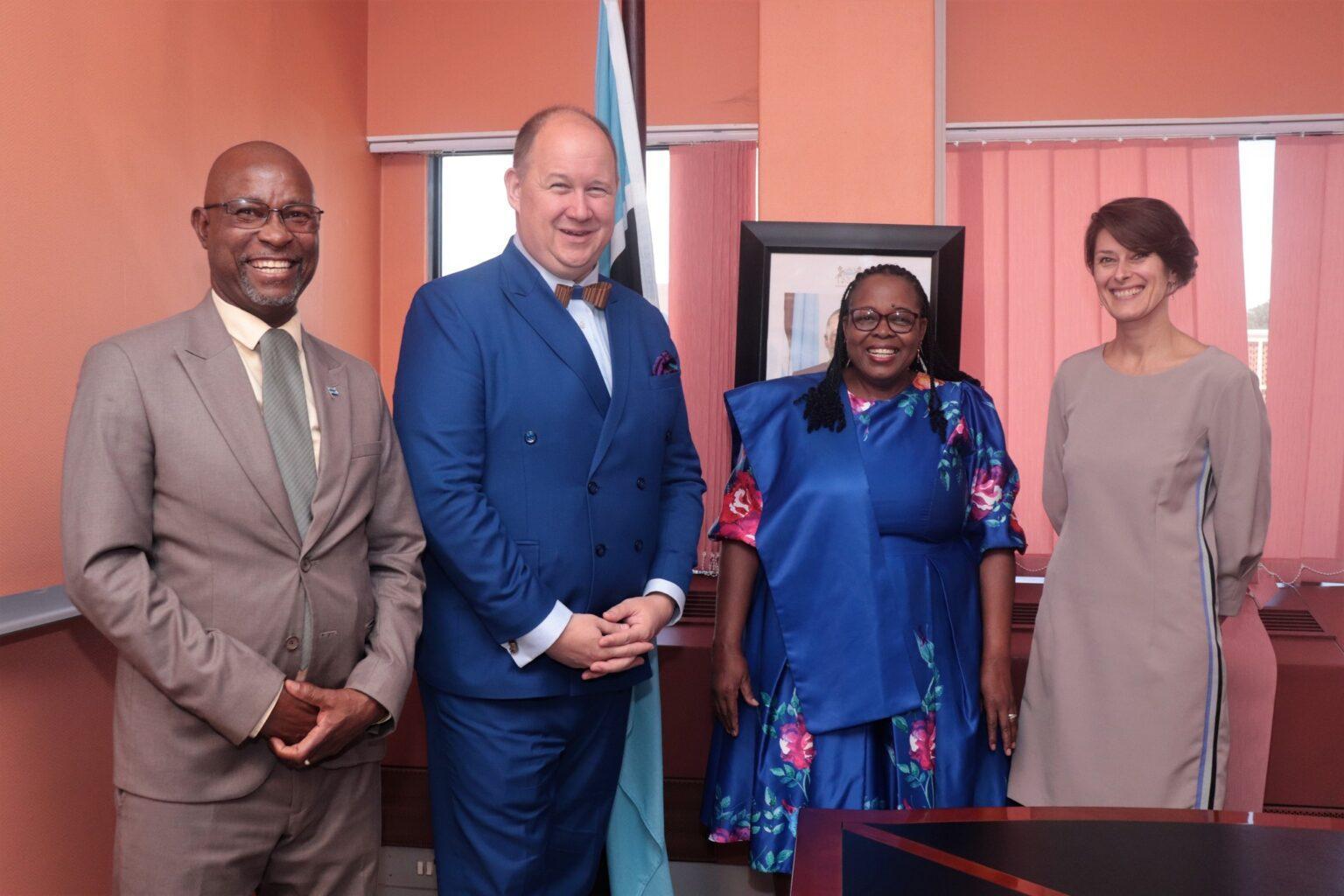
Africa-Press – Botswana. The Minister of Child Welfare and Basic Education, Honourable Nono Kgafela-Mokoka, received a high-level delegation from Estonia today. The delegation included Mr. Daniel Schaer, Ambassador at Large for Africa, Ministry of Foreign Affairs of Estonia, and Miss Olga Bogdanova, Regional Adviser for Africa at the Estonian Centre for International Development (ESTDEV). The visit aimed to advance collaboration on education, focusing on the implementation of a new teacher education programme called the Regional Teachers Initiative for Africa. It also provided an opportunity to follow up on Botswana’s education data systems and digital development following the Ministry’s EMIS and ICT team visit to Estonia in April 2025.
During discussions, the delegation shared Estonia’s experience in digitalising education systems and enhancing STEM learning under a European Union-supported initiative. The conversation highlighted teacher training, digital skills development, gender-responsive pedagogy, and the integration of STEM and STEAM in Botswana’s classrooms. The delegation offered practical insights into how digital tools and structured training can strengthen teacher capacity and improve learning outcomes. They also emphasised the importance of building robust data systems to track student performance and inform policy decisions. These insights provide Botswana with a roadmap for expanding digital education initiatives.
Honourable Nono Kgafela-Mokoka welcomed the engagement and reaffirmed Botswana’s commitment to digital transformation in education. She highlighted the Ministry’s focus on inclusive education and enhancing teacher capacity to meet evolving learning demands. The Minister expressed support for integrating innovative teaching methods and digital tools in classrooms nationwide. She stressed the importance of aligning teacher education with emerging global standards and local needs. The discussion reflected a shared commitment to leveraging technology to improve education outcomes.
Both parties expressed optimism about strengthening cooperation to advance child welfare and educational development. The Estonian delegation’s expertise in digitalisation and STEM education complements Botswana’s strategic priorities in education reform. The engagement underscores the importance of international partnerships in achieving national development goals. Through continued collaboration, Botswana aims to enhance teacher competencies, expand access to quality education, and foster innovative learning environments. The visit marks a significant step toward building a modern, digitally empowered education system.
The meeting concluded with mutual agreement to continue joint efforts on teacher training, STEM integration, and digital education projects. Both Botswana and Estonia recognised the potential for sustainable impact on education outcomes and child welfare. Future initiatives are expected to strengthen curriculum development, improve data-driven policy making, and expand capacity-building programmes for educators. The partnership signals a long-term commitment to transforming Botswana’s education system through innovation and international collaboration.