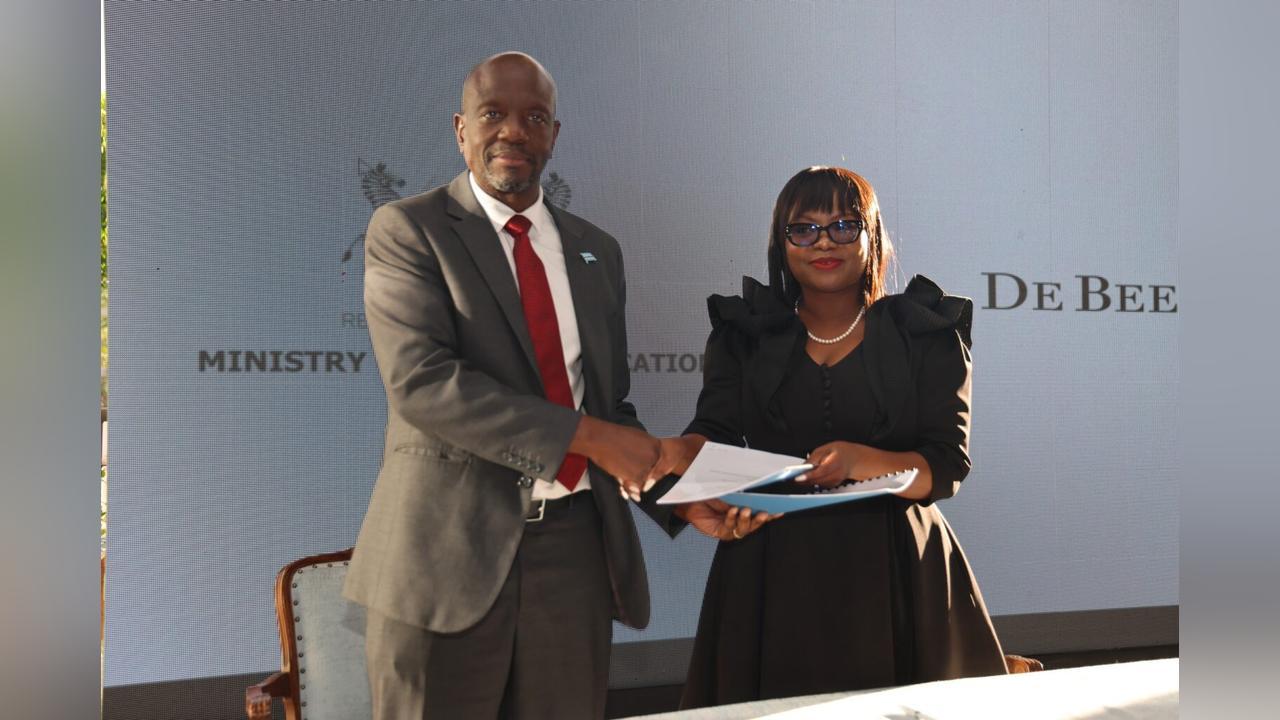
Africa-Press – Botswana. The Ministry of Higher Education and De Beers Group officially signed a Memorandum of Understanding at the University of Botswana Conference Centre. The strategic partnership aims to transform Botswana’s skills landscape, supporting the nation’s shift toward a knowledge-based economy. By aligning academic and vocational training with industry needs, the agreement seeks to ensure that Batswana are globally competitive in the diamond value chain.
This MoU builds on a long-standing collaboration between the Government of Botswana and De Beers Group. Both parties commit to creating an integrated talent pipeline that matches educational outcomes with modern industrial requirements. The partnership emphasizes bridging the gap between education and practical skills to strengthen Botswana’s workforce and enhance economic resilience.
Delivering the keynote address, Minister Prince Maele described human capital as central to economic transformation. He stressed that national development relies on skills rather than natural resources. “Our minerals may open doors, but it is our skills that will keep them open,” Minister Maele said. He highlighted that as diamond beneficiation expands, including sorting, valuing, cutting, polishing, and jewelry manufacturing, the national skills base must include engineers, digital specialists, and entrepreneurs. The Minister added that the partnership will move the nation from potential to performance and from education to excellence.
Ms. Thabile Moipolai, Senior Vice President of People Partnering at De Beers Group, highlighted the urgency of developing talent amid global technological shifts. She cited World Economic Forum data indicating that 44% of workers’ core skills are expected to change within five years. “Natural diamonds may be rare, but exceptional talent must be developed deliberately,” she said. The MoU provides a platform for long-term investment in infrastructure, innovation, and people, supporting sustainable industrial growth.
The partnership focuses on four strategic pillars. Structured pathways will provide high-performing students with industrial exposure, mentorship, and potential employment within De Beers Group. Applied skills development will strengthen university research and TVET programs to ensure industrial resilience. Systemic alignment will enhance curriculum design, educator capacity, and research collaboration. Finally, livelihoods and sustainability initiatives, guided by the Building Forever framework, aim to create lasting social and economic impact across Botswana.The Ministry and De Beers Group will track progress using measurable outcomes to assess the impact of the agreement. This partnership represents a deliberate approach to developing skills, driving economic transformation, and positioning Botswana as a leader in the global diamond industry.