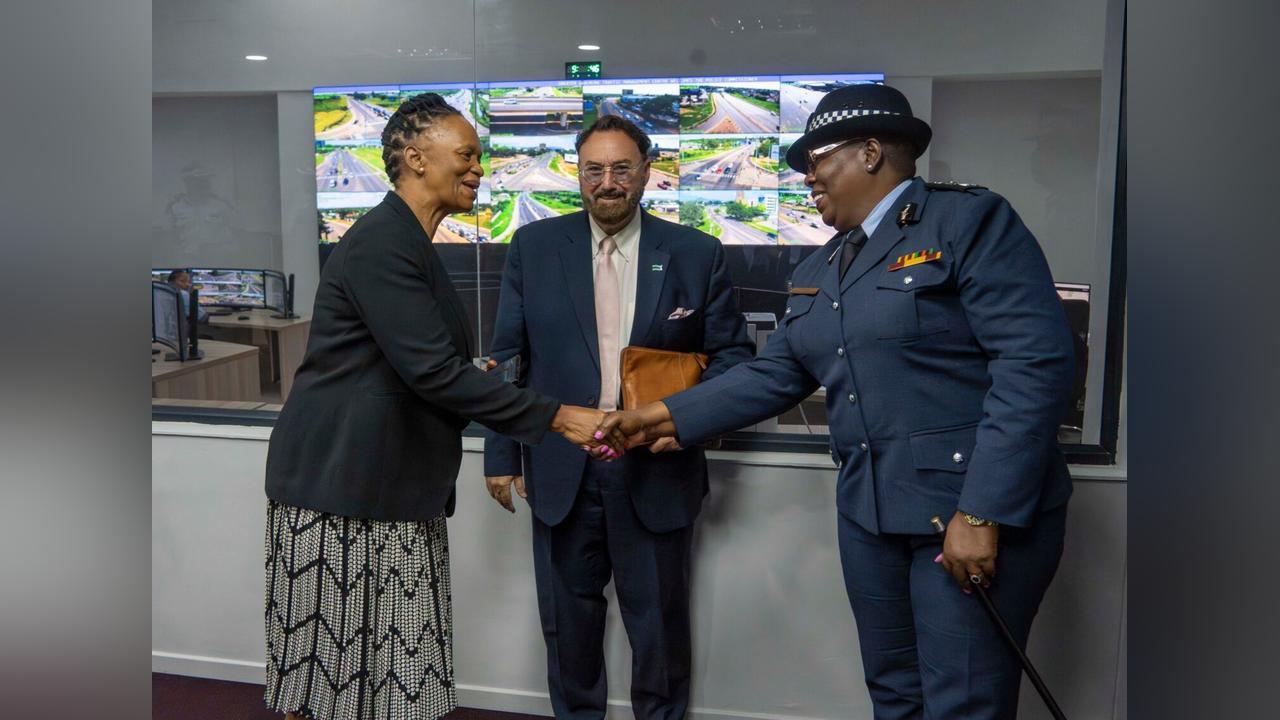
Africa-Press – Botswana. The advancement of smart infrastructure continues to shape how cities manage safety and mobility, and Botswana is taking a decisive step in that direction. On 19 March 2026, Commissioner of Police Service Dinah Marathe visited the newly established Control Traffic Centre in Gaborone, a facility designed to modernise traffic management across the capital. The visit highlighted the country’s growing investment in intelligent transport systems and the role of technology in law enforcement. Developed under the Botswana Integrated Transport Project and co-financed by the World Bank in partnership with the Government of Botswana, the centre reflects a coordinated effort to improve road safety and efficiency. The tour provided a close look at how digital tools can strengthen traffic monitoring and support rapid response to incidents.
During the visit, Commissioner Dinah Marathe expressed strong approval of the technology deployed at the Control Traffic Centre. She noted that real-time monitoring systems, automated alerts and integrated communication tools will improve how officers respond to accidents and enforce traffic laws. The system allows for faster identification of violations, better coordination between departments and more accurate data collection on traffic patterns. These capabilities support proactive policing rather than reactive enforcement, which can reduce congestion and prevent accidents before they escalate. The Commissioner emphasized that such infrastructure equips the police service with the tools needed to meet modern urban challenges while maintaining public safety.
The Control Traffic Centre operates as a central hub that connects surveillance cameras, traffic signals and data systems across key routes in Gaborone. High resolution cameras capture live footage, while software analyses traffic flow and detects irregular patterns such as sudden stops or collisions. Operators can quickly dispatch emergency services or adjust traffic signals to manage congestion in real time. This level of coordination reduces delays and ensures that incidents are handled efficiently. The integration of these systems also creates a valuable database that can guide future planning, helping authorities identify high risk areas and implement targeted interventions.
Acting Permanent Secretary in the Ministry of Local Government and Traditional Affairs, Tshepo Kebakile, raised concerns about the ongoing issue of road traffic accidents and their impact on public infrastructure. Damage to traffic lights and surveillance equipment results in high repair costs and disrupts the effectiveness of the entire system. These incidents place a financial burden on the ministry, which must allocate resources for frequent maintenance. To address this challenge, there are plans to direct a portion of fines collected from traffic violations toward repair and maintenance work. This approach creates a cycle where enforcement supports sustainability, ensuring that the system remains functional and effective over time.
The proposed sharing of revenue among institutions involved in operating and maintaining the system also reflects a collaborative approach to governance. By distributing funds across departments such as law enforcement, transport services and local government, the model encourages accountability and joint responsibility. It ensures that each stakeholder has a vested interest in maintaining the infrastructure and improving service delivery. This structure can lead to better coordination, reduced downtime and a more resilient traffic management system. It also aligns financial incentives with operational goals, which strengthens long term sustainability.
The tour concluded with a detailed walkthrough led by representatives from SICE and the Department of Land Governance and Transport Services. They demonstrated how the system functions in real time, from monitoring traffic conditions to responding to emergencies. The presentation showed how data flows between systems and how decisions are made quickly based on accurate information. This practical demonstration reinforced the value of the investment and highlighted the technical expertise behind the project. It also provided assurance that the system is ready to handle the demands of a growing urban environment.
Botswana’s investment in the Control Traffic Centre marks a clear shift toward smarter, data driven urban management. The facility strengthens law enforcement capabilities, improves response times and supports safer roads for all users. Commissioner Dinah Marathe’s positive response underscores the importance of aligning technology with public safety objectives. With proper maintenance, coordinated governance and continued investment, the centre has the potential to reduce accidents and improve traffic flow significantly. This development positions Gaborone as a city that is actively embracing innovation to solve real world challenges and build a safer future.