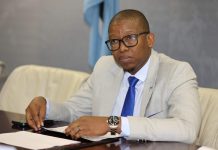
Africa-Press – Botswana. To realise education transformation, Southern African countries must work as a unit and come up with standardised strategies and policies for education and training. Association of Non-Aligned Teacher Unions of Southern African (ANTUSA) member affiliate leadership said this during a panel discussion held at the just ended ANTUSA games held in Maun themed “The role of states in fostering educational transformation: Southern African situation”. They sdecried poor education systems in the region, which they blamed on lack of resources and called on governments to invest in research towards implementation of regional policies and programmes for quality education and training.
One of the panelist from Progressive Teachers Union of Zimbabwe, Dr Takavafira Zhou said governments needed to deploy the right people with right qualifications to work in the ministries of education. He argued the biggest portion of national budgets should go towards efducation to enable training of teachers so that they could produce globally competitive learners.
The teaching profession, he said, must attract best candidates whom it must pay well. “We need to be guided by national interest than political affiliates. Decision making must be from educators not politician as it is the case,” he said. Botswana Sectors of Educators Union (BOSETU) president, Mr Winston Radikolo said Southern Africa was 25 years behind in terms of development and blamed that on education systems that failed to address challenges on the ground.
Governments, he said, needed to have policies, guidelines and programmes that matched labour demands and that the education system should facilitate their research, development and production. He appreciated that in Botswana, government remained committed to transforming education citing the introduction of Education and Training Sector Strategic Plan (ETSSP), whose aim was to strengthen the match between qualifications and labor market requirements thereby ensuring that education outputs were more closely aligned to future employment needs. However, he decried slow implementation of the plan because of lack of the right structure to run and accelerate implementation, and called for up-scaling and training of people.
“We need the right people who are transformative and innovative to run the ministry as well as to improved outcomes in schools,” he added. An educationist and also Member of Parliament for Ngami constituency, Mr Caterpillar Hikuama said education was political and leaders of any state should look at it as an activity that could transform its citizens.
He said if transformation did not address the needs on the ground, then bringing about a more diversified knowledge based economy could not be realised. Therefore, he said, governments needed to sufficiently invest in education to make it easy to invest in other sectors of the economy.
“We need to decolonise our education system to ensure it is culturally suitable and politically correct. In that way, we will foster an educated population better equipped to address the challenges facing the region including poverty alleviation. We need a system that can produce people who feed themselves,” he added.
ANTUSA president, Mr Mkhuseli Dabula said transformation could be achieved if all stakeholders were included in policy formation.
Sadly, he said, governments were currently developing policies without teachers who are key drivers.
He said it was important to include teachers in decision making because they were conversant with what was happening on the ground adding.
“Our governments cannot transform the education system if teachers are not motivated, well developed and trained,” he said.
For More News And Analysis About Botswana Follow Africa-Press