Africa-Press – Botswana. Deputy Commissioner General of the National Planning Commission (NPC), Ms Goaba Mosienyane led a delegation from NPC and the Ministry of Finance on a tour of the Mmamashia potable water treatment plant project recently.
During the tour, Ms Mosienyane commended the execution of the National Water Master Plan and noted the importance, magnitude, and complexity of the project. She emphasised the critical nature of delivering the project as per expectations to ensure it served its intended purpose effectively.
While acknowledging the challenges and unforeseen delays, Ms Mosienyane expressed satisfaction with the progress of the treatment plant works, noting that they were moving at the desired pace and remaining within the allocated budget. She also highlighted the need for the project implementer, Water Utilities Corporation (WUC), to leverage technological advancements to address water scarcity challenges resulting from climate change.
In addition, she appreciated the local and foreign-owned contractors charged with working on and delivering the project for seamlessly complementing each other’s expertise to deliver a world-class and technologically-advanced project.
Permanent Secretary in the Ministry of Lands and Water Affairs Dr Kekgonne Baipoledi said the Mmamashia water treatment plant was Botswana’ source of pride given its stature as an engineering masterpiece in the region.
He said the commissioning of the project would result in the supply of 220 mega litres of water per day in Greater Gaborone.
“We are building a centre of excellence, a hub for water distribution,” he said, adding that WUC itself was a centre of excellence in purifying water to ensure that the water supplied to the people was of good quality as per recommended standards.
Dr Baipoledi further applauded WUC for safeguarding the lives of the people against cholera, a water borne disease fears of whose outbreak remained a concern.
Giving a background of the establishment of the North-South Carrier water pipeline, WUC chief executive officer, Mr Gaselemogwe Senai said the National Water Master Plan of 1991 recommended the construction of a pipeline to deliver water from the north to the southern part of the country.
Mr Senai said the plan gave birth to the construction of the North South Carrier (NSC1) pipeline, the inefficiencies of which later resulted in the construction of yet another pipeline, the NSC2.
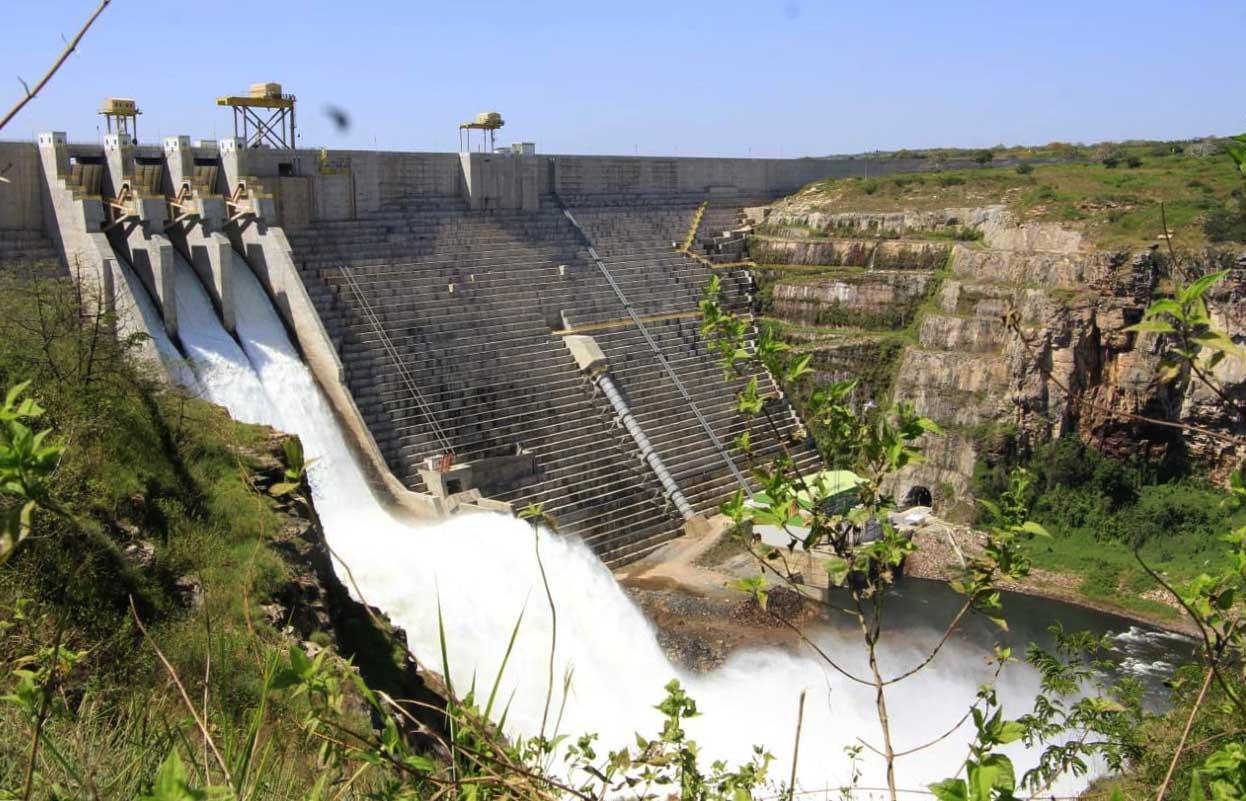
He said NSC1 which drew water from Dikgatlhong and Letsibogo dams was commissioned in 2000, and that one of its major components was the Mmamashia water treatment plant which was currently under expansion.
However, he said while 2006 review of the National Water Master Plan gave specific timelines for major capital projects delivery, some delays were experienced emanating from among others procurement complications, limited budgets and reprioritising of projects on account of limited budgets.
He said some of the projects that were affected by the aforesaid challenges by either being delayed or brought forward was the connection of Serowe to the NSC.
He said the project was supposed to have been done in 2010 but was fortunate to have been commissioned earlier than the planned date.
He said connection of Kanye, Moshupa and Thamaga was supposed to have been in 2011 but it was done in 2017.
Additionally, he said the two-way link between Mmamashia Water Treatment Plant and Gaborone Water Treatment Plant was supposed to have been done in 2015, only to be delayed and be done in 2024.
As for NSC2 expansion including the ongoing additional treatment plant at Mmamashia, he said the project was supposed to have been done in 2020, but was delayed and would be commissioned in June 2024.
Once the project was complete, Mr Senai said the 15 per cent water shortage for Greater Gaborone would be eradicated, adding that the project would also yield surplus supply of water.
Mr Senai said the ongoing major projects of upgrading potable water supply across the country were informed by the projected economic and population growth.
Upon completion, Mr Senai said the projects were anticipated to adequately supply the country with potable water for 20 years.
He has also acknowledged that even though the current projects were focused on the major works of networking water sources and construction of treatment plants, the distribution networks within villages, towns and cities were in dire need of attention as they were worn out.
Therefore, he said during NDP12 the corporation would focus on upgrading internal distributing networks.
For More News And Analysis About Botswana Follow Africa-Press