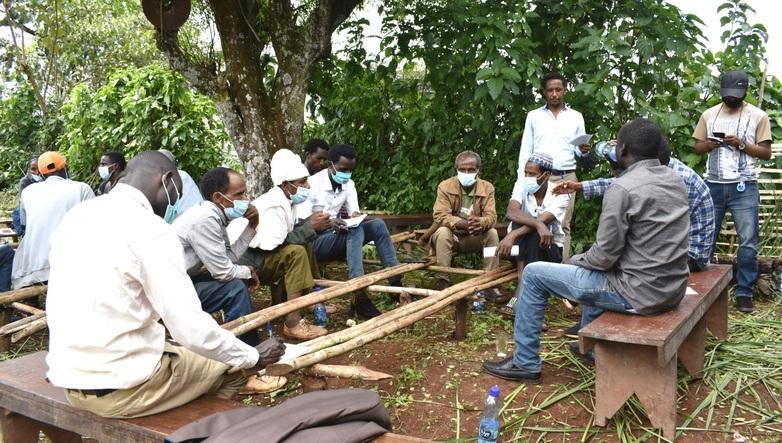
Africa-Press – Botswana. A delegation from Uganda on January 18 visited Ngwaketse Land Board on a benchmarking exercise in an effort to improve their land management.
Addressing the attendees on land management and administration in Kanye, Ngwaketse land board secretary, Mr Godiramang Moepeng said land as one of the factors of production was very important, hence the need to be managed effectively.
He informed the delegation that Botswana land tenure system comprised of freehold, state and tribal land, noting that tribal land had a bigger share, followed by state while freehold land had a smaller share.
Land board, he said was mandated to manage tribal land and were guided by the Tribal land Act.
Mr Moepeng explained that land board had powers to do anything and enter into any transactions to facilitate proper discharge of its functions.
“The board members are appointed by the Minister for a term of three years,” he said.
Ngwaketse land board secretary said their functions included granting of right to use any land, cancellation of grant of any rights to use land, imposition of restrictions on the use of tribal land, authorising of any change of use of tribal land as well as authorising of any transfer of tribal land.
However, he said land boards were obliged to manage and administer tribal land in a prudent manner, to ensure equitable distribution of land to citizens for sustainable development and protection of natural resources.
He further said land boards were obliged to advise government wherever appropriate in any matters relating to policies as may be necessary.
Mr Moepeng said tribal land was allocated under both customary and common law, adding that customary land rights were allocated as a grant for the right to perpetual use land for residence, water points and ploughing fields.
“All these are allocated at no costs except the cost recoveries of application fees,” he added.
Non-citizens, he said were only allocated land under common law not customary.
However he said there was need for consent of the relevant minister.
With regards to commercial plots, Mr Moepeng said they were allocated under competitive process, noting that they were granted fifty years period at specified rental which were reviewed time and again.
He said their other sources of income included gravel extraction, sale of sundry items, staff rentals, applications fees, transfer fees, tender fees and interest on investments.
Mr Moepeng said problems encountered in land management included plots which took long time to be developed, high demand of land, proliferation of settlements and failure to pay lease rentals.
Ugandan delegation leader, Under-secretary ministry of Lands, Housing and Urban Development, Mr Richard Juuko thanked Ngwaketse Land board for the opportunity to benchmark, noting that they were happy and felt privileged.
He said they learnt a lot, which would obviously help them to successfully manage their land. However he said there were a number of similarities with their process of land management.
Mr Juuko said in Uganda, their constitution stipulated that land belonged to the people, while land boards were there to facilitate registration of land.
He said unlike in Botswana, revenue from land boards in their country was taken to the national purse and they would then be allocated funds like all other departments.
The Ugandan delegation further invited Botswana to their country, to see if they could also acquire some land management strategies which might be useful to them.
Maokane sub land board secretary, Mr Fannuel Radifalana said they were happy to be the hosts and believed that what the delegation learnt would improve their land management.
Mr Radifalana said it was vital to make such visits a tradition, so that as land management techniques evolved, they would all be at par.
DAILYNEWS
For More News And Analysis About Botswana Follow Africa-Press