Africa-Press – Cape verde. The Court of Auditors announced this Monday that it had rejected the request for nullity submitted by the Presidency of the Republic regarding the Financial Audit and Compliance Report to the Presidency of the Republic of Cape Verde, for the period from 1 January 2021 to January 2024.
The decision was made in an ordinary session of the Conference on 10 October.
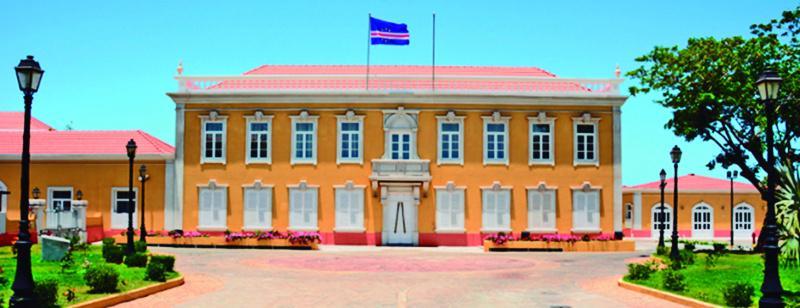
It should be recalled that last Tuesday, the 8th, the Presidency of the Republic requested the nullity of the Court of Auditors report, stating that the document should be considered null because the decision, dated 26 September, “was signed by the Judge Counsellor and the other Judge Counsellors of the same section who remain in office after the expiry of the five-year period from the date on which they were sworn in by the President of the Republic”.
Thus, the Presidency adds, “since it began on 13 November 2018, the term of office of each of the honorable judges of the Court of Auditors expired at midnight on 13 November 2023”.
Adding that the Court of Auditors is a sovereign body, the Presidency of the Republic claims that this court “cannot, in the exercise of its functions, apply rules that are contrary to the Constitution or the principles enshrined therein, as stipulated in the rule contained in paragraph 3 of article 211 of the CRCV”.
“In summary and in conclusion, the continued service of the Judges of the Court of Auditors, including those who intervened in the deliberation whose nullity is alleged, is based on the rule contained in article 17, paragraph 2” of the law that regulates the composition, competence, procedure and functioning of the Court of Auditors.
Judges under question
On Monday, on the RCV program Opinião Pública, jurist Olavo Freire said that the request for annulment filed by the Presidency of the Republic called into question “the legitimacy of the judges” of the Court of Auditors.
The jurist also points to art. 17 of the Court of Auditors Law, which explains that “the end of the term of office of each of the judges of the Court of Auditors is independent of the end of the term of office of the other judges and occurs when the new judge takes office”. Therefore, Olavo Freire continues, “we cannot have a hiatus under any circumstances. Therefore, the judge has finished, but the institutions must function and that is precisely why the legislator included in article 17 that, despite the end of the term, the institutions must continue and the decisions must be made”.
The Portuguese case
In Portugal, in July 2023, the Constitutional Court was faced with an identical situation. Two judges of that instance had their mandate expired, which served as the basis for some of the decisions of the Constitutional Court to be the subject of requests for challenge.
In Ruling No. 505/2023, published on the website of the Portuguese Constitutional Court, the rejection of the requests for challenge and unconstitutionality is announced and “the absence of any exhaustion of jurisdictional power is reaffirmed, with all the Judges who intervened in these proceedings having full jurisdiction and competence within the scope of the proceedings in question, and there being no nullity or essential non-existence of the decision complained of to be considered”.
“The appellants’ argument does not hold water”, further states the Portuguese court, adding that “the model for the succession of judges’ mandates is a domain that the Constitution expressly referred to the Assembly of the Republic”.
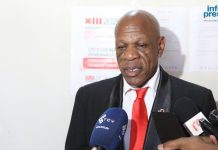
Jorge Bacelar Gouveia, a Portuguese constitutionalist who attended the International Justice Days on Monday, recalled the case and pointed out that what is at stake, and is present in the Portuguese Constitution, is “the principle of continuity of the State’s function”.
However, the constitutionalist gives the example of the case of the Italian Constitutional Court in which, with regard to the Constitutional Court of that country, “the mandate ends automatically at the end of the 9-year term. It’s over. There’s no waiting around”.
For More News And Analysis About Cape verde Follow Africa-Press