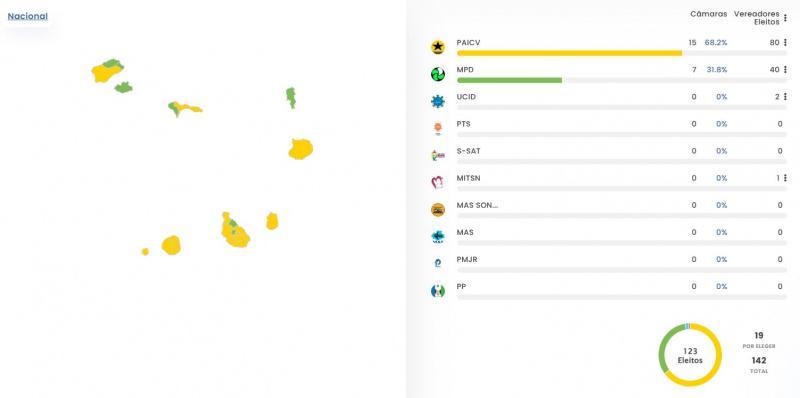
Africa-Press – Cape verde. The PAICV won in the majority of the 22 municipalities in Sunday’s elections, inverting the country’s municipal map and defeating the MpD.
The provisional results at 1:00 am today, when 17 of the 1,079 polling stations had yet to be counted, gave the PAICV 15 councils and seven to the MpD. In 2020, the MpD won in 14 and the PAICV in eight.
In statements made throughout the night of the election count, the MpD acknowledged defeat, while the PAICV celebrated the turnaround in the municipal political landscape.
The main opposition party to the Government maintained the eight councils where it had previously governed: Praia, Ribeira Grande Santiago, Santa Cruz, São Domingos and Tarrafal, Boa Vista Island and also São Filipe and Mosteiros.
The PAICV added six more to these local authorities: it won the municipality of Santa Catarina (Santiago) from the MpD, as well as Maio, Brava, Ribeira Brava, Santa Catarina do Fogo, Porto Novo and, by one vote, São Lourenço dos Órgãos.
On the MpD’s local authority map, the party retained the island of São Vicente, but was once again in the minority, as in the last term.
The party won in Paul and Ribeira Grande (Santo Antão), on the island of Sal, in Tarrafal de São Nicolau and in two municipalities on the island of Santiago: São Miguel and São Salvador do Mundo.
Regarding the composition of the municipal executives, two other forces in addition to the two main parties in the archipelago managed to elect councillors.
The UCID, the third parliamentary force, elected two councillors in São Vicente and the Independent Movement of Tarrafal de São Nicolau will have one councillor in the municipality.
The UCID also managed to enter the municipal assemblies of São Vicente (five members), Sal (two), Ribeira Grande and Paul (one elected in each).
The Santa Catarina Sempre e Acima de Tudo movement will have one representative in the assembly of that municipality on the island of Santiago, while the Tarrafal Independent Movement of São Nicolau will have three elected in the respective assembly.
The overall abstention rate is expected to rise in relation to the last local elections, from 41.6% to around 50%.
The percentage of voters who did not vote is expected to rise in all municipalities, with the exception of the capital, Praia, where the results indicate a decrease of a few tenths.
In 2020, the capital was the only municipality where abstention was over 50%, but this year, in addition to the city of Praia, there were six more in which the majority of voters did not vote.
For Sunday’s elections, there were around 352 thousand registered voters, approximately 15 thousand more than four years ago.
The next elections, presidential and legislative, are expected to take place in 2026.
For More News And Analysis About Cape verde Follow Africa-Press