Africa-Press – Cape verde. Journalist João do Rosário considers the first kidney transplant performed in Cape Verde “a gain for the country,” but warns of the need to create a solid structure to monitor patients post-surgery.
In an interview with Inforpress, João do Rosário, who has lived with a transplanted kidney for about nine years, stressed that the success of a transplant depends not only on the surgery, but also on a system prepared to guarantee the patient’s clinical follow-up.
He explained that before being transplanted, he had to deal with the difficulties of the disease and the limitations it imposes on his personal, family, and professional life.
He recalled that when he began to face kidney problems, he had to travel to Portugal for hemodialysis, a process that, he stated, “profoundly affects the quality of life of patients.”
Today, he says he lives with a good quality of life and considers it proof that “transplantation is an opportunity for rebirth.”
“The transplant is a great step forward for healthcare in Cape Verde. It’s a gain for all Cape Verdeans,” he said, adding that many patients see their lives conditioned by the need to undergo hemodialysis several times a week.
Despite acknowledging the progress represented by the first kidney transplant in the country, the journalist stressed that the success of this procedure involves several stages and requires a well-organized structure and a properly prepared multidisciplinary team.
“It’s not just about performing the transplant. It requires a specialized team and a well-structured logistics system to monitor the patient,” he said.
In this sense, he defended the need for specialized medical teams, integrating nephrologists, surgeons, urologists, and other qualified professionals to monitor all stages of the process, in addition to adequately equipped infrastructure.
According to the journalist, “the transplant does not represent a cure for kidney disease,” but a procedure that allows the patient to have a functional kidney and stop hemodialysis, but requires permanent medical monitoring throughout life.
“Transplantation greatly improves quality of life, but it doesn’t mean the person is cured. It’s a treatment that replaces hemodialysis, but it requires constant monitoring,” he explained.
João do Rosário also said that the success of the transplant doesn’t depend solely on the surgical intervention.
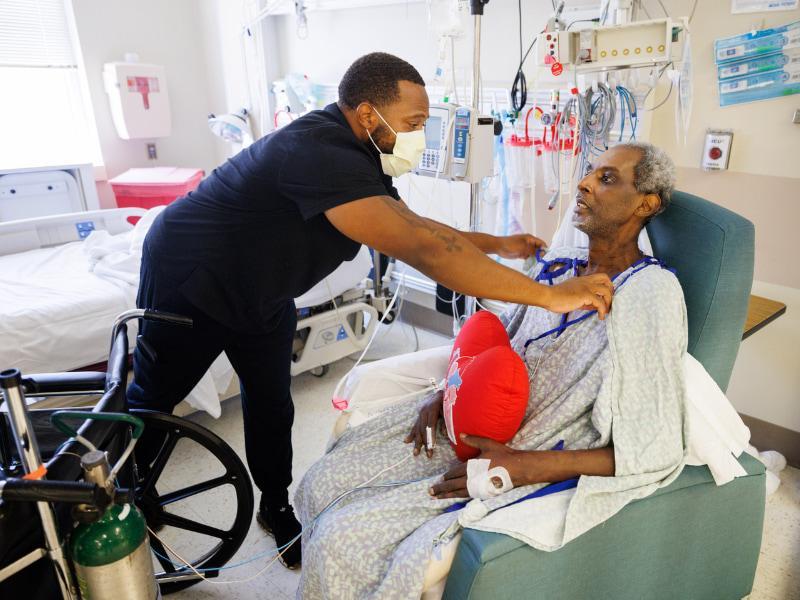
He revealed that, after the operation, the patient goes through a delicate period of adaptation of the body to the new organ, and complications can occur, including hospital infections or rejection of the transplanted kidney.
According to him, transplant patients need to take specific medication to reduce the body’s defenses, in order to prevent the body from rejecting the new organ.
However, this process makes patients more vulnerable to infections and other diseases, requiring extra care in their daily lives.
“When a person undergoes a transplant, they have to live with several restrictions. They have to be careful with their diet, the quality of the water they drink, and take their medication rigorously. Otherwise, they risk organ rejection,” he explained.
The journalist also highlighted that the lifespan of a transplant recipient can vary from person to person, and the kidney can function for several years, depending on factors such as the patient’s lifestyle, the degree of organ compatibility, and medical follow-up.
According to him, there are cases of patients who live for decades with a transplanted kidney, while others may face complications a few years after surgery.
The journalist further argued that Cape Verde should structure an organ donation and harvesting system, similar to the one in Portugal, where there is a whole logistical system in place that allows for the identification of potential donors and the organized and regulated harvesting of organs.
According to the journalist, in Portugal people can declare in advance whether or not they wish to donate their organs, which facilitates the process in situations such as accidents or brain death.
“In this system, when an accident occurs and there is a possibility of donation, organs can be removed to save other lives, provided that the person has not previously declared that they do not want to be a donor,” he explained.
Therefore, he considered that Cape Verde should work on creating a similar system, aligned with the legislation already approved in parliament on transplants, in order to guarantee that the process can function safely and effectively.
“The first step has already been taken, now it is necessary to prepare the next steps so that the entire system works well and patients can have a good quality of life,” he said.
The journalist also stressed that the development of this area requires investment in the training of health professionals, the acquisition of equipment, and the strengthening of international cooperation.
João do Rosário also highlighted the importance of continuing to raise awareness in society about the issue.
Kidney disease and the need to strengthen the public health system.
“Transplantation is not just a medical technique, it is also solidarity. Without donors there is no new life. May this first step inspire confidence, more donations and more investment in health,” he concluded.
For More News And Analysis About Cape verde Follow Africa-Press