Africa-Press – Cape verde. University professors on Wednesday considered the workshop on the valorization and management of marine macroalgae an important initiative to address their proliferation, advocating for greater involvement from authorities and the expansion of actions to other islands.
The increased presence of macroalgae in the coastal areas of Cape Verde has motivated scientific and academic initiatives aimed at understanding and mitigating this phenomenon, which affects the environment, communities, and the tourism sector.
Professor Osvaldo Ortet, from the University of Cape Verde, stated that, recently, there has been a “significant increase in algae” in several bathing areas, particularly on the islands in the southern region, a situation he described as worrying.
According to the professor, this is a recent phenomenon, the scale of which requires “greater attention from the authorities” and reinforcement of monitoring and control actions.
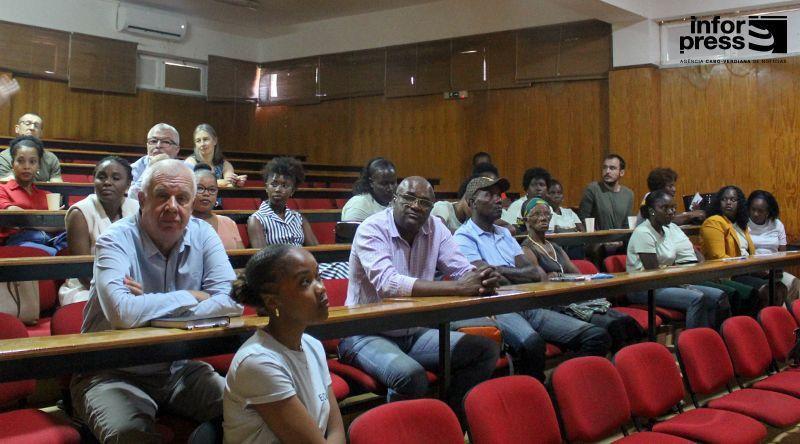
Ortet considered the technical workshop on the valorization and management of macroalgae, held by the Cape Verdean Association of Ecotourism (Eco-CV), a positive initiative, but advocated for “greater participation from governmental entities responsible for environmental and maritime control areas,” emphasizing the importance of involving different institutions in the search for solutions.
He also defended the need to extend this type of initiative to other islands, such as Brava, Fogo, and Maio, where a significant appearance of algae has also been observed, highlighting the importance of continuous monitoring of the situation.
In turn, Professor Wlodzimierz Szymaniak from the Jean Piaget University of Cape Verde explained that the workshop is the result of ongoing work monitoring marine algae on the island of Santiago, developed in partnership with the Association for Ecotourism of Cape Verde.
According to this researcher, in addition to monitoring, the work includes the study of the use of algae, namely for the production of “fertilizers and, in the future, cosmetics and medicines.”
He further emphasized that the workshop brought together researchers from different institutions, constituting a space for knowledge sharing and scientific discussion.
Wlodzimierz Szymaniak advocated for the continuation of these initiatives, considering them important for finding solutions and supporting the populations of the affected coastal areas.
For More News And Analysis About Cape verde Follow Africa-Press