Africa-Press – Cape verde. Political calculations for 2027 reveal the fragmentation of the Angolan opposition. The Democratic Bloc is attempting to transform the United Patriotic Front (FPU) into a formal coalition, while UNITA avoids clarifying its role, fueling signs of disunity.
While official discourse maintains the focus on alternation of power, behind-the-scenes maneuvers suggest a growing strategic disunity.
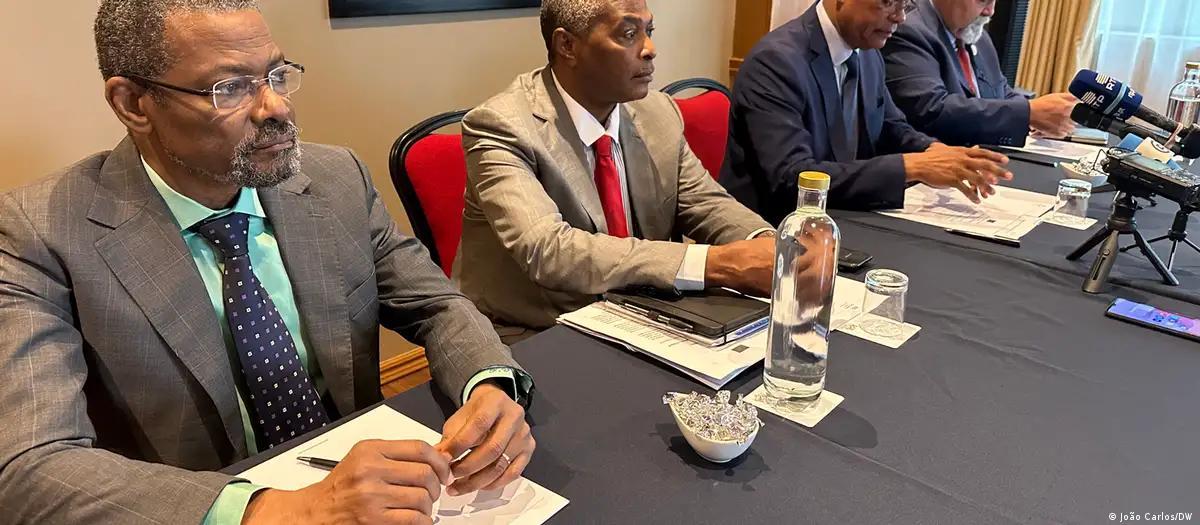
The Democratic Bloc (BD), a central player in the United Patriotic Front (FPU), has begun a cycle of consultations to transform its electoral platform into a formal coalition – a survival maneuver at a time when the National Union for the Total Independence of Angola (UNITA) is avoiding clarifying its participation model in the next election.
The Bloc faces an existential dilemma: the risk of legal extinction if it repeats the 2022 model, integrating the lists of UNITA, the largest opposition party, without a coalition structure. To circumvent this scenario, Filomeno Vieira Lopes’ leadership initiated contacts with Renova Angola, the Liberal Party, and the Pacific Party of Angola.
The BD’s “Inclusive Dialogue” program also aims to build bridges with historical forces such as the FNLA and the PRS, and with civil society. In statements to DW, the Secretary-General of the Democratic Bloc, Muata Sebastião, explains that the initiative is a direct response to UNITA’s resistance to formalizing the coalition.
“And so, specifically, it has a lot to do with UNITA’s position, which everyone followed at the last congress, and it’s important to point this out, UNITA instructed its leadership to explore all possible models, except for a coalition. This means that, in the meantime, those who are not counting on the Democratic Bloc are those who do not want to find a better way for the Bloc to participate and not be dissolved,” he explained.
For the politician, it is about guaranteeing the party’s viability after 2027, fulfilling the mandate of its members. “The Bloc is making exploratory contacts with civil society and political parties, as well as some organizing committees, in order to understand what these forces’ assessment is regarding the 2027 agenda,” he revealed.
Therefore, Muata Sebastião adds, “as soon as it is concluded that everyone is aligned in the same direction regarding the combination of efforts, regarding the formalization of an electoral coalition, then the Bloc may eventually announce which partners it will work with and how the agreements for the formalization of a coalition will be made.”
Others bet on autonomy
In this chessboard, PRA-JA Servir Angola, which distanced itself from the FPU in May 2025, reaffirms its commitment to autonomy. In a statement, Abel Chivukuvuku’s party highlighted its orientation to “go it alone” to consolidate its national presence, although it notes that it keeps the door open to de jure coalitions, provided they are approved by its higher bodies for strategic imperatives.
From CASA-CE and Renova Angola, the tone is one of caution. Manuel Fernandes confirms the dialogue, but imposes conditions of institutional robustness: “We were consulted by the Democratic Bloc, but our understanding is that we must prepare the party to be up to the great challenges. It cannot be dependent on a coalition. We are preparing the party to compete in the elections. If the understanding is that we should go by coalition, let it be a coalition to contest power and not to contest a seat in Parliament. Therefore, it will only be possible when we have strong parties. Therefore, Renova Angola is working to be a strong party.”
UNITA, through its spokesperson Francisco Falua, avoids committing to a formal coalition, assuring only that the FPU will be reformulated and that the BD continues to be a partner. Confidence in the model led by the “Black Rooster” remains unwavering. “Those who have governed this country for 50 years are powerless to provide the basics, the necessities; water, electricity, education, healthcare are in bad shape. So, UNITA will be the winning leader,” he believes.
For observers, this dispersion of narratives can be counterproductive. Political analyst Celestino Lumbangululu criticizes what he calls the “verbal conflict” between opposition forces. “UNITA politicians say one thing, PRA-JA politicians say another, they clash with each other. We don’t want that. We want the political forces in this country to follow the same path for the good of Angolan society,” he says.
Lumbangululu also notes that UNITA’s inflexibility regarding the coalition format puts its partners in a vulnerable position: “It’s a risk because if the coalition doesn’t achieve alternation, these parties may have difficulty uniting in the public arena, but it’s important that they use a regime pact that facilitates the parties, provided there is unity among them.”
For More News And Analysis About Cape verde Follow Africa-Press