Africa-Press – Cape verde. Minister Fernando Elísio Freire argued this Monday that reform is an ethical imperative, and that the new legal framework for Civil Society Organizations will guarantee transparency and fairness in the use of public funds.
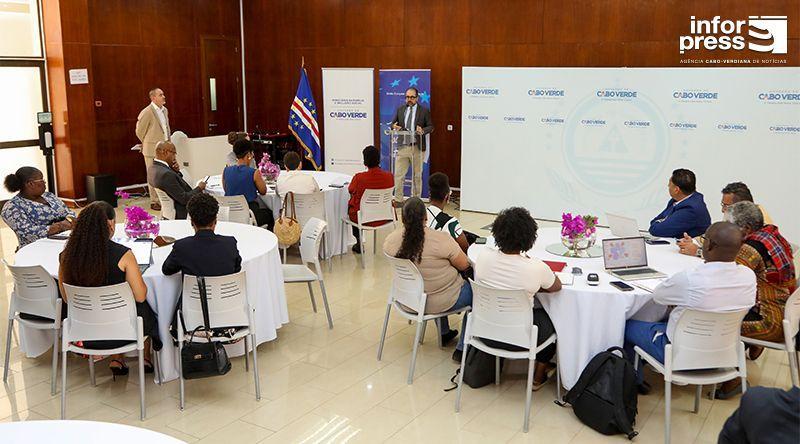
Fernando Elísio Freire, head of the Ministry of Family, Inclusion and Social Development, made these statements at the opening of the Workshop for Validation of Legislative Proposals on the Legal Framework for Public Funding of Civil Society Organizations (CSOs) and the Statute of Social and Solidarity Economy Entities.
The minister, for whom the executive took a “decisive step” today in modernizing the social sector, reaffirmed the commitment to transparency and fairness in the use of public resources.
He stressed that with the creation of clear rules and a new statute for the social economy, the Government intends to strengthen the organizations that are the “voice of the invisible” and ensure that support effectively reaches the most vulnerable communities and the rural world.
“Any funding for civil society organizations must have clear rules and be publicized. We are dealing with public funding and public money,” stated the government official, emphasizing that transparency and predictability are the pillars that reinforce trust between the State and society.
Fernando Elísio Freire exemplified the new era of management with the ongoing calls for proposals in areas such as care and productive inclusion.
“The rules are clear, the terms of reference are publicized, and organizations compete and are chosen according to their compliance with the rules. With these calls for proposals, we are taking a step towards transparency and, above all, justice,” he reinforced.
According to the same source, strengthening these institutions through a robust legal framework is, ultimately, strengthening democracy and social cohesion in the country, reiterating that CSOs are the “voice of those who have no voice,” specifically children, women, the elderly, and people with disabilities, with particular emphasis on those living in rural areas, where vulnerability is accentuated by distance.
In addition to funding, the new Statute of Social and Solidarity Economy Entities will provide tax incentives and an appropriate contribution framework, recognizing the economic and social value of these entities in generating employment and boosting local economies.
For his part, the Head of Cooperation of the European Union, Cristobal Delgado Matas, praised the initiative, stressing that this is the ideal moment to advance institutional modernization in Cape Verde.
“The State doesn’t reach everywhere, but civil societies have that vocation and capacity if they are properly supported,” the diplomat emphasized, sharing a personal testimony about the impact of cooperatives in his homeland, Spain.
This, to illustrate how working in “Djunta mo” (joining hands – partnerships) creates more cohesive societies, also recalling the challenges of the archipelago.
“It is difficult to adapt to all the realities of each island. Therefore, this work of updating the legal and fiscal regime is fundamental to responding to the challenges that Cape Verdean women and men face,” he commented.
The workshop, which has the partnership of the European Union and the support of Portuguese Cooperation, serves to gather final contributions and identify constraints, ensuring that the new legal instruments effectively respond to the needs of the more than 250 organizations mapped in the country.
For More News And Analysis About Cape verde Follow Africa-Press