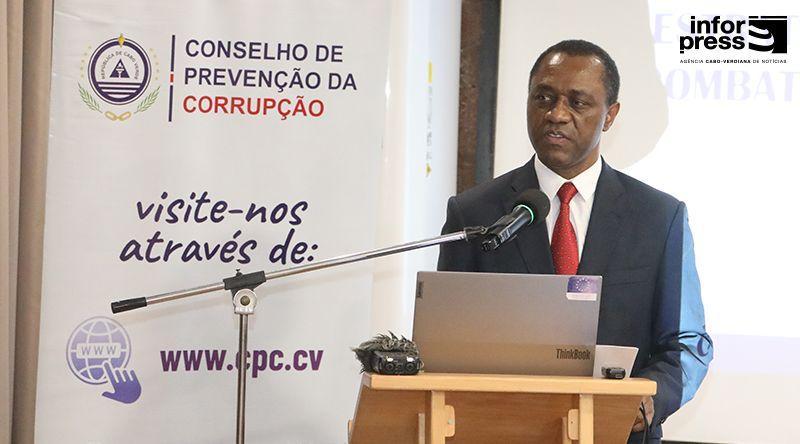
Africa-Press – Cape verde. The President of the Council for the Prevention of Corruption (CCP) stated this Monday that the first National Strategy for the Prevention and Combat of Corruption (2026-2029) constitutes a commitment by the country to consolidating a culture of integrity, transparency, and accountability.
João da Cruz Silva made these remarks during the strategy’s presentation forum, held in Praia, where he emphasized that the moment “goes beyond the simple presentation of a strategic document,” constituting an “unequivocal affirmation” of the national commitment to strengthening democracy.
“It represents a clear and unequivocal affirmation of the commitment to consolidating a culture of integrity, transparency, and accountability, essential pillars for improving democracy in the country,” he stated.
The President of the Court of Auditors also stressed that corruption undermines citizens’ trust in institutions, compromises social justice, distorts economic competition, and weakens the rule of law.
Combating corruption, according to him, requires a systemic, preventive, and participatory approach that goes far beyond repression and involves all sectors of society.
It is in this sense that he explained that the present strategy was born, with the objective of strengthening the National Integrity System and protecting the country against current and future risks and challenges.
“The objective of this event is to make a technical presentation of the strategy, which aims to gather any input for its improvement before its approval by the Council of Ministers,” he explained.
The National Strategy for the Prevention and Combat of Corruption 2026-2029 is structured around eight strategic lines, notably the institutional reform of the Council for the Prevention of Corruption and the launch of a National Transparency Portal.
The document also foresees the creation of an inter-institutional commission to strengthen the articulation between public bodies and civil society, as well as the implementation of corruption risk prevention plans, with the identification of vulnerable areas and the adoption of standardized methodologies.
Among the measures are the strengthening of codes of ethics and conduct in public administration, continuous training in integrity and prevention, and preventive education initiatives aimed at promoting ethical values and critical thinking.
For her part, the Minister of Justice, Joana Rosa, pointed out that, although Cape Verde presents levels of corruption considered residual according to international studies and reports, the country cannot become complacent and must continue to invest heavily in prevention.
She affirmed that the Government has strengthened control mechanisms, emphasizing that the National Strategy for the Prevention and Combat of Corruption focuses on strengthening institutions and the participation of civil society to ensure greater transparency in the management of public resources in the country.
For More News And Analysis About Cape verde Follow Africa-Press