Africa-Press – Cape verde. The Minister of State for Family, Inclusion and Social Development assured today, in Praia, that “soon” the regulation of diplomas will be carried out and procedures for asylum and refugee reception will be improved.
Parliament approved the laws on asylum and on the reception and temporary installation of foreigners and stateless persons for humanitarian reasons in temporary reception centers, however, the diplomas were not subject to regulation, and the legal procedures and institutional responsibilities in this matter were not “clearly determined”.
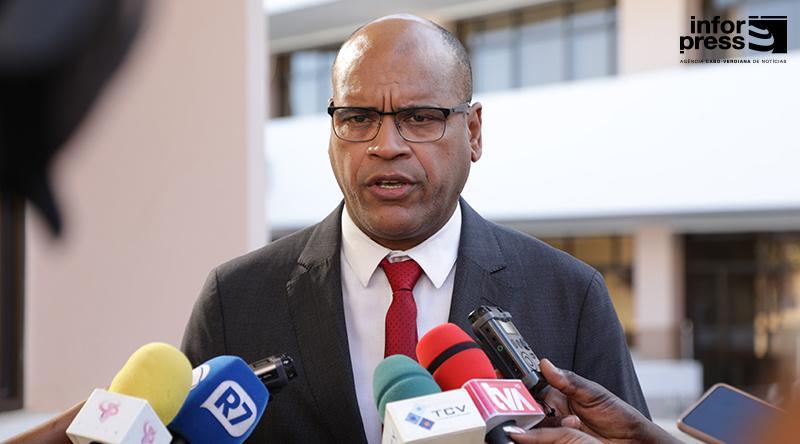
However, Minister Fernando Elísio Freire guaranteed, “soon”, to clarify the procedures, in statements to the press, on the sidelines of the conference on “Migration and asylum in West Africa: regional context and responses in ECOWAS countries”, promoted by the High Immigration Authority, in partnership with the International Organization for Migration and the University of Santiago.
The conference aims to promote better knowledge of the phenomenon, explore challenges, opportunities and responsibilities related to asylum and collect possible subsidies that can be translated into recommendations to strengthen the country’s legal and operational mechanisms and tools in this matter.
“We have to adapt our country to reality, we know that we are a small, archipelagic country, but a country very connected to the world that defends the values of democracy, freedom and human dignity, and we have had legislation since 1999 on the issue of asylum and refugees, regulation remains to be done”, he explained.
As Fernando Elísio Freire recognized, there is a need to improve procedures and clarify the responsibilities of the various institutions in the country that deal with this issue.
The government official also assured that Cape Verde, being a country open to the world, remains committed to adhering to best international practices.
However, he highlighted the importance of respecting the country’s security, its reception capacity and the archipelagic reality.
“It is this balance that we have to strike and that in due time, with the debts involved involving all the entities that have responsibility in the matter, the Government will make a decision on the path to take shortly”, noted the minister.
This is because, he argued, global dynamics have changed and Cape Verde has recently entered the irregular migration route, with four cases of vessels reaching the coasts in the last three years, so the country must be prepared for such situations.
The minister also reinforced that procedures are currently being adjusted so that, in the next event, Cape Verde is “much better prepared”.
Therefore, he mentioned, the procedures must cover all legislation, including the nationality law, which also addresses the issue of stateless people. However, he stressed, the most essential issue is that of asylum applications by people who are refugees.
On the other hand, the president of the High Authority, Carmem Barros, emphasized that since 2020 the country has registered the arrival of vessels on the coast, with people seeking other opportunities in different destinations, highlighting the importance of reflecting on this issue, “despite the vulnerabilities of the country”, taking into account that the Constitution of Cape Verde provides asylum as a fundamental right.
According to the official, there is an entire international and regional context that indicates that Cape Verde must establish clear mechanisms and ensure that, in exceptional cases, institutions are minimally prepared and aware of their role and responsibility.
As Carmem Barros highlighted, there is a set of commitments already made by the State, with clarification lacking, taking into account that the diplomas were not regulated and at the moment there is no effective asylum regime.
“These are issues to be reflected upon, in fact the proposal for the third action plan makes this recommendation that the country effectively reflect and decide what procedures and what model is suitable for Cape Verde, taking into account institutional and economic capacity (…), he concluded .
For More News And Analysis About Cape verde Follow Africa-Press