Africa-Press – Cape verde. This Friday, 24th, marked the anniversary of Russia’s invasion of Ukraine. In addition to human lives, the economic and social impacts of that war are overwhelming, including for Cape Verde. Avelino Bonifácio, an economist trained in Ukraine, warns of the “harmful effects” of this conflict on the Cape Verdean economy, translated into a sharp increase in the price of fuel and food. The biggest bill, the public debt, is yet to come.
It is not news that, a year later, the war in Europe, dictated by the Russian invasion of Ukraine, is causing strong economic and social impacts throughout the world, effects that are typical of a global economy that we are experiencing today. The war that should be resolved in the space of a weekend is proving to be much longer than expected by Moscow and its allies.
Although in the opinion of Avelino Bonifácio, Cape Verde is not one of the countries that are suffering “the worst” impacts, the effects of the conflict on the economy and social condition of Cape Verdeans are still “very strong”. Especially when it comes to a country that imports practically everything it consumes.
“In the case of Cape Verde, and speaking of the economy, the sectors that were most heavily impacted are, on the one hand, those that consume the most fuel, namely, the production of electricity and water desalination, and transport, as well as activities that make intensive use of those same goods and services, such as the transformation industry and tourism”, begins by observing Bonifácio, who was also an Economics student in Kiev, Ukraine.
Food industry heavily penalized
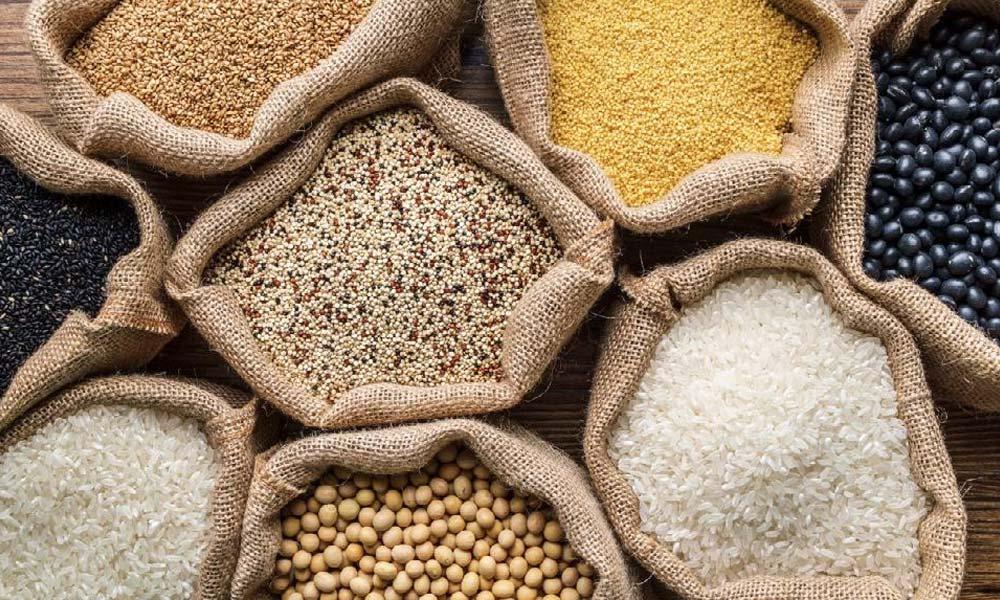
On the other hand, he also points out the “multiple” impacts on the food industry, which uses cereals and cooking oil as raw materials.
Whether due to shortages and acquisition price increases, or transport price increases, or even indirectly due to exchange rate fluctuations. “The example can be seen in the variation in the price of a barrel of brent (crude oil) which, after suffering brutal increases of almost 50% throughout 2021 and the year ended with being sold for around USD 77.3, rose to around USD 102 the day after the invasion of Ukraine. At the peak of the price, brent reached the barrier of USD 130 in April. By the end of 2022, the price had already dropped to around USD 89.9”, he exemplifies.
Concern about public debt
However, the interviewee from A NAÇÃO recalls that, in Cape Verde, the subsidies granted by the Government “softened” the impacts of prices on final consumers of goods and services, who, as he explains, “did not have to bear the real increases” and pay the prices that they would, in fact, have to pay.
But, in the “long term”, the bill will be greater and will reach other levels. “Taxpayers will have to bear these costs, either through public debt or through the retreat of investments, both in public infrastructure and in measures of a social nature”, perspective.
Food insecurity and rising poverty
Apart from that, as he also says, “the impact of that war must be evaluated, first of all, by the significant increase in the percentage of the Cape Verdean population in a situation of severe food insecurity (above 11%), as well as the rate of the population in risk of food insecurity (over 33%), numbers well above the period before the war”, he analyzes, warning that the increase in the poverty rate is “also” another indicator to take into account.
Added to these factors is another “important” indicator: the increase in the inflation rate. “In 2021 it stood at around 1.86%, and that rose to around 8.5% in 2022”, he attests.
However, this specialist points out that if you take into account inflation only in basic food items, where the population with less purchasing power uses the largest share of their income, inflation will have been “almost 20%” .
In other words, as he puts it in context, the impact of these inflation rates on people’s lives is “particularly serious”, when one takes into account that, except for some salary ranges, “there has been no replacement of purchasing power through salary increases” .
This has even been one of the points claimed by unions in different sectors. Having said that, and according to the scenario described above, Avelino Bonifácio is “certain” that there is a direct correlation between the war in Europe and the increase in the rates of people living in a situation of severe food insecurity (hunger), of people at risk of food insecurity as well as poverty.
“One cannot, however, blame everything on the war in Ukraine, remembering that the socioeconomic situation of any country (and Cape Verde is no exception) results from the combination of a set of more or less identifiable and measurable factors, including options for political and economic nature”, safeguards.
Context with “little slack”
These factors, as he explains, range from the state of development Cape Verde is in and “the determinants” of that development. “Dependence on tourism, food imports,
poor use of mobilized and mobilized water resources (former dams, boreholes, reservoirs, desalination, wastewater treatment,…), dependence on fossil fuels,…), the level of indebtedness public, etc.”, he lists.
Deep down, these are factors that determine an economic situation “with little respite” in the face of the “difficulties” brought by the consequences of the war. Asked, as an economist, what measures should be taken to mitigate the negative impact of that war in Cape Verde, Bonifácio is incisive when talking about cost containment.
“Popular wisdom teaches us that, in times of crisis, we should give up spending that, due to the situation, may be considered superfluous. However, the story of the grasshopper and the ant teaches us that we must work and have a sense of savings, taking precautions for periods of lean cows”.
Support the most affected and contain superfluous expenses
Therefore, it argues that the priority should be to “help” the most vulnerable sections of the population. “Like elderly people without any type of pension, or beneficiaries only of the social pension which, meanwhile, has suffered strong erosion due to price increases, unemployed people and people who survive on daily and uncertain income from informal activities”.
Given the current situation, he warns that “certain” “non-essential” investments are no longer a priority, leaving a message to the authorities. “The State continues to have structures and bear charges that are neither compatible with the real country nor ethical towards the most needy, at the present juncture”.
sadness and revolt
Graduated in economics, in Kiev, Avelino Bonifácio has followed the evolution of the situation in Ukraine with “a lot of sadness and some anger”. Especially, for the “loss of human lives, suffering of the
population and much destruction” of a country that welcomed him during six years of his youth.
“In fact, I have followed in recent decades, and already with quite astonishment, the tension in relations between Russia and Ukraine, more sharply since the ‘Maidan Revolution’ of 2014, which led to the deposition of a president and a government pro-Russian elected officials, followed by the latter’s annexation of the Province of Crimea”.
From his point of view, Russians and Ukrainians are all peoples of “historical-cultural matrix”, including linguistic, and Slavic religious, with centuries of coexistence, although, as he clarifies, “not always peaceful” and with deep mixtures, both on one side as on the other.
“From my knowledge from years of living in Kiev and Odessa, in the 1980s, but with passages through various cities and regions, both Ukrainian and Russian, this situation was completely unimaginable”, he laments.
Directly and unequivocally condemning Russia’s invasion of Ukraine, Avelino Bonifácio argues that this war “cannot be shielded by justifications of any kind for invading a sovereign country with the full right to make its own choices”.
However, he says he has no doubt that Ukraine is accepting in its territory, and the Ukrainians “pay with their own blood”, the price of a “geostrategic dispute of which, themselves, are nothing more than mere pawns” . As mere pawns, he clarifies, he means “only Ukrainians”, not Russians, and explains why. “The real dispute is between Russia and the West, in this case led by the USA, for the dominance of world geopolitics, in which this region has a preponderant role”, he concludes.
For More News And Analysis About Cape verde Follow Africa-Press