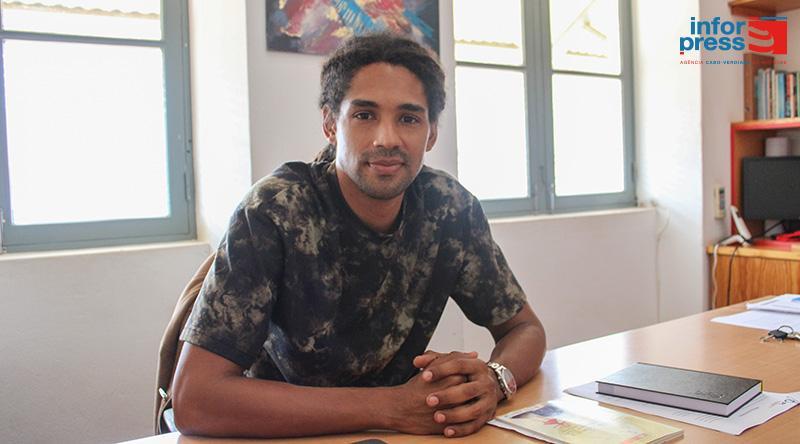
Africa-Press – Cape verde. The Cape Verdean Institute for Children and Adolescents (ICCA) has focused on providing more favorable conditions within the institution for the 35 children institutionalized in São Vicente, as a way of helping them overcome any violence they may have suffered.Having 22 children at the Children’s Emergency Center and 13 teenagers at the Nhô Djunga Youth Center, ICCA, according to delegate Humberto Bruno Delgado, tries to lead them to overcome, presenting them with physical and social conditions, so that the past does not condition their future.
“Almost all children who enter the institute have experienced some situation of violence, aggression, abuse, disorder and can feel traumatized, abandoned and rejected and this is exactly what needs to be worked on so that they do not remain victims of society”, assured the delegate, in an interview with Inforpress.
Despite the stigma created by society on different occasions, Humberto Bruno Delgado indicated that there is a lot of psychological work done around these children, in addition to knowing their own history, so that it can be a stimulus for their lives.
“Being here, there are a large number of people who know, the number of professionals who go through their lives, the types of training they find here and when we realize that the path is no longer academic, they are sent to training to learn a trade ”, says the person responsible for the institute in São Vicente.
Athletics and martial arts have been other occupations that the institution has noticed have an effect on the social and sporting development of children and adolescents and on the process of rapprochement between institutionalized individuals and their families.
“It has been excellent, the physical work, the children’s psychomotricity, the development, the courage, not giving up, the strength and believing in oneself, and the parents are starting to have the bond again”, believes Humberto Delgado, who also emphasizes that sport keeps children away from addictions, such as drugs.
In this process, “which is individual”, of changing consciousness, mentality, the aim of the center, according to the ICCA delegate, in office for half a year, is to create a life project, preparing an autonomous child for when he leaves the institution .
Taking into account the institution’s work, last year was a year of recognition for Humberto Delgado of institutional practices, employee knowledge and people’s achievements.
This year considers that there will be changes and that plans are still underway, with projects that require greater training and cooperation with universities, partners and NGOs.
“One of the plans is to transform the institute into a reference, not only in terms of welcoming and protecting children, but also in creation, production of scientific articles for universities, interconnected work with foreign universities, international volunteering and a place where we can have more training for everyone”, he explains.
The training of professionals who work with children is another point that for the delegate is important for the changes he intends, and recognizes that there is still a lot to be modified within the institution for the success of the projects.
“It will depend on the people who work here, on the spirit, willpower and, above all, on the integrity of each person, and an ‘almost’ total restructuring of human resources would certainly have a huge impact”, he considers.
Another problem faced in São Vicente is the shortage of foster families, the slow adoption process and the separation of families from the children who end up in the centers.
“The adoption process needs to be accelerated in some way, although I am not here to judge, it needs to be more effective and we have many families who cannot take on these responsibilities. When they arrive at the center, they are practically abandoned by their families”, laments this leader.
Regarding children on the streets, Humberto Bruno Delgado guarantees that street addiction is difficult, but not impossible to overcome.
However, he considers that it is a social problem that triggers others, such as drug consumption, and considers that the phenomenon of children on the streets is also driven by tourism.
“Last year and this year we had a huge flow of tourists and the tendency was to have more children taking to the streets, because the older ones who are already on the streets call the younger ones, with greater persuasive power”, he explains.
If children are already addicted to drugs, the person responsible for ICCA explains that institutionalization becomes a more complex process, as they must undergo detoxification services first, and then go to the Youth Center.
In addition to the Children’s Emergency Center and the Nhô Djunga Youth Center, ICCA has the Orlandina Fortes day center, in Ribeirinha, which welcomes dozens of children from disadvantaged families, in two periods, for school, vocational guidance, psychological, social and cultural.
For More News And Analysis About Cape verde Follow Africa-Press