Africa-Press – Eritrea. TELL US ABOUT YOURSELF
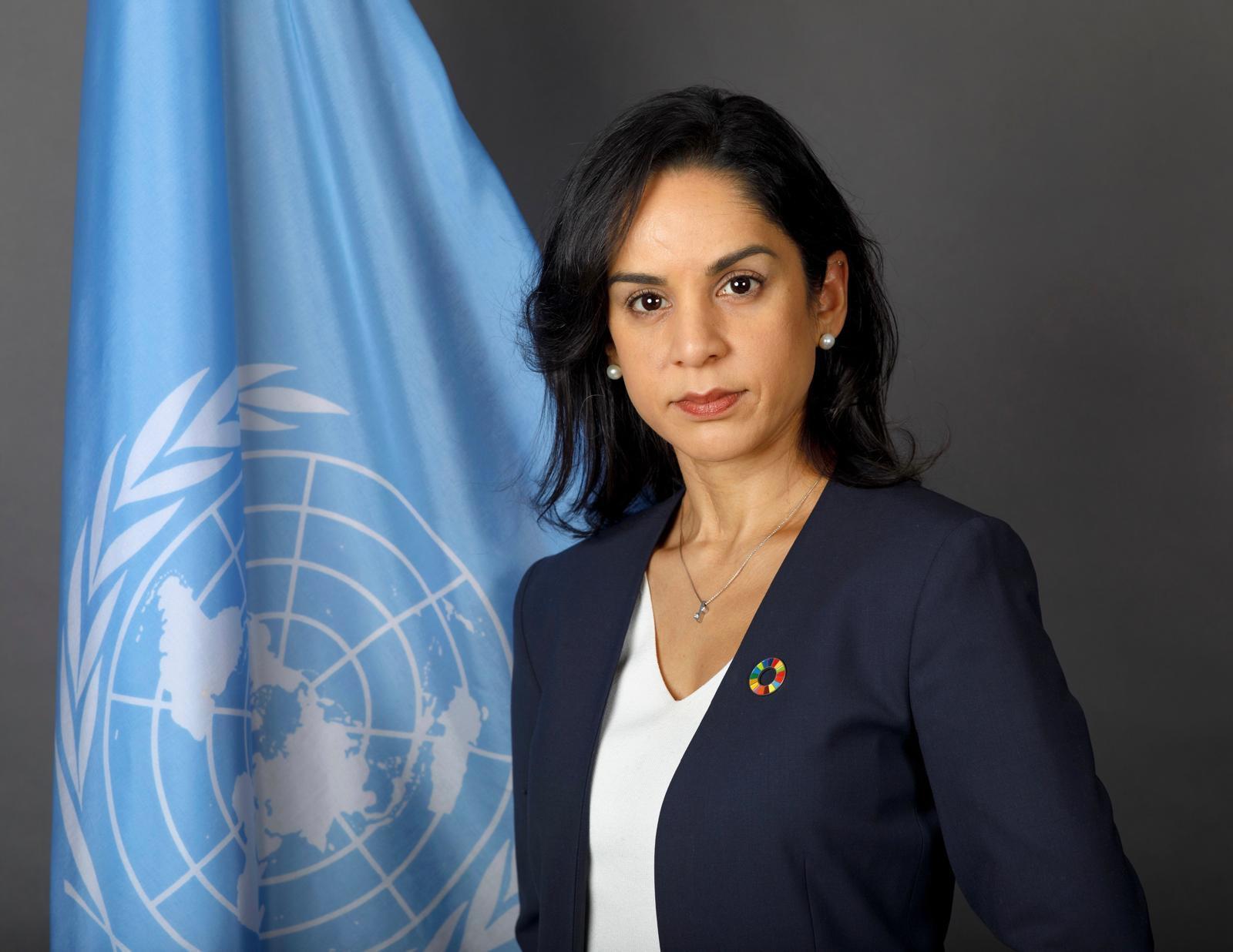
Most of my professional life has been with the United Nations, and before that with civil society organizations based in South Africa. Across different roles and themes, the thread in my career has been a focus on social justice, equality, peace, and sustainable development, especially the question of how institutions and public policy can create meaningful change and opportunities for people.
My professional story is also deeply connected to my personal history, which is where I believe my original motivation for this work – and passion for the United Nations – comes from. My family’s story spans three continents and encompasses many of the issues the UN was created to respond to: forced migration, political instability, inequality, and underdevelopment. It’s a perspective I carry with me in my role in Eritrea today, where the UN works with a focus on partnership, dignity, and development rooted in national priorities.
What is the role of a UN Resident Coordinator, and how does it relate to the UN Country Team? Emotionally Resonant Themes
The UN Resident Coordinator (RC) is the UN Secretary-General’s representative at the country level, tasked with coordinating the work of the UN Country Team (UNCT), which consists of all UN agencies, funds, and programs, resident and non-resident, operating in the country.
The role is to ensure that the UN system works coherently and efficiently together, making the best use of our respective capacities, resources, and expertise. In practice, this means aligning our collective efforts with the country’s priorities, facilitating dialogue with government and partners, and ensuring that the UN delivers as one to achieve meaningful results for people.
The elements of my career I have enjoyed the most have always been those that focused on building bridges – between people, governments, and organizations – to make sure development is inclusive and sustainable.
Serving as RC in Eritrea over the past two years has been an incredible privilege and a real learning opportunity. Eritrea is a country where we, as the international community, have much to learn from the emphasis on self-reliance, strong national ownership of development processes, solidarity, and dignity.
What is the core role, operation, and mission of the UN Country Team in Eritrea?
The UNCT’s mission is to accompany Eritrea in its own national development pathway and priorities, and, through that, advance the Sustainable Development Goals (SDGs). Our operations span health, education, food security, climate resilience, and social protection, as well as key economic areas such as trade, industrialization, and financing for development, which directly impact people’s lives. We do this through technical expertise, policy support, capacity development, and leveraging global resources for economic development. We work hand in hand with government institutions and communities to strengthen systems that deliver on local priorities.
How do the UNCT objective sand programs relate to the country’s priorities?
The UN does not come with a “onesize-fits-all” plan. The Sustainable Development Goals are a shared global roadmap, but how they are achieved needs to reflect national realities if they are to succeed and be sustainable.
In Eritrea, this means that our work is shaped jointly with the Government and in close consultation with national institutions and communities. We focus on areas where the UN can add technical value, support national systems, and complement existing efforts rather than duplicate them. Our Cooperation Framework – our partnership agreement that encompasses all areas where the UN and Government work together – is fully aligned with Eritrea’s national development agenda and reflects these priorities. This alignment ensures that our programs are not externally imposed but rather cocreated with national stakeholders.
What was your impression of the country before you came, and now?
Eritrea has fascinated me for many years. In university, one of my first essays was on the role of women in national liberation struggles. It was then that I first learned about Eritrea, the fight for independence, the number of women who fought on the front lines, and the impact, not just in numbers but in their roles and achievements. So even before I had the chance to visit, I knew this was a country where the philosophy of equality was not just rhetoric but truly informed the new nation’s identity.
In 2019, I had the opportunity to visit Eritrea with the UN Deputy Secretary-General. In just those few days, it was clear to me that this is a unique and beautiful country – from its people to its topography to its food and coffee! – and everything in between. Being here has deepened my understanding of how the nation’s values are lived in practice, and I have witnessed firsthand the strength of communities, the pride in national identity, and the determination to chart a sovereign path of development.
Does the concept of development and sustainability mean different things to different countries?
Yes, very much so. While all countries agree on the SDGs, development is shaped by history, geography, resources, culture, social values, and a vision. Sustainability in Eritrea, for example, is closely linked to self-reliance, long-term thinking, community responsibility, and strong ownership at all levels of development processes. Our job is to adapt the UN’s support to fit that context. Eritrea’s emphasis on self-reliance and resilience is something we respect, value, and build on.
How does the UN model relate to the Eritrean development concept?
The UN development model emphasizes inclusivity, national ownership, and long-term sustainability. These principles resonate strongly with Eritrea’s development philosophy. In fact, our Cooperation Framework is titled after a core principle of the SDGs – Leave No One Behind. This principle is central here in Eritrea, and the Government often reminds us to focus our partnership on the furthest reaches and ensure that development touches every individual and every community. Similarly, the UN model revolves around the three dimensions of sustainable development: economic, social, and environmental. We see these reflected in the Government’s priorities as well.
What is culture’s role in sustainable development?
Culture shapes how societies organize – what they value, how they see themselves in relation to the world, and how they see their roles and responsibilities in relation to each other. Development efforts are most effective when they build on cultural strengths rather than trying to override them. In Eritrea, values such as social cohesion, collective responsibility, and self-reliance are powerful assets for sustainable development.
The UN/GoSE Cooperation Frame workhas passed mid way: how do you see its progress?
At the midpoint, the Cooperation Framework has made real progress, particularly in foundational areas such as health, education, food systems, climate resilience, and data. Funding constraints remain a challenge, and more so today than ever before, given the global context. New and non-traditional partners, along with innovative resource mobilization efforts, are helping bridge gaps, and we are learning that strong coordination and flexibility are key to progress. Eritrea is also moving away from development funding toward more transformative financing models for development. This is an area where we, as the UN, are making our own shift, and I hope we can reflect it more strongly in our next Cooperation Framework.
What is your view of gender issues, and what collaboration has the UN done in Eritrea?
As I mentioned, my first encounter with Eritrea was through the lens of women’s equality. This was also the case for my first visit as the Deputy Secretary-General’s mission here in 2019 was focused on women, peace, and security, as well as development. It’s an issue that I have worked on in different ways and feel personally committed to.
Gender equality isn’t just about fairness or rights, crucially important as these principles are. It is also about unlocking potential. Ultimately, no country can succeed if it leaves half of its population behind.
And while no country has achieved gender equality, Eritrea has much to be proud of and share in this area, including in girls’ education and progress towards the eradication of Female Genital Mutilation. These are areas where we, as the UN, remain a steadfast partner. We will also continue to partner with and encourage progress in areas where gaps exist or where more can be done to fully realize women’s contribution to national development.
In what way has your experience serving in Eritrea impacted your views of self-reliance, gender equality, and partnership?
My experience here has reinforced the idea that self-reliance and partnership go hand in hand. Strong national ownership actually makes partnerships more effective and meaningful. I have also seen that progress on gender equality is most sustainable when it is rooted in social values, community realities, and leadership, rather than driven externally.
Eritrea has been under unilateral sanctions for several years, and the UN considers such UCMs as illegal. What is the responsibility and obligation of the UN in this regard?
The Secretary-General has consistently underscored that unilateral coercive measures—that is, measures not authorized by the Security Council—raise serious concerns for multilateralism and international cooperation, particularly in contexts where development and humanitarian needs are significant. The UN has also highlighted that such measures can have unintended and far-reaching impacts on civilian populations and may affect the enjoyment of human rights, including access to health, food, and development.
In this context, the United Nations’ responsibility is to remain guided by its Charter mandate. This includes continuing to support Eritrea’s development priorities, safeguarding humanitarian and development space, documenting and communicating, through objective, evidence-based analysis, the humanitarian and developmental impacts of unilateral measures, and encouraging dialogue and cooperation.
At the recent UNGA meeting, the Eritrean delegation met with United Nations (UN) Secretary General (SG) Guterres, and the UN’s role in Eritrea was highly acknowledged. What were the achievements that were mentioned?
Well, I couldn’t tell you exactly as I wasn’t in the room! But the feedback received has been positive, and I am grateful to Minister Osman for highlighting and acknowledging the partnership with the UN team in Eritrea. We are committed to building trust, deepening development efforts, and emphasizing constructive engagement between Eritrea and the UN system as a whole.
Finally, what messages do you have to women of Eritrea, the youth, and Eritreans in the diaspora?
To the women of Eritrea: your strength and resilience have helped shape this nation at every stage of its history. From the liberation struggle to community life today, your contributions are profound and enduring, inspiring far beyond Eritrea’s borders.
To the youth: you carry the responsibility and the opportunity of shaping the next chapter of national development. Your creativity, ideas, and energy are essential. I would encourage you to build on the values, discipline, and sense of collective purpose you inherit -combined with new skills and perspectives, this is a powerful and unmatched foundation for the future.
To the diaspora: Eritrea’s diaspora is one of the most engaged, committed, and connected I have encountered. You serve as an essential bridge between Eritrea and the broader world, and one that can build greater understanding and cooperation.
shabait