What You Need to Know
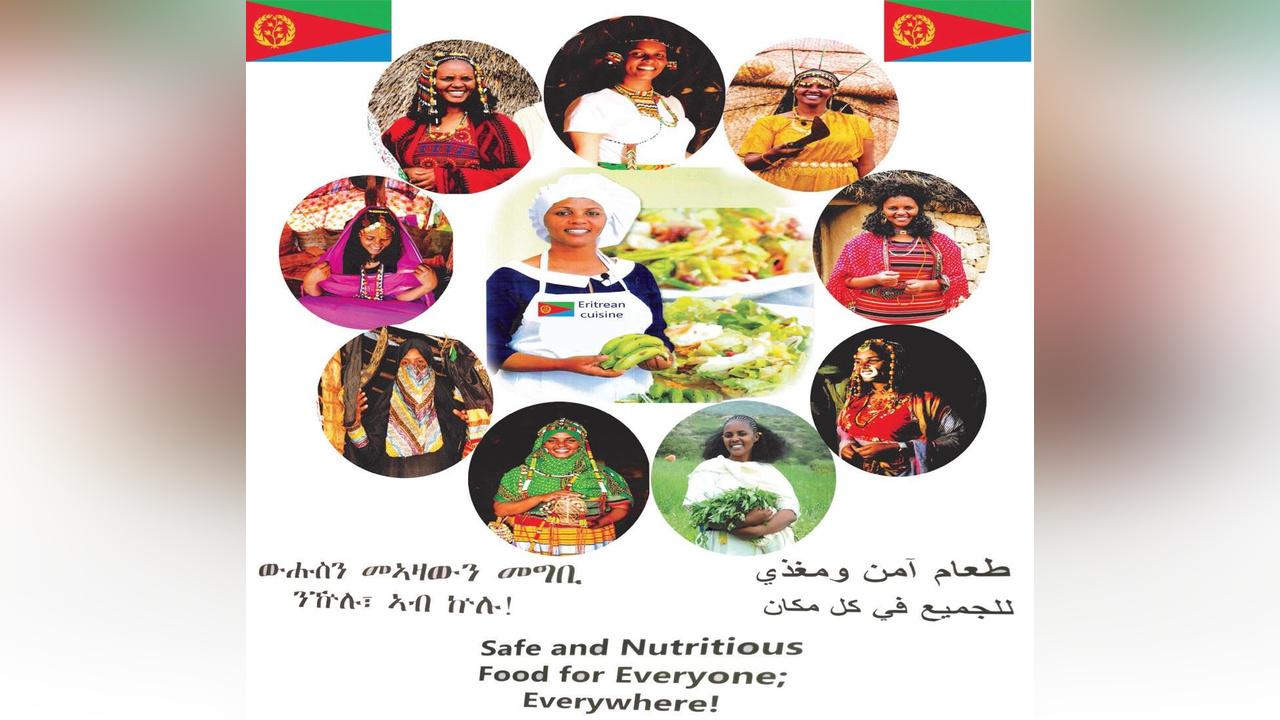
Asmeret Damir, a passionate advocate for Eritrean cuisine, seeks to elevate her nation’s traditional dishes on the global stage. Through her culinary journey, she emphasizes the importance of preserving cultural identity and health benefits associated with Eritrean food. Her book and television program aim to inspire future generations to embrace their culinary heritage.
Africa-Press – Eritrea. Asmeret Damir is a young Eritrean culinary visionary driven by a passion for preserving and promoting her nation’s traditional dishes on the global stage. Her dedication has earned widespread acclaim from both local and international audiences, many of whom have watched her masterfully prepare traditional recipes on television or experienced her craft firsthand at the “Tinti” restaurant. Eritrea Profile is honored to share her story and her culinary journey with our readers.
* * *
Asmeret, let’s begin with your childhood. Where did your journey start?
I was born in 1989 in Embatkala. Due to the heightened military confrontation after Operation Fenkil in 1990, my family moved to Asmara. When my father passed away when I was only three years old, life became quite challenging, and we moved to his birthplace, Zigib. I vividly remember cycling 17 kilometers from Zigib to Asmara every day for school—a stark contrast to today, where educational facilities are much more accessible across the country.
When did you first realize that cooking was your true calling?
My mother, like so many Eritrean women, is the treasure who transformed my life. As a child, I was mesmerized by her deep love for our traditional cuisine. By the age of six, I remember begging her to let me help prepare the family meals. It was in those moments, standing by her side, that I truly fell in love with the art of Eritrean cooking.
I recently came across your book, “The Secret of Our Casserole.” What inspired you to write it?
In 2020, I attended a culinary school to formalize my training. However, I was disappointed to find that the curriculum completely lacked traditional Eritrean dishes. While I learned valuable technical skills and became acquainted with modern ingredients, my heart remained with our heritage.
During the COVID-19, I noticed many families were baking cakes and pizzas at home. It made me wonder: Why aren’t we celebrating our own traditional dishes with the same enthusiasm? I began conducting intensive research into Tigrinya culinary traditions. Elder women were my most reliable sources, and I consulted the Ministry of Agriculture to understand the nutritional profiles of our indigenous ingredients. I published the book in 2022 to highlight the immense health and economic significance of Eritrea’s traditional food.
Why focus so specifically on traditional dishes?
Just as a fish cannot survive out of water, a society cannot flourish without its identity. Our traditional dishes are central to our national identity; they determine our well-being and economic self-reliance. Most of our dishes are organic and affordable. In a world where chronic, diet-related diseases are on the rise, our traditional diet offers a significant solution to these modern health challenges.
How many dishes have you documented so far, and how would you describe the relationship between them?
My research is ongoing, but I have studied 45 traditional dishes from across the country so far. All Eritrean dishes are complementary. They are organic, beautiful, flavorful, and healthy. For example, porridge is a staple across all our ethnic groups; while the specific ingredients or designs might vary slightly by region, the essence remains a unifying cultural thread.
How do you compare Eritrean cuisine to globally popular dishes like pizza?
Honestly, Eritrean traditional dishes hold superior medicinal and economic value. In many parts of the world, pesticides and other chemicals contaminate soil and produce, putting public health at risk. In Eritrea, the use of such chemicals is strictly regulated or prohibited. This ensures the health of our soil and the purity of our food.
Furthermore, our traditional methods allow food to be preserved naturally. For instance, a dish called “Tobno” can stay fresh for six months without any chemical preservatives or refrigeration. Our food is built for resilience.
What is your assessment of the public’s awareness regarding our traditional culinary heritage?
Awareness needs to be strengthened, particularly among the youth in urban areas. In the countryside, these traditions are still celebrated despite the wave of globalization. Our goal now— which the Ministry of Agriculture and various stakeholders are working toward—is to integrate these national dishes into our modern lifestyle for their undeniable health and economic benefits.
You recently traveled to Europe to hone your skills. Which countries did you visit, and what did you take away from that experience?
Last year, I visited Italy, Norway, and Sweden. In Italy, I attended the Giglio Cooking School in Florence, where I studied Italian cuisine, its history, and its techniques. In Norway and Sweden, I observed how they modernize their traditional dishes while maintaining their cultural integrity. I also traveled to India to participate in a Food Expo, where I was proud to introduce three Eritrean dishes to an international audience. These travels taught me that while techniques and tools may vary, the soul of cooking is universal.
What does cooking mean to you personally?
To me, cooking is love. When you prepare a dish with love, it rewards you with love in return. Cooking is a vessel for identity and memory— it brings back the warmth of family, the innocence of childhood, and the affection of a mother. I truly believe the “secret ingredient” isn’t a spice; it’s the love expressed through the process.
What is your ultimate dream?
My dream is to be the “Ambassador of Eritrean Traditional Dishes.” I want to use our flavors to promote Eritrean identity and culture worldwide.
What are your plans to achieve this?
First, I will continue to document every traditional dish in Eritrea and publish them in a comprehensive collection. I plan to expand my television program on Eri-TV, organize national food festivals, and eventually open a culinary training school and a flagship national restaurant. Ultimately, I want to travel the world as a culinary ambassador.
Of all the dishes you’ve discovered, which one has impressed you the most?
I love them all, but if I must choose, I am fascinated by “Tobno,” a dish from the Afar ethnic group.
It is made from meat, sorghum or barley, and dates. Traditionally, those embarking on the pilgrimage to Mecca would carry it packed in an animal skin. Just two servings provide enough calories for an entire day of travel. It is also incredibly effective in helping sick people recover their strength quickly.
What kind of feedback have you received from the public?
The feedback has been overwhelmingly positive. One moment that stays with me involves a member of the Diaspora who visited Tinti restaurant. After tasting one of our traditional dishes, he was moved to tears. He told me the taste brought back the memory of his mother’s love and his childhood. Stories like that inspire me to keep going, no matter the challenges.
Do you have a final message for our readers?
I encourage everyone to explore the “buried treasures” within our traditional kitchen. To Eritrean women, both at home and in the Diaspora: please learn and pass down these recipes. They are the key to preserving our heritage and ensuring the health of future generations.
Finally, I want to express my deepest gratitude to the Ministry of Agriculture, the Ministry of Education (Cultural Branch), and my family. Most importantly, I thank the generations of Eritrean women who preserved these recipes so that I could share them today.
Ms. Asmeret, thank you for your time and for sharing your inspiring story. We wish you every success in your journey to become Eritrea’s culinary ambassador.
Eritrean cuisine is deeply rooted in the country’s diverse cultural heritage, reflecting the traditions of its various ethnic groups. The culinary practices have evolved over centuries, influenced by historical events and the agricultural landscape. Asmeret Damir’s efforts to document and promote traditional dishes highlight the significance of food in maintaining cultural identity and fostering community ties in Eritrea. Her work comes at a time when globalization poses challenges to local culinary traditions, making her mission even more vital.