Africa-Press – Eswatini. Preliminary figures indicate that total public debt decreased by 1.5 per cent to E33.7 billion in June 2023 from E34.2 billion recorded in the previous month, translating to an equivalent of 41.5 per cent of GDP.
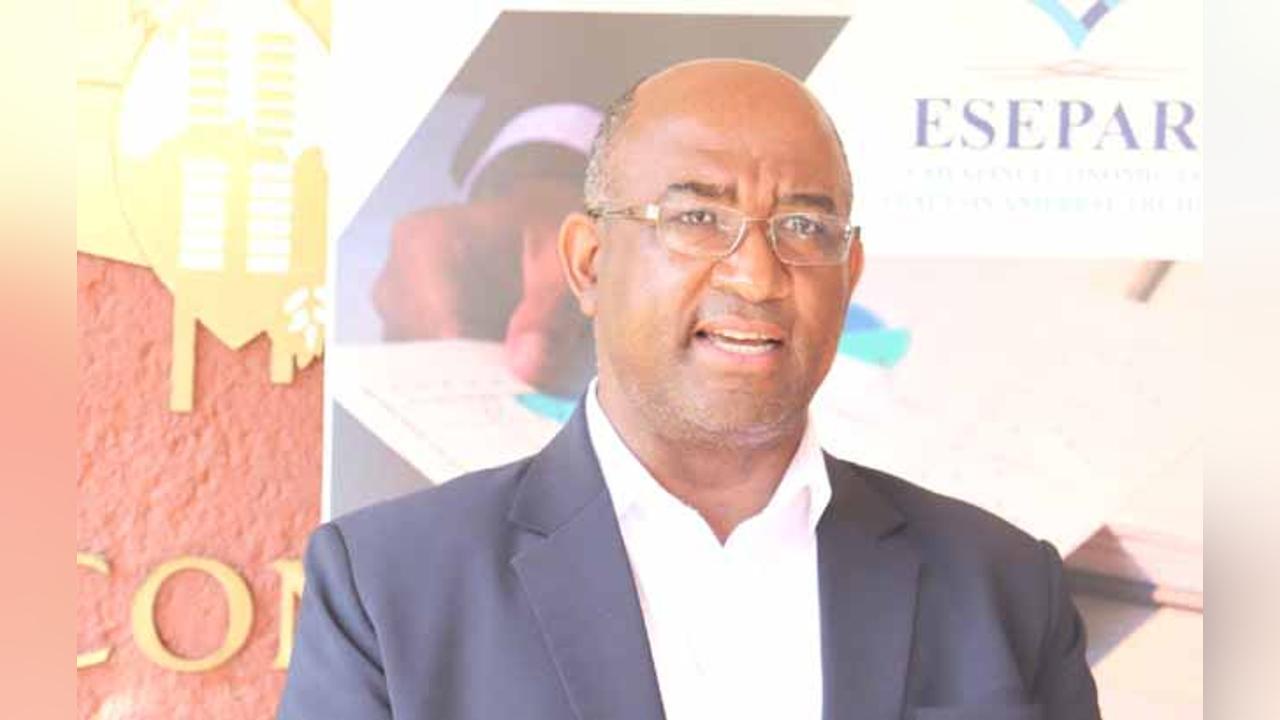
Central Bank of Eswatini (CBE) Governor, Phil Mnisi, in his Monetary Policy statement, mentioned that as of July 14, gross official reserves stood at E9.5 billion equivalent to three months of imports.
Mnisi said taking into consideration relevant global, regional and domestic economic factors; as well as the price and financial stability mandate, the bank decided to cut the discount rate by 25 basis points from 7.75 per cent to 7.50 per cent.
“On the domestic front, gross domestic product (GDP) grew by a slower 1.1 per cent year-on-year (seasonally adjusted) in the first quarter of this year, down from a revised growth of 6.7 per cent in the fourth quarter of 2022,” he said.
He explained that the slight growth observed in the quarter under review was attributed to positive performance in the primary and tertiary sectors.
“On a quarter-on-quarter basis, economic activity grew by 2.5 per cent (seasonally adjusted) in the quarter under review, from a revised contraction of 0.3 per cent in the previous quarter,” said Mnisi.
The governor also mentioned that the country’s headline consumer inflation declined to 5.3 per cent in June from 6.0 per cent in May.
“Decreases were observed in price indices for; ‘Furnishing and Household Equipment’ which fell to 8.1 per cent in June 2023 from 10.8 per cent the previous month; ‘Transport’ which decreased to -1.7 per cent in June from 1 per cent in May and “Miscellaneous Good and Services” which fell from five per cent in May to 3.6 per cent in June 2023,” he said.
He further explained that the decreasing rates were counteracted by increases in price indices for “Recreation and Culture” which increased from 2.4 per cent in May to 4.3 per cent in June and “Clothing and Footwear” which grew from six per cent in May to 6.3 per cent in June.
“The bank reviewed down its inflation forecasts to 5.6 per cent (from 5.7 per cent forecasted in May) for this year while the forecast for 2024 was revised up to 5.4 per cent (from 5.3 per cent). The inflation forecast for 2025 was unchanged at 5.13 per cent,” he said.
Mnisi mentioned that risks to the inflation outlook included supply chain disruption due to the Russia-Ukraine, oil prices uncertainty and high food prices.
The governor further disclosed that credit extended to the private sector rose by a marginal 0.7 per cent month-on-month to reach E17.8 billion at the end of May.
Improvements
“Growth in private sector credit was boosted by improvements in credit to other sectors of the economy which grew by 11.2 per cent to E1.1 billion and the household and non-profit institutions serving households (NPISH) sector which grew by 0.2 per cent to close at E8.1 billion at the end of May,” explained the governor.
He said credit extended to the business sector stood at E8.6 billion at the end of May 2023, reflecting a decline of 0.1 per cent over the review month.
“The stock of non-performing loans (NPLs) is a concern as they grew by 2.7 per cent month-on month in May 2023 to E1.1 billion. The NPL ratio rose to 7.5 per cent in May from 7.3 per cent the previous month, the highest in the Common Monetary Area (CMA),” he said.
The governor also explained that on the global front, geopolitical tensions and the tight monetary policy conditions continue to weigh down on global growth prospects.
“Growth in Advanced Economies (AEs) and Emerging Markets and Developing Economies (EMDEs) exhibit mixed patterns,” he said.
Inflation
He explained that in advanced economies, the US economy grew by two per cent quarter-on-quarter in the first quarter of this year and the UK grew by a mere 0. 1 per cent in the same period whilst the Euro contracted by 0.1 per cent.
“Among EMDEs, China’s economy grew by 2.2 per cent in the second quarter of 2023. Inflation is moderating in both As and EMDEs, however, in most countries it remains above target and upside risks still persist. These include elevated oil prices and supply chain disruption due the Russia-Ukraine conflict, among others,” he said.
The governor stated that on the regional front, the South African economy grew by 0.4 per cent quarter-on-quarter in the first quarter of this year after a 1.1 per cent contraction in the fourth quarter of 2022.
“The South African Reserve Bank (SARB) marginally revised up its growth forecast for this year to 0.4 per cent (from a 0.3 per cent forecast in May) while the forecasts for 2024 and 2025 were left unchanged at one per cent and 1.1 per cent, respectively,” he said.
He added that South Africa inflation moderated to 5.4 per cent in June from 6.3 per cent in May.
“The SARB revised its inflation forecasts to 6.0 per cent (from 6.2 per cent in May) this year and 5.0 per cent (from 5.1 per cent) in 2024 whilst the forecast for 2025 was left unchanged at 4.5 per cent. The SARB maintained its repo rate at 8.25 per cent in July,” said Mnisi.
The governor further stated that bank had noted the subdued economic growth, low growth in credit extension, high non-performing loans ratio and the moderating inflation, hence the accommodative monetary policy stance.
“The bank will continue to monitor closely the international, regional and domestic developments, particularly the aforementioned indicators, and will act appropriately in line with its mission to foster price and financial stability that is conducive to the economic development in Eswatini,” assured Mnisi.
For More News And Analysis About Eswatini Follow Africa-Press